
Vegetable
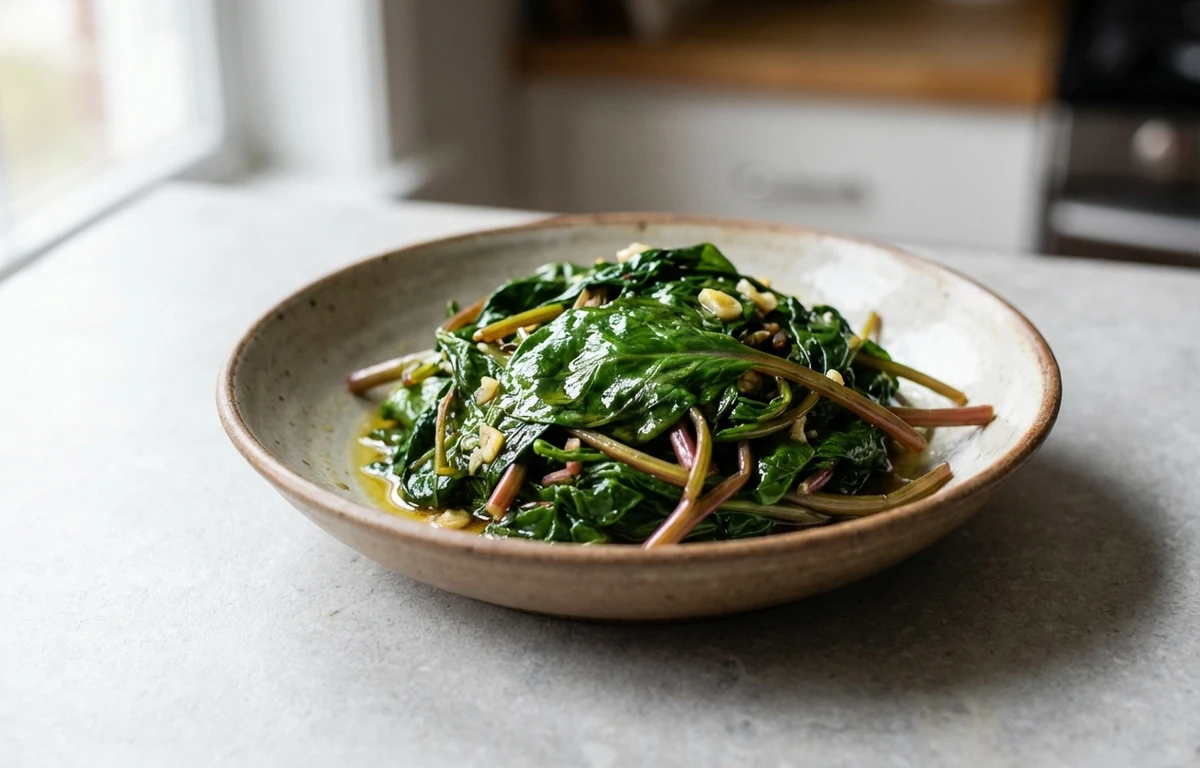
cooked malabar spinach.
VegetarianVeganGluten-freeDairy-freeNut-freePeanut-freeSoy-freeEgg-freeShellfish-freeHoney-freeAlcohol-free
ALSO KNOWN AS
cooked basella albacooked poi saagcooked pui shakcooked vine spinachcooked ceylon spinach
SERVING
CALORIES
23
PROTEIN
2.0g
CARBS
3.5g
FAT
0.30g
FIBER
2.0g
This ingredient is flagged as naturally gluten-free. Per 100 g, it provides 400 µg of vitamin K.
NUTRITION PROFILE · per 100 g
Everything in this ingredient.
MACRONUTRIENTS
Calories23kcal—
Protein2.0g4%
Carbohydrates3.5g1%
Fiber2.0g7%
Sugar0.50g1%
Total fat0.30g0%
Saturated fat0.05g0%
Trans fat0g—
Cholesterol0mg0%
Water92g—
MINERALS
Sodium25mg1%
Potassium230mg5%
Calcium102mg8%
Iron1.2mg7%
Magnesium65mg15%
Phosphorus35mg3%
Zinc0.40mg4%
Copper0.10mg11%
Manganese0.70mg30%
Selenium0.50µg1%
VITAMINS
Vitamin A400µg44%
Vitamin C25mg28%
Vitamin D0µg0%
Vitamin E1.5mg10%
Vitamin K400µg333%
Thiamin (B1)0.05mg4%
Riboflavin (B2)0.15mg12%
Niacin (B3)0.50mg3%
Pantothenic acid (B5)0.05mg1%
Vitamin B60.20mg12%
Folate (B9)140µg35%
Vitamin B120µg0%
%DV based on a 2,000 cal diet. Source: USDA FoodData Central. A dash in the %DV column means there’s no established Daily Value for that nutrient.
MEASUREMENT CONVERSIONS
How much is what.
1 cup180g
1 tablespoon15g
1 teaspoon5g
1 oz28.4g
1 lb453.6g
1 liter1000g
HEALTH BENEFITS
Why eat it.
- ✓High in Vitamin A which supports healthy vision and skin
- ✓Excellent source of folate (B9) essential for DNA synthesis
- ✓Contains mucilage which can help soothe the digestive tract
- ✓Low in calories but high in essential minerals like calcium and magnesium
COOKING TIPS
In the kitchen.
- 1Sauté or steam quickly to prevent the leaves from becoming excessively slimy
- 2The stems are edible; chop them finely and start cooking them 2 minutes before the leaves
- 3Pairs well with strong flavors like garlic, ginger, mustard seeds, and coconut
STORAGE
Keep it fresh.
- Store cooked Malabar spinach in an airtight container in the refrigerator
- Consume within 2 to 3 days for optimal taste and safety
- Avoid freezing if possible, as the high water content makes it very mushy upon thawing
FAQ
Frequently asked questions.
How long does cooked Malabar spinach last in the fridge?
When stored in an airtight container, it will stay fresh for 2 to 3 days.
Is Malabar spinach the same as regular spinach?
No, they are different species. Malabar spinach has thicker, heart-shaped leaves and a slightly mucilaginous (slimy) texture when cooked.
Can I freeze cooked Malabar spinach?
You can, but the texture will become very soft and watery. It is best used in soups or stews after freezing.
What is the best substitute for Malabar spinach?
Regular spinach, Swiss chard, or Bok choy are the best alternatives, though they lack the signature thickness of Malabar spinach.
How do I reduce the sliminess when cooking?
Avoid overcooking and do not add too much water. A quick stir-fry over high heat is the best method to maintain texture.
Are the stems of Malabar spinach edible?
Yes, the stems are crunchy and highly nutritious. They should be cooked slightly longer than the leaves.
Is cooked Malabar spinach high in iron?
Yes, it is a good plant-based source of iron, providing about 1.2mg per 100g serving.
Is it safe to eat during pregnancy?
Yes, it is highly recommended due to its high folate (Vitamin B9) content, which is crucial for fetal development.
What does cooked Malabar spinach taste like?
It has a mild, slightly peppery flavor with a hint of citrus and a succulent, smooth mouthfeel.



















