
Meat
cooked New Zealand lamb.
VegetarianVeganGluten-freeDairy-freeNut-freePeanut-freeSoy-freeEgg-freeShellfish-freeHoney-freeAlcohol-free
ALSO KNOWN AS
cooked NZ lambcooked New Zealand sheep meat
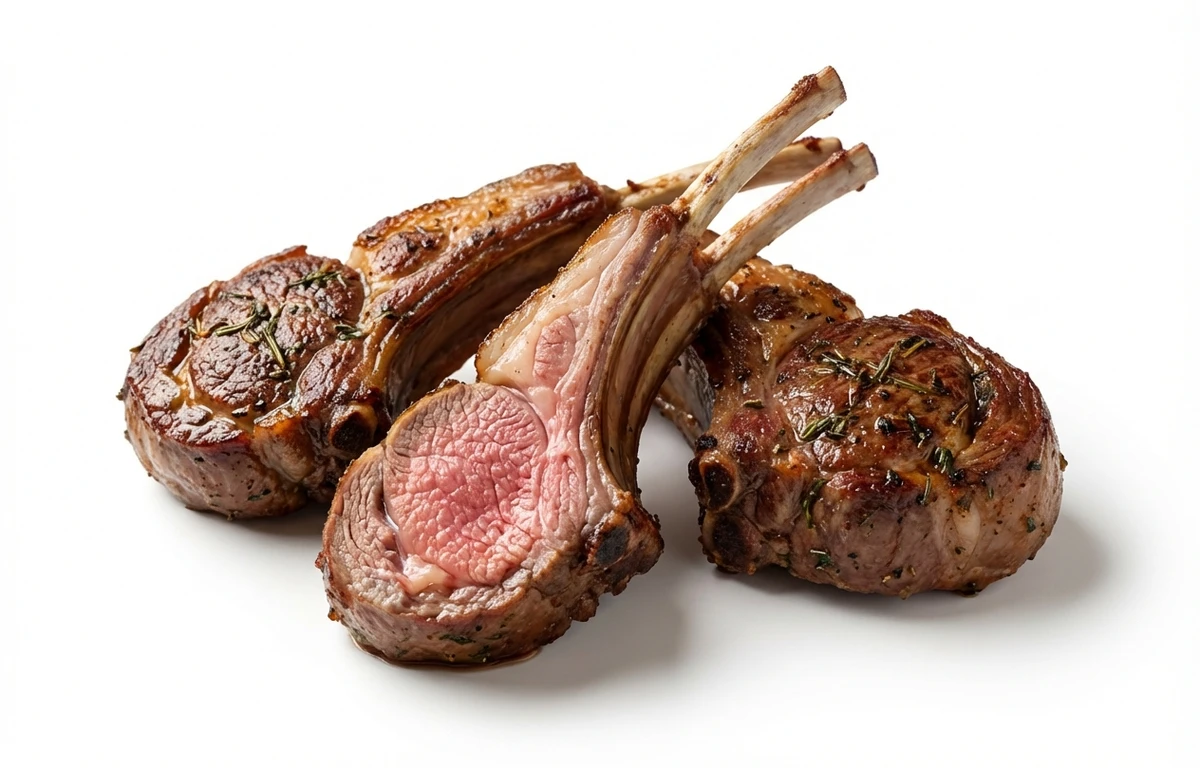
SERVING
CALORIES
258
PROTEIN
25.6g
CARBS
0g
FAT
16.5g
FIBER
0g
NUTRITION PROFILE · per 100 g
Everything in this ingredient.
MACRONUTRIENTS
Calories258kcal—
Protein25.6g51%
Carbohydrates0g0%
Fiber0g0%
Sugar0g0%
Total fat16.5g21%
Saturated fat7.4g37%
Trans fat0.90g—
Cholesterol88mg29%
Water57.2g—
MINERALS
Sodium65mg3%
Potassium310mg7%
Calcium16mg1%
Iron2.4mg13%
Magnesium24mg6%
Phosphorus195mg16%
Zinc4.8mg44%
Copper0.12mg13%
Manganese0.02mg1%
Selenium26.2µg48%
VITAMINS
Vitamin A0µg0%
Vitamin C0mg0%
Vitamin D0.10µg1%
Vitamin E0.22mg1%
Vitamin K0µg0%
Thiamin (B1)0.11mg9%
Riboflavin (B2)0.23mg18%
Niacin (B3)6.2mg39%
Pantothenic acid (B5)0.65mg13%
Vitamin B60.14mg8%
Folate (B9)5.0µg1%
Vitamin B122.6µg108%
%DV based on a 2,000 cal diet. Source: USDA FoodData Central. A dash in the %DV column means there’s no established Daily Value for that nutrient.
MEASUREMENT CONVERSIONS
How much is what.
1 oz28.4g
1 lb453.6g
HEALTH BENEFITS
Why eat it.
- ✓Excellent source of high-quality complete protein
- ✓Rich in Vitamin B12 for nervous system health
- ✓High in bioavailable Zinc for immune support
- ✓Contains heme iron which is easily absorbed by the body
- ✓Source of CLA (Conjugated Linoleic Acid) and Omega-3s
COOKING TIPS
In the kitchen.
- 1Allow the meat to rest for 5-10 minutes after cooking to redistribute juices
- 2Reheat gently with a splash of broth to prevent the meat from drying out
- 3Trim excess visible fat after cooking if a leaner meal is desired
STORAGE
Keep it fresh.
- Store in an airtight container in the refrigerator for up to 3-4 days
- Freeze in moisture-proof wrap or freezer bags for 2-3 months
- Keep separate from raw foods to prevent cross-contamination
FAQ
Frequently asked questions.
How long does cooked New Zealand lamb last in the fridge?
Cooked lamb can be safely stored in the refrigerator for 3 to 4 days when kept in an airtight container.
Can I freeze cooked New Zealand lamb?
Yes, you can freeze it for 2 to 3 months. For best quality, ensure it is tightly wrapped to prevent freezer burn.
What makes New Zealand lamb different from other lamb?
New Zealand lamb is primarily grass-fed and pasture-raised, which often results in a leaner meat with a higher Omega-3 fatty acid profile compared to grain-fed lamb.
What is a good substitute for cooked lamb?
Cooked beef or cooked goat meat (mutton) are the closest substitutes in terms of texture and flavor profile.
How should I reheat cooked lamb so it stays tender?
Reheat it slowly at a low temperature in the oven or on the stovetop with a little liquid (like broth or water) and cover it to trap steam.
Is cooked New Zealand lamb high in iron?
Yes, it is an excellent source of heme iron, which is the form of iron most easily absorbed by the human body.
What are common dishes using cooked lamb leftovers?
Leftover cooked lamb is excellent in shepherd's pie, lamb curry, gyros, or sliced cold in sandwiches and salads.
Is New Zealand lamb usually grass-fed?
Yes, the vast majority of New Zealand lamb is raised on open pastures and is grass-fed year-round.
Does cooked lamb contain any carbohydrates?
No, plain cooked lamb is a zero-carbohydrate food, making it suitable for keto and low-carb diets.



















