
Other
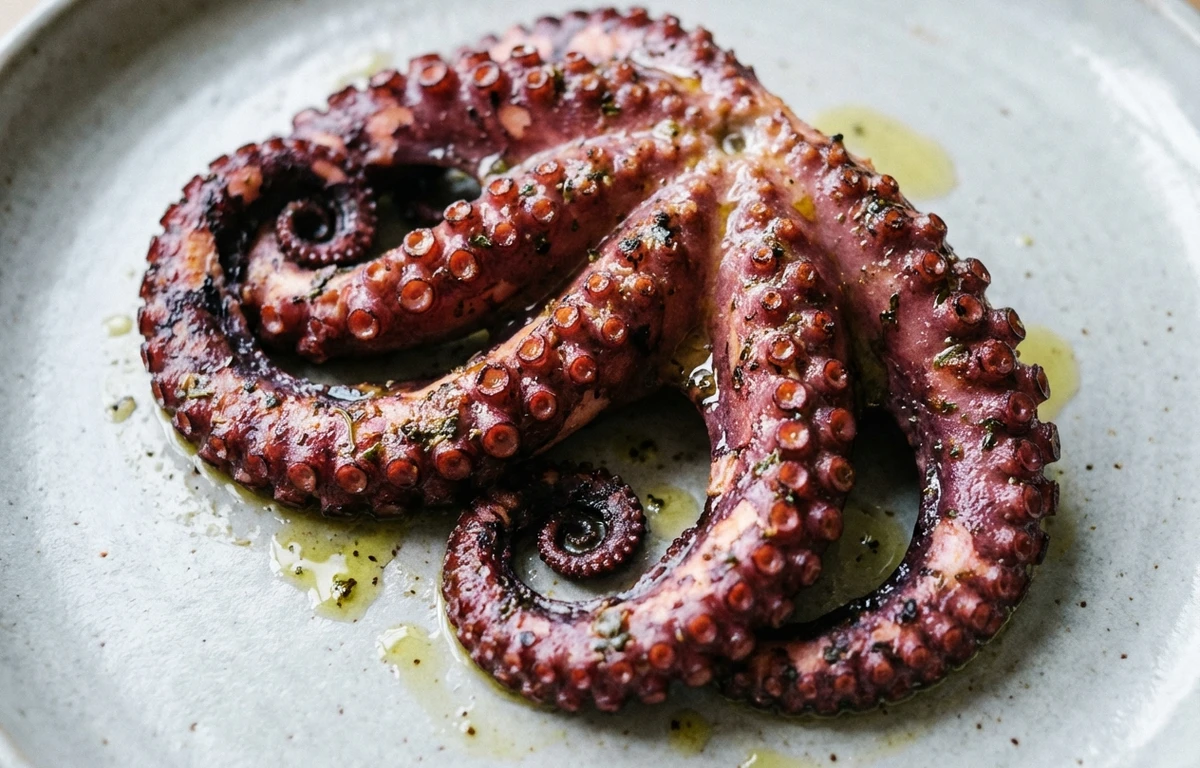
cooked octopus.
VegetarianVeganGluten-freeDairy-freeNut-freePeanut-freeSoy-freeEgg-freeShellfish-freeHoney-freeAlcohol-freeKosher
ALSO KNOWN AS
boiled octopussteamed octopuspulpo cocidocooked pulpotakonakjicooked common octopus
SERVING
CALORIES
164
PROTEIN
29.8g
CARBS
4.4g
FAT
2.1g
FIBER
0g
This ingredient is flagged as naturally gluten-free. Per 100 g, it provides 0.10 µg of vitamin K.
NUTRITION PROFILE · per 100 g
Everything in this ingredient.
MACRONUTRIENTS
Calories164kcal—
Protein29.8g60%
Carbohydrates4.4g2%
Fiber0g0%
Sugar0g0%
Total fat2.1g3%
Saturated fat0.45g2%
Trans fat0g—
Cholesterol96mg32%
Water60.5g—
MINERALS
Sodium460mg20%
Potassium630mg13%
Calcium106mg8%
Iron9.5mg53%
Magnesium60mg14%
Phosphorus280mg22%
Zinc3.4mg31%
Copper0.70mg78%
Manganese0.05mg2%
Selenium89.6µg163%
VITAMINS
Vitamin A81µg9%
Vitamin C8.0mg9%
Vitamin D0µg0%
Vitamin E2.1mg14%
Vitamin K0.10µg0%
Thiamin (B1)0.04mg3%
Riboflavin (B2)0.09mg7%
Niacin (B3)3.8mg24%
Pantothenic acid (B5)1.0mg20%
Vitamin B60.65mg38%
Folate (B9)24µg6%
Vitamin B1236µg1500%
%DV based on a 2,000 cal diet. Source: USDA FoodData Central. A dash in the %DV column means there’s no established Daily Value for that nutrient.
MEASUREMENT CONVERSIONS
How much is what.
1 cup248g
1 tablespoon15.8g
1 teaspoon5.3g
1 oz28.4g
1 lb453.6g
1 ml1.1g
1 liter1050g
1 piece85g
HEALTH BENEFITS
Why eat it.
- ✓Excellent source of Vitamin B12 for nerve function
- ✓High in lean protein for muscle repair
- ✓Contains Omega-3 fatty acids for heart health
COOKING TIPS
In the kitchen.
- 1Simmer slowly at low heat to prevent the meat from becoming rubbery
- 2Massage the octopus before cooking to help break down tough connective tissues
- 3Add a splash of vinegar or a wine cork to the boiling water, a traditional method to aid tenderization
STORAGE
Keep it fresh.
- Store in an airtight container in the refrigerator for up to 3 days
- Can be frozen for up to 2 months if tightly wrapped in plastic and foil
- Keep in the coldest part of the refrigerator, ideally at 32-38°F (0-3°C)
FAQ
Frequently asked questions.
How long does cooked octopus last in the fridge?
Cooked octopus will stay fresh for 2 to 3 days when stored in an airtight container in the refrigerator.
Why is my cooked octopus rubbery?
Octopus becomes rubbery if it is cooked too quickly at high heat. Slow, gentle simmering is the key to a tender texture.
What is a good substitute for octopus?
Squid (calamari) is the best substitute, though it is slightly more tender and has a milder flavor.
Is cooked octopus high in cholesterol?
It contains a moderate amount of cholesterol (about 96mg per 100g), which is similar to other lean meats and seafood.
How do I know if cooked octopus has gone bad?
Discard it if it has a slimy texture, an overly fishy or sour smell, or any visible discoloration.
Is octopus considered shellfish for allergy purposes?
Yes, octopus is a mollusk. People with shellfish allergies, particularly to mollusks, should avoid it.
What are common ways to serve cooked octopus?
It is commonly served chilled in salads (like Pulpo a la Gallega), grilled with olive oil and lemon, or tossed in pasta.
Does octopus need to be peeled after cooking?
The purple skin is edible and flavorful, but some prefer to rub it off after boiling for a cleaner white appearance.



















