
Grain
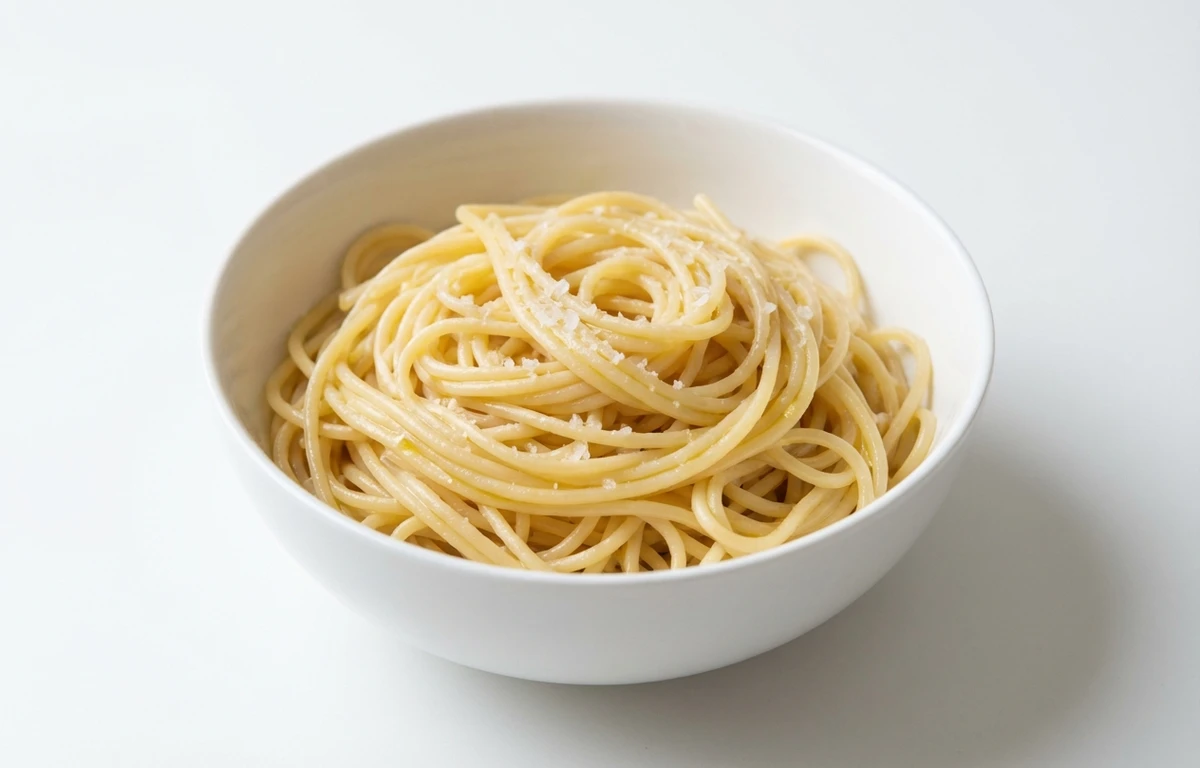
cooked salted enriched pasta.
VegetarianVeganGluten-freeDairy-freeNut-freePeanut-freeSoy-freeEgg-freeShellfish-freeHoney-freeAlcohol-free
ALSO KNOWN AS
boiled salted enriched pastacooked salted white pastaboiled salted macaronicooked salted spaghetti
SERVING
CALORIES
131
PROTEIN
5.2g
CARBS
24.9g
FAT
1.1g
FIBER
1.8g
NUTRITION PROFILE · per 100 g
Everything in this ingredient.
MACRONUTRIENTS
Calories131kcal—
Protein5.2g10%
Carbohydrates24.9g9%
Fiber1.8g6%
Sugar0.56g1%
Total fat1.1g1%
Saturated fat0.18g1%
Trans fat0g—
Cholesterol0mg0%
Water68g—
MINERALS
Sodium230mg10%
Potassium44mg1%
Calcium7.0mg1%
Iron1.3mg7%
Magnesium18mg4%
Phosphorus58mg5%
Zinc0.51mg5%
Copper0.10mg11%
Manganese0.32mg14%
Selenium26.4µg48%
VITAMINS
Vitamin A0µg0%
Vitamin C0mg0%
Vitamin D0µg0%
Vitamin E0.06mg0%
Vitamin K0.10µg0%
Thiamin (B1)0.16mg13%
Riboflavin (B2)0.12mg9%
Niacin (B3)1.2mg8%
Pantothenic acid (B5)0.13mg3%
Vitamin B60.05mg3%
Folate (B9)102µg26%
Vitamin B120µg0%
%DV based on a 2,000 cal diet. Source: USDA FoodData Central. A dash in the %DV column means there’s no established Daily Value for that nutrient.
MEASUREMENT CONVERSIONS
How much is what.
1 cup140g
1 tablespoon10g
1 teaspoon3g
1 oz28.4g
1 lb453.6g
1 liter0.2g
HEALTH BENEFITS
Why eat it.
- ✓Provides quick energy through complex carbohydrates
- ✓Enriched with B-vitamins like folic acid for cell health
- ✓Contains iron to support oxygen transport in the blood
- ✓Low in fat and cholesterol-free
- ✓Good source of selenium, an antioxidant mineral
COOKING TIPS
In the kitchen.
- 1Cook in a large pot of boiling water to prevent clumping
- 2Cook to 'al dente' (firm to the bite) for the best texture
- 3Reserve a cup of pasta water to help sauces adhere better
STORAGE
Keep it fresh.
- Store in an airtight container in the refrigerator for 3-5 days
- Toss with a little oil before storing to prevent sticking
- Can be frozen for up to 3 months in freezer-safe bags
FAQ
Frequently asked questions.
How long does cooked pasta last in the fridge?
Cooked pasta typically lasts 3 to 5 days when stored in an airtight container in the refrigerator.
Can you freeze cooked pasta?
Yes, you can freeze cooked pasta for up to 3 months. It is best to freeze it slightly undercooked to prevent mushiness when reheating.
What does 'enriched' mean in pasta?
Enriched means that nutrients lost during the refining process, such as B-vitamins and iron, have been added back into the flour.
Is cooked pasta vegan?
Most standard dried pastas are vegan as they are made from semolina flour and water. However, fresh pasta often contains eggs, so check the label.
How do I prevent cooked pasta from sticking together?
Toss the pasta with a small amount of olive oil or butter immediately after draining if you are not serving it with sauce right away.
What is the best way to reheat cooked pasta?
Reheat it in a microwave with a splash of water or sauce, or briefly dip it in boiling water for 30-60 seconds.
Does cooked pasta contain gluten?
Yes, standard enriched pasta is made from wheat and contains gluten. Gluten-free alternatives are made from rice, corn, or legumes.
Why is salt added to the pasta water?
Salt is added to season the pasta from the inside out as it absorbs the water, significantly improving the final flavor of the dish.
What are good substitutes for enriched pasta?
Whole wheat pasta, chickpea pasta, or zoodles (zucchini noodles) are common substitutes depending on dietary needs.
How much dry pasta makes 100g of cooked pasta?
Generally, about 40-45g of dry pasta will yield approximately 100g of cooked pasta as it absorbs water during cooking.



















