
Grain
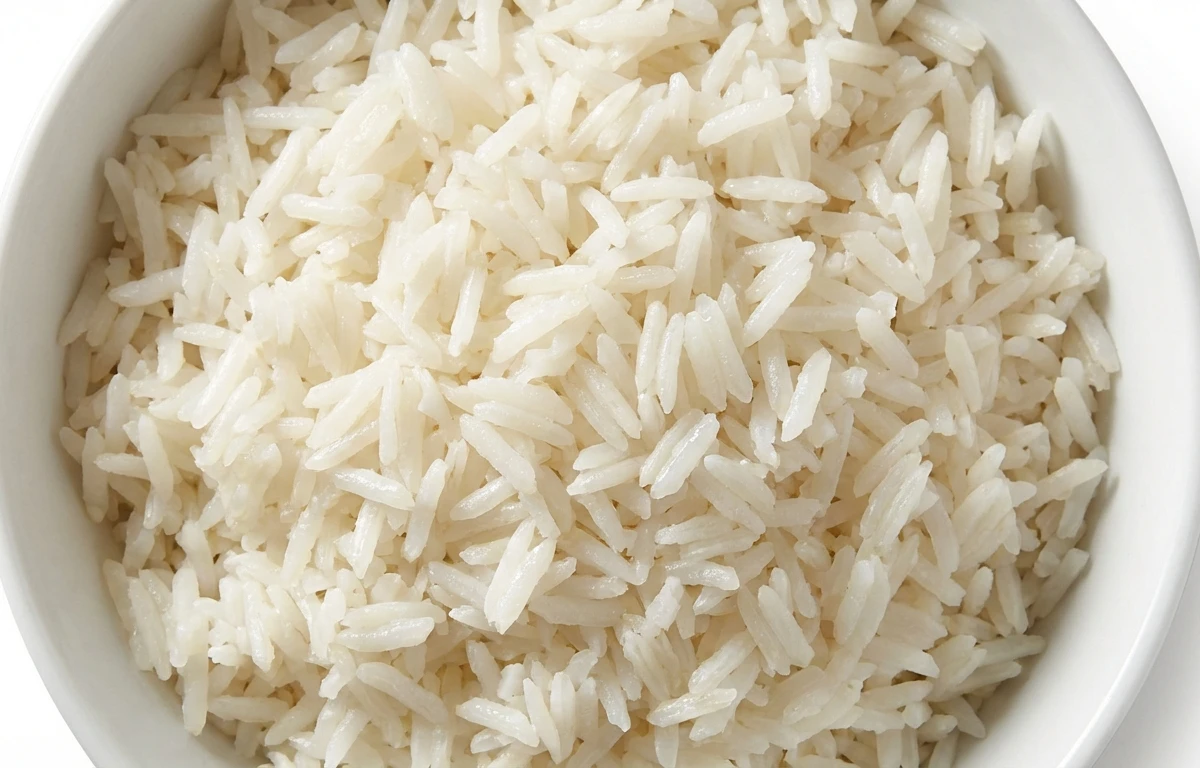
cooked salted long-grain white rice.
VegetarianVeganGluten-freeDairy-freeNut-freePeanut-freeSoy-freeEgg-freeShellfish-freeHoney-freeAlcohol-free
SERVING
CALORIES
130
PROTEIN
2.7g
CARBS
28.2g
FAT
0.28g
FIBER
0.40g
NUTRITION PROFILE · per 100 g
Everything in this ingredient.
MACRONUTRIENTS
Calories130kcal—
Protein2.7g5%
Carbohydrates28.2g10%
Fiber0.40g1%
Sugar0.05g0%
Total fat0.28g0%
Saturated fat0.08g0%
Cholesterol0mg0%
Water68.4g—
MINERALS
Sodium382mg17%
Potassium35mg1%
Calcium10mg1%
Iron0.20mg1%
Magnesium12mg3%
Phosphorus43mg3%
Zinc0.49mg4%
Copper0.07mg8%
Manganese0.47mg20%
Selenium7.5µg14%
VITAMINS
Vitamin A0µg0%
Vitamin C0mg0%
Vitamin D0µg0%
Vitamin E0.04mg0%
Vitamin K0µg0%
Thiamin (B1)0.02mg2%
Riboflavin (B2)0.01mg1%
Niacin (B3)0.40mg3%
Pantothenic acid (B5)0.39mg8%
Vitamin B60.09mg5%
Folate (B9)3.0µg1%
Vitamin B120µg0%
%DV based on a 2,000 cal diet. Source: USDA FoodData Central. A dash in the %DV column means there’s no established Daily Value for that nutrient.
MEASUREMENT CONVERSIONS
How much is what.
1 cup158g
1 tablespoon9.9g
1 teaspoon3.3g
1 ml0.7g
1 liter658.3g
HEALTH BENEFITS
Why eat it.
- ✓Provides a quick source of energy due to its high carbohydrate content.
- ✓Easy to digest because it is low in fiber, making it suitable for individuals with sensitive digestive systems.
- ✓Naturally gluten-free, serving as a safe staple for those with celiac disease or gluten sensitivity.
- ✓Low in fat and cholesterol, which can be part of a heart-healthy diet.
COOKING TIPS
In the kitchen.
- 1For fluffier, separate grains, rinse the rice under cold water before cooking to remove excess surface starch.
- 2Use day-old, refrigerated cooked rice for making fried rice, as the drier grains prevent the dish from becoming mushy.
- 3To reheat, add a tablespoon of water per cup of rice and microwave or steam to restore moisture and prevent dryness.
- 4Infuse flavor by cooking the rice in broth (vegetable, chicken) instead of water, or by adding aromatics like a bay leaf or cardamom pod to the cooking liquid.
STORAGE
Keep it fresh.
- Refrigerate cooked rice in an airtight container within two hours of cooking and consume within 3-4 days.
- For longer storage, freeze cooked rice in airtight containers or freezer bags for up to 2 months. Reheat directly from frozen.
FAQ
Frequently asked questions.
Is cooked salted long-grain white rice healthy?
Yes, it is a healthy source of quick energy and is very easy to digest. While it is lower in fiber than brown rice, it is naturally low in fat and cholesterol, making it a safe staple for many balanced diets.
How many calories and carbs are in 100g of this rice?
A 100g serving contains approximately 130 calories and 28.17g of carbohydrates. It also provides about 2.69g of protein and a very low fat content of 0.28g.
Is cooked salted long-grain white rice gluten-free?
Yes, white rice is naturally gluten-free. This makes it an excellent and safe carbohydrate source for individuals with celiac disease or non-celiac gluten sensitivity.
Is this rice suitable for a keto or low-carb diet?
No, cooked white rice is not keto-friendly. With over 28g of carbohydrates per 100g, it is a high-carb food that would likely exceed the daily carbohydrate limits of a ketogenic diet.
Is cooked salted white rice vegan?
Yes, as long as it is prepared using only water, salt, and the rice itself, it is 100% vegan. If butter or animal-based broths are used during cooking, it would no longer be considered vegan.
What are the health benefits of eating white rice?
It provides a rapid source of energy due to its high carb content and is easy on the digestive system. It is also a heart-healthy option because it is naturally low in fat and contains no cholesterol.
How long does cooked white rice last in the refrigerator?
Cooked white rice typically lasts for 4 to 6 days when stored in an airtight container in the fridge. It is important to cool the rice quickly and refrigerate it within two hours of cooking to prevent bacterial growth.
What is the best way to reheat cooked white rice?
To prevent the rice from drying out, add a splash of water or an ice cube to the container and cover it before microwaving. This creates steam that rehydrates the grains, making them fluffy again.
How can I tell if cooked rice has gone bad?
Spoiled rice often develops an unpleasant, sour odor or a slimy, sticky texture. If you notice any visible mold or if the rice has been refrigerated for more than a week, it should be discarded.
Can diabetics eat cooked salted white rice?
Diabetics can eat white rice, but they should do so in moderation and monitor portion sizes. Because it has a high glycemic index, it is best paired with fiber-rich vegetables and lean proteins to help stabilize blood sugar levels.



















