
Grain
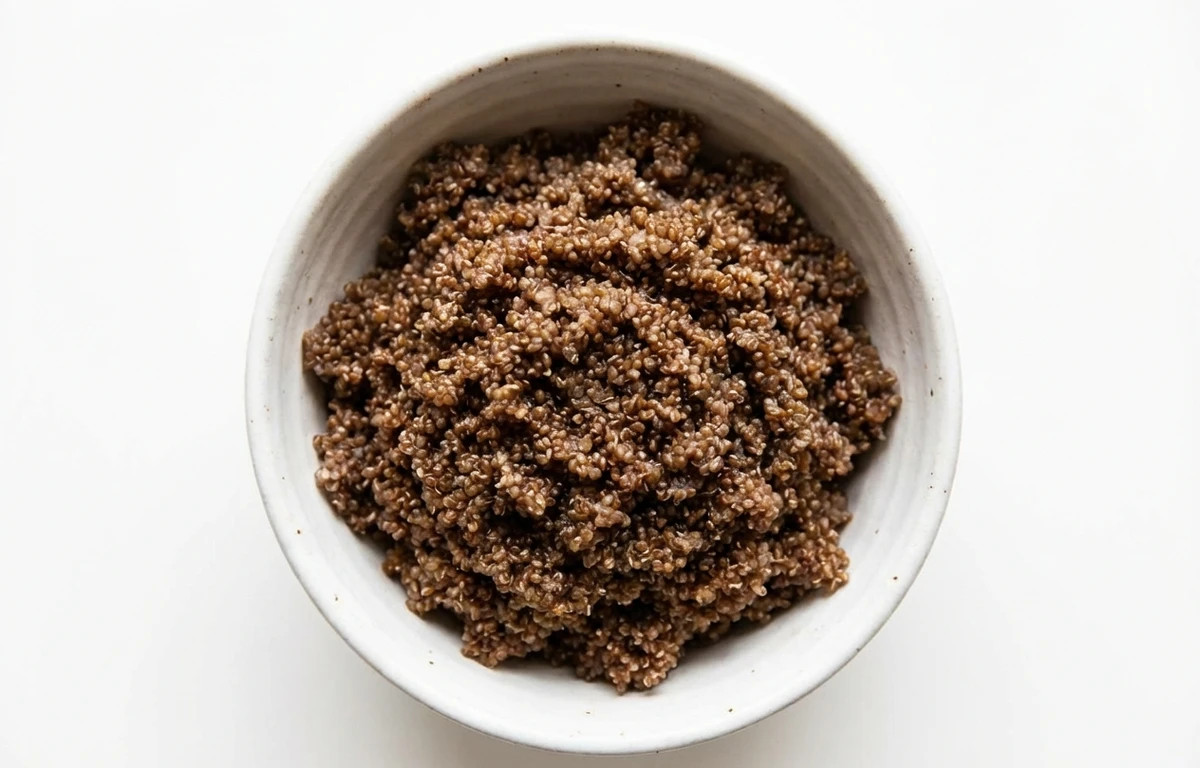
cooked teff.
VegetarianVeganGluten-freeDairy-freeNut-freePeanut-freeSoy-freeEgg-freeShellfish-freeHoney-freeAlcohol-freeWhole grain
ALSO KNOWN AS
steamed teffboiled teffcooked eragrostis tefcooked teff grain
SERVING
CALORIES
101
PROTEIN
3.9g
CARBS
19.9g
FAT
0.70g
FIBER
2.8g
NUTRITION PROFILE · per 100 g
Everything in this ingredient.
MACRONUTRIENTS
Calories101kcal—
Protein3.9g8%
Carbohydrates19.9g7%
Fiber2.8g10%
Sugar0.20g0%
Total fat0.70g1%
Saturated fat0.20g1%
Trans fat0g—
Cholesterol0mg0%
Water75g—
MINERALS
Sodium2.0mg0%
Potassium101mg2%
Calcium49mg4%
Iron2.1mg12%
Magnesium50mg12%
Phosphorus120mg10%
Zinc1.3mg12%
Copper0.20mg22%
Manganese2.8mg122%
Selenium1.1µg2%
VITAMINS
Vitamin A0µg0%
Vitamin C0mg0%
Vitamin D0µg0%
Vitamin E0.01mg0%
Vitamin K0.50µg0%
Thiamin (B1)0.15mg13%
Riboflavin (B2)0.03mg2%
Niacin (B3)0.80mg5%
Pantothenic acid (B5)0.25mg5%
Vitamin B60.10mg6%
Folate (B9)18µg5%
Vitamin B120µg0%
%DV based on a 2,000 cal diet. Source: USDA FoodData Central. A dash in the %DV column means there’s no established Daily Value for that nutrient.
MEASUREMENT CONVERSIONS
How much is what.
1 cup180g
1 tablespoon12g
1 teaspoon4g
1 oz28.4g
1 lb453.6g
1 liter1330g
HEALTH BENEFITS
Why eat it.
- ✓Naturally gluten-free, making it safe for celiac disease
- ✓Exceptionally high in iron compared to other grains
- ✓Good source of calcium for bone health
- ✓Contains resistant starch which aids blood sugar management
- ✓Provides a complete amino acid profile
COOKING TIPS
In the kitchen.
- 1Use a 1:3 ratio of teff to water for a porridge-like consistency
- 2Toast the dry grains for 2 minutes before adding water to enhance the nutty flavor
- 3Let the cooked teff sit covered for 5 minutes after boiling to absorb remaining moisture
STORAGE
Keep it fresh.
- Store cooked teff in an airtight container in the refrigerator for up to 5 days
- Can be frozen for up to 3 months; thaw in the fridge before reheating
- If it smells sour or develops mold, discard immediately
FAQ
Frequently asked questions.
How long does cooked teff last in the fridge?
Cooked teff stays fresh for 3 to 5 days when stored in an airtight container in the refrigerator.
Is teff gluten-free?
Yes, teff is naturally gluten-free and is an excellent alternative for those with gluten sensitivities or celiac disease.
What is the best substitute for cooked teff?
Quinoa, millet, or amaranth are the best substitutes due to their similar small grain size and nutritional profiles.
Can I freeze cooked teff?
Yes, cooked teff freezes well. Store it in freezer-safe bags or containers for up to 3 months.
How do I pick high-quality teff?
Look for uniform color (ivory to dark brown) and ensure the packaging is sealed with no signs of moisture or pests.
Does teff need to be rinsed before cooking?
Because teff grains are so tiny, they usually don't require rinsing, but you can use a very fine mesh sieve if you prefer.
Why is teff considered a superfood?
It is nutrient-dense, containing high levels of iron, calcium, and protein, and it is a whole grain that retains its bran and germ.
What does cooked teff taste like?
It has a mild, nutty, and slightly earthy flavor. Darker varieties tend to have a deeper, more robust taste.
How do you reheat cooked teff?
Reheat on the stovetop with a splash of water or milk, or in the microwave covered with a damp paper towel.



















