
Seafood
cooked wild atlantic salmon.
VegetarianVeganGluten-freeDairy-freeNut-freePeanut-freeSoy-freeEgg-freeShellfish-freeHoney-freeAlcohol-free
ALSO KNOWN AS
atlantic salmon
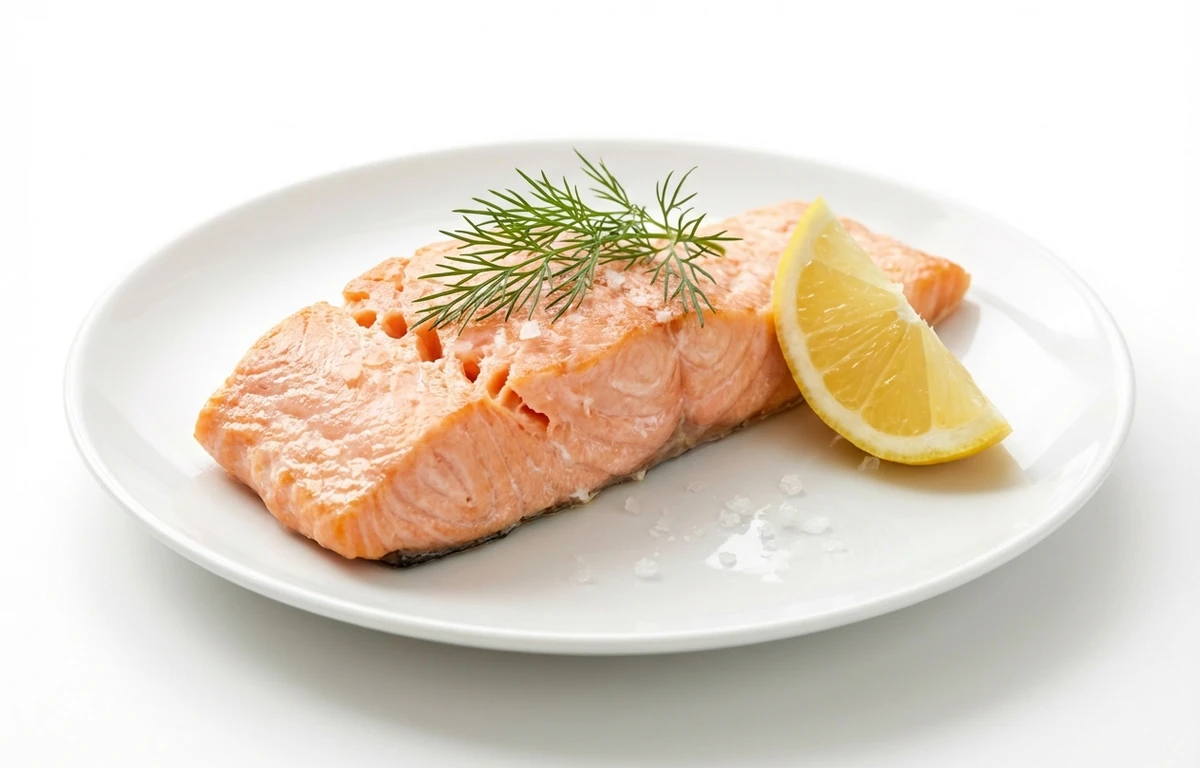
SERVING
CALORIES
182
PROTEIN
25.4g
CARBS
0g
FAT
8.1g
FIBER
0g
NUTRITION PROFILE · per 100 g
Everything in this ingredient.
MACRONUTRIENTS
Calories182kcal—
Protein25.4g51%
Carbohydrates0g0%
Fiber0g0%
Sugar0g0%
Total fat8.1g10%
Saturated fat1.3g7%
Trans fat0g—
Cholesterol71mg24%
Water64.8g—
MINERALS
Sodium61mg3%
Potassium490mg10%
Calcium15mg1%
Iron1.0mg6%
Magnesium30mg7%
Phosphorus256mg20%
Zinc0.60mg5%
Copper0.10mg11%
Manganese0.02mg1%
Selenium41.4µg75%
VITAMINS
Vitamin A15µg2%
Vitamin C0mg0%
Vitamin D13.1µg66%
Vitamin E1.1mg7%
Vitamin K0.50µg0%
Thiamin (B1)0.20mg17%
Riboflavin (B2)0.10mg8%
Niacin (B3)10mg63%
Pantothenic acid (B5)1.6mg32%
Vitamin B60.90mg53%
Folate (B9)29µg7%
Vitamin B123.2µg133%
%DV based on a 2,000 cal diet. Source: USDA FoodData Central. A dash in the %DV column means there’s no established Daily Value for that nutrient.
MEASUREMENT CONVERSIONS
How much is what.
1 cup155g
1 tablespoon9.7g
1 teaspoon3.2g
1 ml0.6g
1 liter645.8g
1 piece142g
HEALTH BENEFITS
Why eat it.
- ✓Rich in Omega-3 fatty acids (EPA and DHA), which support heart health, brain function, and reduce inflammation.
- ✓Excellent source of high-quality complete protein, essential for muscle repair, growth, and overall body function.
- ✓High in Vitamin D, a crucial nutrient for bone health and immune system support.
- ✓Contains the antioxidant astaxanthin, which helps protect cells from damage and supports skin health.
COOKING TIPS
In the kitchen.
- 1To avoid dry salmon, cook until the internal temperature reaches 125-135°F (52-57°C) for medium-rare to medium. The fish will continue to cook after being removed from heat.
- 2Flake leftover cooked salmon and add it to salads, pasta, omelets, or use it to make salmon cakes or spreads.
- 3Reheat gently in a low-temperature oven (275°F / 135°C) or in a covered skillet with a splash of liquid to prevent it from drying out.
STORAGE
Keep it fresh.
- Refrigerate cooked salmon in an airtight container and consume within 3 days. Store at or below 40°F (4°C).
- For longer storage, freeze cooked salmon in a freezer-safe bag or airtight container for up to 3 months. Thaw in the refrigerator before use.
FAQ
Frequently asked questions.
Is cooked wild Atlantic salmon healthy?
Yes, it is exceptionally healthy. It is a nutrient-dense source of high-quality protein and is rich in Omega-3 fatty acids, which are essential for heart health, brain function, and reducing systemic inflammation.
How much protein is in cooked wild Atlantic salmon?
A 100g serving of cooked wild Atlantic salmon provides approximately 25.4g of protein. This makes it an excellent complete protein source for muscle repair, growth, and maintaining overall body function.
Is cooked wild Atlantic salmon keto-friendly?
Yes, it is ideal for keto and low-carb diets. It contains 0g of carbohydrates and provides 8.1g of healthy fats per 100g, helping to maintain ketosis while providing essential micronutrients like Vitamin D.
What are the specific health benefits of the Omega-3s in salmon?
The Omega-3s (EPA and DHA) found in wild salmon support cardiovascular health by lowering blood pressure and reducing triglycerides. They also play a critical role in cognitive health and may help protect against age-related brain decline.
How long does cooked wild Atlantic salmon last in the fridge?
When stored in an airtight container, cooked salmon will stay fresh in the refrigerator for 3 to 4 days. For the best quality, ensure it is cooled and refrigerated within two hours of cooking.
Can I freeze cooked wild Atlantic salmon?
Yes, you can freeze cooked salmon for up to 3 months. To maintain the best texture, wrap it tightly in plastic wrap or aluminum foil and place it in a heavy-duty freezer bag to prevent freezer burn.
What does wild Atlantic salmon taste like?
Wild Atlantic salmon has a more pronounced, savory flavor and a firmer, leaner texture compared to farmed salmon. It is less oily than farmed varieties but offers a more complex and 'clean' seafood taste.
Is cooked wild Atlantic salmon good for weight loss?
Yes, it is very effective for weight management. Its high protein content increases satiety and helps you feel full longer, while its moderate calorie count (182 calories per 100g) makes it easy to fit into a calorie-controlled diet.
What is astaxanthin and why is it in salmon?
Astaxanthin is a powerful antioxidant that gives wild salmon its natural pinkish-red color. It helps protect your cells from oxidative damage and has been linked to improved skin health and UV protection.
How should I reheat cooked salmon without drying it out?
The best way to reheat salmon is low and slow in the oven at 275°F (135°C) for about 15 minutes, covered with foil and a splash of water or lemon juice. Avoid the microwave, as it often makes the fish rubbery and dry.



















