
Vegetable
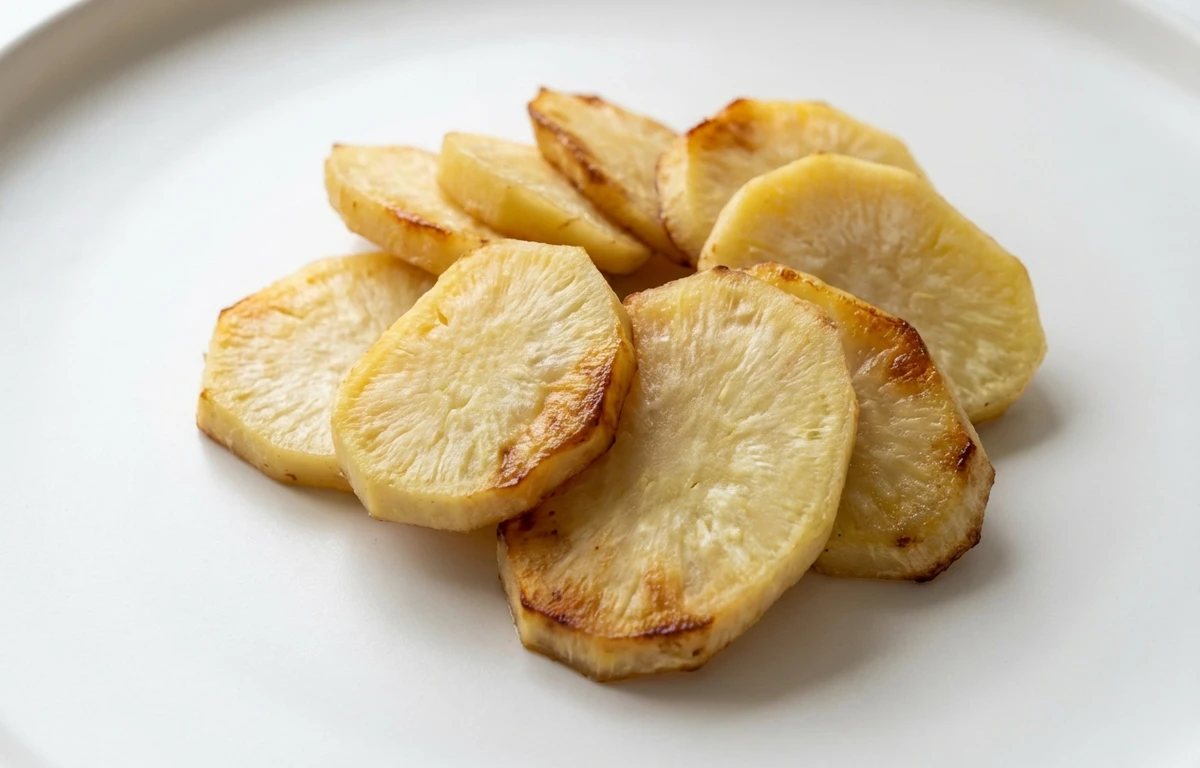
cooked yellow pond lily tuber.
VegetarianVeganGluten-freeDairy-freeNut-freePeanut-freeSoy-freeEgg-freeShellfish-freeHoney-freeAlcohol-free
ALSO KNOWN AS
wocas
SERVING
CALORIES
34
PROTEIN
0.69g
CARBS
7.1g
FAT
0.35g
FIBER
2.3g
NUTRITION PROFILE · per 100 g
Everything in this ingredient.
MACRONUTRIENTS
Calories34kcal—
Protein0.69g1%
Carbohydrates7.1g3%
Fiber2.3g8%
Sugar0g0%
Total fat0.35g0%
Saturated fat0.04g0%
Trans fat0g—
Cholesterol0mg0%
Water91.4g—
MINERALS
Sodium10mg0%
Potassium187mg4%
Calcium23mg2%
Iron1.2mg7%
Magnesium3.0mg1%
Phosphorus13mg1%
Zinc0.30mg3%
Copper0mg0%
Manganese0.95mg41%
Selenium0µg0%
VITAMINS
Vitamin C2.0mg2%
Vitamin E0.42mg3%
Thiamin (B1)0.02mg2%
Riboflavin (B2)0.02mg2%
Niacin (B3)0.29mg2%
Pantothenic acid (B5)0.14mg3%
Vitamin B60.07mg4%
Folate (B9)5.0µg1%
Vitamin B120µg0%
%DV based on a 2,000 cal diet. Source: USDA FoodData Central. A dash in the %DV column means there’s no established Daily Value for that nutrient.
MEASUREMENT CONVERSIONS
How much is what.
1 cup170g
1 tablespoon10.6g
1 teaspoon3.5g
1 oz28.4g
1 lb453.6g
1 ml0.7g
1 liter718.5g
HEALTH BENEFITS
Why eat it.
- ✓A good source of complex carbohydrates, providing sustained energy.
- ✓Contains dietary fiber, which aids in digestion and promotes gut health.
- ✓Provides essential minerals such as potassium and manganese, which are important for nerve function and bone health.
COOKING TIPS
In the kitchen.
- 1Safety is paramount: Raw tubers are bitter and contain alkaloids, so they must be cooked thoroughly. Boiling in several changes of water is recommended to remove bitterness.
- 2Once properly cooked, the tuber has a starchy texture similar to a potato and can be roasted, fried, mashed, or added to soups and stews.
- 3The flavor is mild and slightly sweet, pairing well with savory seasonings, butter, or rich sauces.
STORAGE
Keep it fresh.
- Store cooked yellow pond lily tuber in an airtight container in the refrigerator for up to 3-4 days.
- For longer-term storage, cooked tubers can be frozen for up to 3 months. Thaw in the refrigerator before use.
FAQ
Frequently asked questions.
Is cooked yellow pond lily tuber healthy?
Yes, it is a nutritious, low-calorie vegetable that provides complex carbohydrates for sustained energy. It is also a good source of dietary fiber, which supports digestive health, and essential minerals like potassium and manganese.
How many calories and carbs are in cooked yellow pond lily tuber?
A 100g serving contains approximately 34 calories and 7.06g of carbohydrates. It is very low in fat (0.35g) and contains about 0.69g of protein, making it a light but energy-providing food.
Is cooked yellow pond lily tuber good for weight loss?
Yes, it can be an excellent addition to a weight loss diet due to its low calorie density and fiber content. The fiber helps you feel full longer, while the complex carbohydrates provide energy without a high calorie cost.
Is yellow pond lily tuber gluten-free and vegan?
Yes, yellow pond lily tuber is naturally gluten-free and vegan. It is a plant-based root vegetable, making it safe for those with celiac disease or those following a strict plant-based diet.
Is cooked yellow pond lily tuber keto-friendly?
With about 7g of carbs per 100g, it is lower in carbohydrates than many other tubers like potatoes. While it can fit into a keto diet in moderation, those on a very strict carb limit should monitor their portion sizes.
What does cooked yellow pond lily tuber taste like?
It has a mild, slightly sweet, and nutty flavor, often described as a cross between a potato and a water chestnut. Its starchy texture allows it to absorb the flavors of sauces and seasonings very well.
How do you prepare and cook yellow pond lily tuber?
The tubers should be thoroughly cleaned and peeled before cooking. They are most commonly boiled until tender, but they can also be roasted, sautéed, or added to soups and stews similarly to other root vegetables.
Can you eat yellow pond lily tuber raw?
It is generally recommended to eat them cooked rather than raw. Cooking helps break down the dense starches for better digestion and removes any potential bitterness caused by tannins found in the raw root.
How do you store cooked yellow pond lily tuber?
Cooked tubers should be kept in an airtight container in the refrigerator, where they will stay fresh for 3 to 5 days. You can also freeze them for up to three months, though the texture may become slightly softer after thawing.
What are the specific mineral benefits of this tuber?
It is particularly rich in manganese and potassium. Manganese is essential for bone health and metabolic function, while potassium is a vital electrolyte that supports healthy nerve function and blood pressure regulation.



















