Spice10 recipes
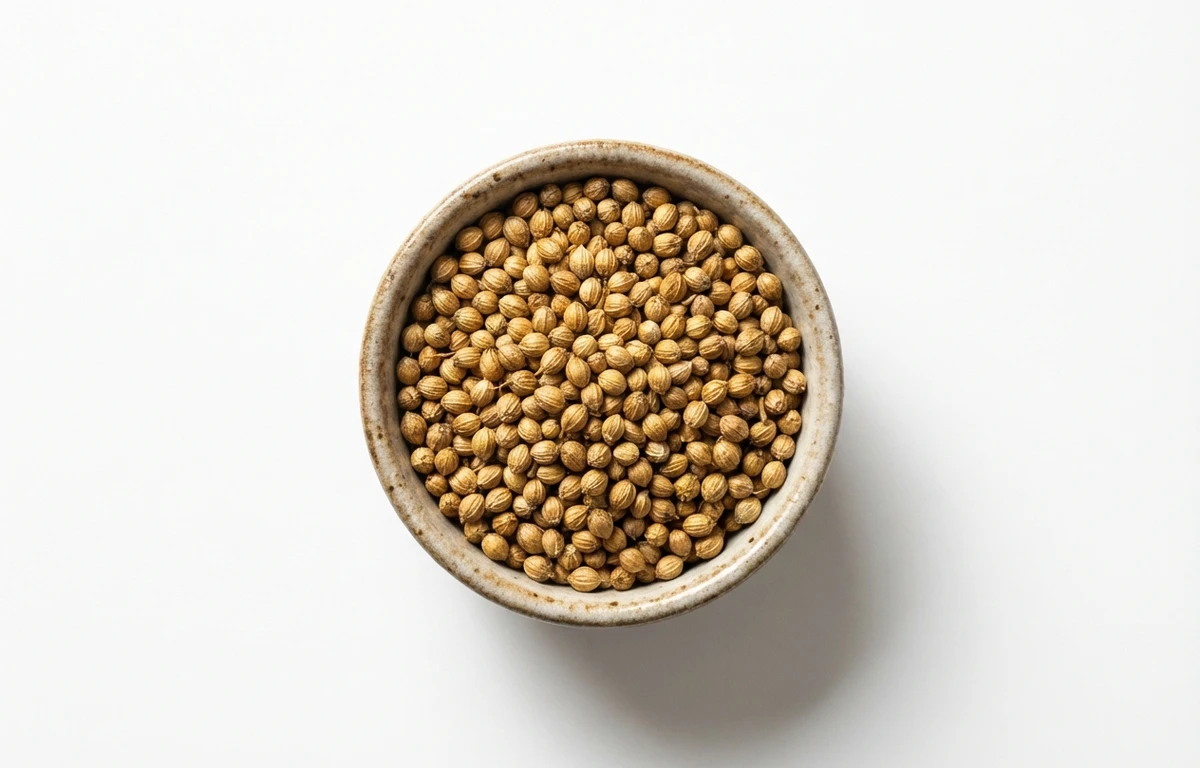
coriander seeds.
VegetarianVeganGluten-freeDairy-freeNut-freePeanut-freeSoy-freeEgg-freeShellfish-freeHoney-freeAlcohol-free
ALSO KNOWN AS
sabut dhaniyadhaniya seedswhole corianderdhania seedcoriander seedCoriander SeedsDhaniaKothamalli VidhaiDhanyakaKothambariDhania seedsKothamalli vidaiDhaniyalu
SERVING
CALORIES
430
PROTEIN
12.4g
CARBS
55g
FAT
17.8g
FIBER
41.9g
NUTRITION PROFILE · per 100 g
Everything in this ingredient.
MACRONUTRIENTS
Calories430kcal—
Protein12.4g25%
Carbohydrates55g20%
Fiber41.9g150%
Sugar0.90g2%
Total fat17.8g23%
Saturated fat1.0g5%
Trans fat0g—
Cholesterol0mg0%
Water8.9g—
MINERALS
Sodium35mg2%
Potassium1267mg27%
Calcium709mg55%
Iron16.3mg91%
Magnesium330mg79%
Phosphorus409mg33%
Zinc4.7mg43%
Copper0.97mg108%
Manganese1.9mg83%
Selenium26.2µg48%
VITAMINS
Vitamin A0µg0%
Vitamin C21mg23%
Vitamin D0µg0%
Vitamin E0mg0%
Vitamin K0µg0%
Thiamin (B1)0.24mg20%
Riboflavin (B2)0.29mg22%
Niacin (B3)2.1mg13%
Biotin (B7)1.5µg5%
Vitamin B120µg0%
%DV based on a 2,000 cal diet. Source: USDA FoodData Central. A dash in the %DV column means there’s no established Daily Value for that nutrient.
MEASUREMENT CONVERSIONS
How much is what.
1 cup80g
1 tablespoon6g
1 teaspoon2g
1 oz28.4g
1 lb453.6g
1 ml0.3g
1 liter340g
HEALTH BENEFITS
Why eat it.
- ✓Supports digestive health and reduces bloating
- ✓Rich in antioxidants that protect against cellular damage
- ✓May help in managing blood sugar levels
- ✓Promotes heart health by helping to lower LDL cholesterol
- ✓Possesses anti-inflammatory and antimicrobial properties
COOKING TIPS
In the kitchen.
- 1Dry roast seeds on low heat until fragrant before grinding for maximum flavor
- 2Add whole seeds to pickling brines or oil infusions for a subtle citrus note
- 3Coarsely crush seeds to use as a textured crust for roasted meats or vegetables
STORAGE
Keep it fresh.
- Store in an airtight container in a cool, dark, and dry place
- Whole seeds stay fresh for up to one year when stored properly
- Keep away from direct sunlight and moisture to prevent loss of oils
FAQ
Frequently asked questions.
How long do coriander seeds last?
Whole coriander seeds can last up to a year if stored in an airtight container in a cool, dark place. Once ground, the flavor degrades quickly, usually within 6 months.
Can I freeze coriander seeds?
Yes, you can freeze them in an airtight bag to preserve their volatile oils for longer, though it is generally not necessary if kept in a cool pantry.
How do I pick high-quality coriander seeds?
Look for seeds that are round, firm, and light brown or yellowish-brown. Avoid seeds that look shriveled or have a greyish tint, and ensure they have a strong citrusy aroma.
What is the best substitute for coriander seeds?
Cumin seeds are the most common substitute, though they have a more earthy flavor. Caraway seeds or a mix of cumin and fennel can also work in certain recipes.
Should I wash coriander seeds before using?
No, washing is not recommended as it introduces moisture. Instead, dry roasting them in a pan will clean off any surface dust and release their aromatic oils.
Are coriander seeds and cilantro the same thing?
They come from the same plant (Coriandrum sativum), but 'coriander seeds' refers to the dried fruit/spice, while 'cilantro' refers to the fresh green leaves. They have very different flavors.
What are the common culinary uses for coriander seeds?
They are a staple in curry powders, garam masala, sausages, pickling spice blends, and Belgian-style wheat beers.
Do coriander seeds help with digestion?
Yes, they are traditionally used in many cultures to relieve digestive upset, gas, and bloating due to their carminative properties.
RECIPES
Cook with coriander seeds.
10 recipes · sorted by what’s quick