
Vegetable1 recipes
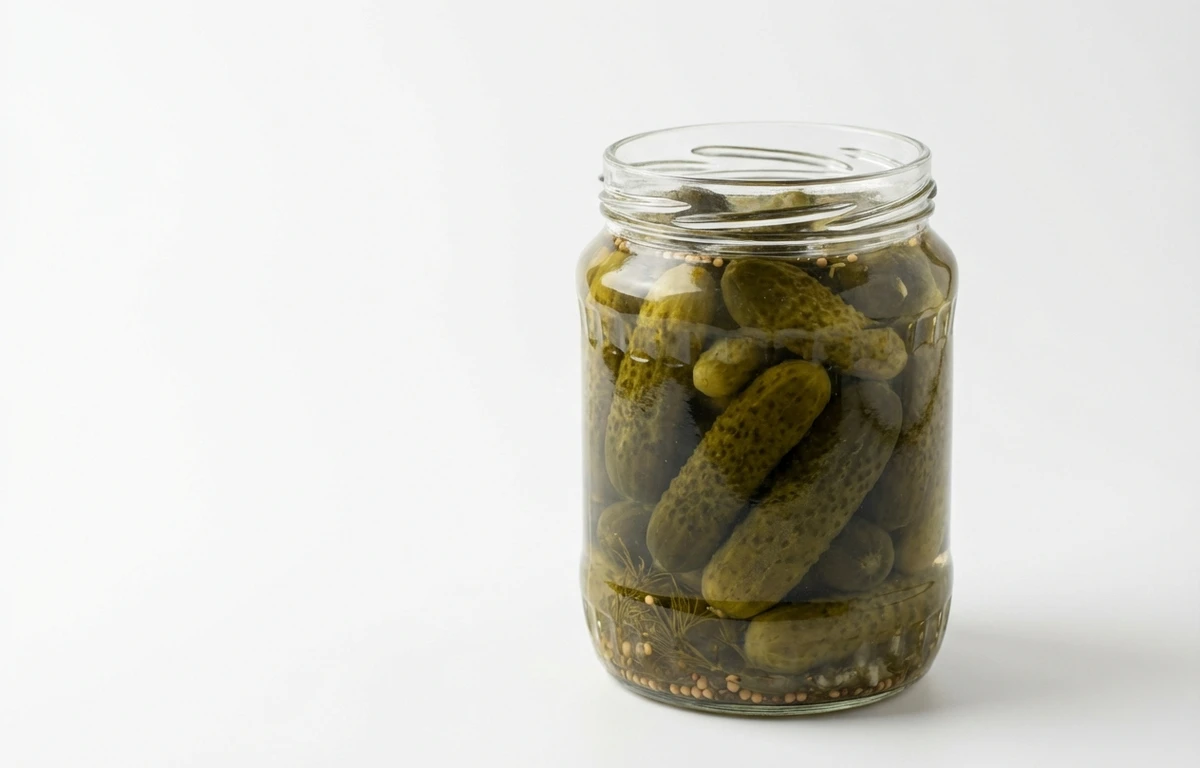
cornichons.
VegetarianVeganGluten-freeDairy-freeNut-freePeanut-freeSoy-freeEgg-freeShellfish-freeHoney-freeAlcohol-freeFermented
ALSO KNOWN AS
gherkinspickled gherkinsfrench pickles
SERVING
CALORIES
18
PROTEIN
0.70g
CARBS
3.8g
FAT
0.20g
FIBER
1.1g
This ingredient is flagged as naturally gluten-free. Per 100 g, it provides 47 µg of vitamin K.
NUTRITION PROFILE · per 100 g
Everything in this ingredient.
MACRONUTRIENTS
Calories18kcal—
Protein0.70g1%
Carbohydrates3.8g1%
Fiber1.1g4%
Sugar1.5g3%
Total fat0.20g0%
Saturated fat0.05g0%
Trans fat0g—
Cholesterol0mg0%
Water92g—
MINERALS
Sodium950mg41%
Potassium120mg3%
Calcium45mg3%
Iron0.40mg2%
Magnesium10mg2%
Phosphorus18mg1%
Zinc0.10mg1%
Copper0.07mg8%
Manganese0.05mg2%
Selenium0.10µg0%
VITAMINS
Vitamin A12µg1%
Vitamin C1.5mg2%
Vitamin D0µg0%
Vitamin E0.10mg1%
Vitamin K47µg39%
Thiamin (B1)0.02mg2%
Riboflavin (B2)0.02mg2%
Niacin (B3)0.15mg1%
Pantothenic acid (B5)0.10mg2%
Vitamin B60.04mg2%
Folate (B9)6.0µg2%
Vitamin B120µg0%
%DV based on a 2,000 cal diet. Source: USDA FoodData Central. A dash in the %DV column means there’s no established Daily Value for that nutrient.
MEASUREMENT CONVERSIONS
How much is what.
1 cup160g
1 tablespoon12g
1 teaspoon4g
1 oz28.4g
1 lb453.6g
1 piece7g
HEALTH BENEFITS
Why eat it.
- ✓Low in calories making them a diet-friendly snack
- ✓Fermented versions can support gut health with probiotics
- ✓Helps replenish electrolytes due to sodium content
COOKING TIPS
In the kitchen.
- 1Finely dice and add to tartare sauce or remoulade for classic acidity
- 2Serve whole as a traditional accompaniment to charcuterie and pate
- 3Mince into potato or egg salads to provide a crunchy, tart contrast
STORAGE
Keep it fresh.
- Keep refrigerated in their original brine after opening
- Ensure the cornichons are fully submerged in liquid to prevent mold
- Use clean utensils to remove them from the jar to avoid contamination
FAQ
Frequently asked questions.
What is the difference between a cornichon and a regular pickle?
Cornichons are made from a specific variety of small, bumpy cucumbers harvested before they reach full maturity. They are typically tarter and crunchier than standard American dill pickles.
How long do cornichons last in the refrigerator?
Once opened, a jar of cornichons kept in the refrigerator can last for 1 to 2 years, provided they remain submerged in the brine.
Can cornichons be frozen?
Freezing is not recommended as it destroys the cellular structure of the cucumber, resulting in a mushy texture once thawed.
What can I use as a substitute for cornichons?
The best substitutes are chopped gherkins, cocktail onions, or diced dill pickles with a splash of white wine vinegar.
Are cornichons high in sodium?
Yes, like most pickled foods, cornichons are high in sodium due to the brining process and should be consumed in moderation by those on low-sodium diets.
How do I know if cornichons have gone bad?
Discard them if the brine becomes excessively cloudy, if you see mold on the surface, or if they develop an off-smell or soft, slimy texture.
Are cornichons fermented or vinegar-pickled?
Most commercial cornichons are preserved in a vinegar brine (pickled), though some traditional French versions may undergo a short fermentation process first.
What dishes pair best with cornichons?
They pair excellently with rich, fatty foods like raclette, cheese boards, smoked meats, and heavy stews to cut through the richness.
RECIPES
Cook with cornichons.
1 recipes · sorted by what’s quick



















