
Other
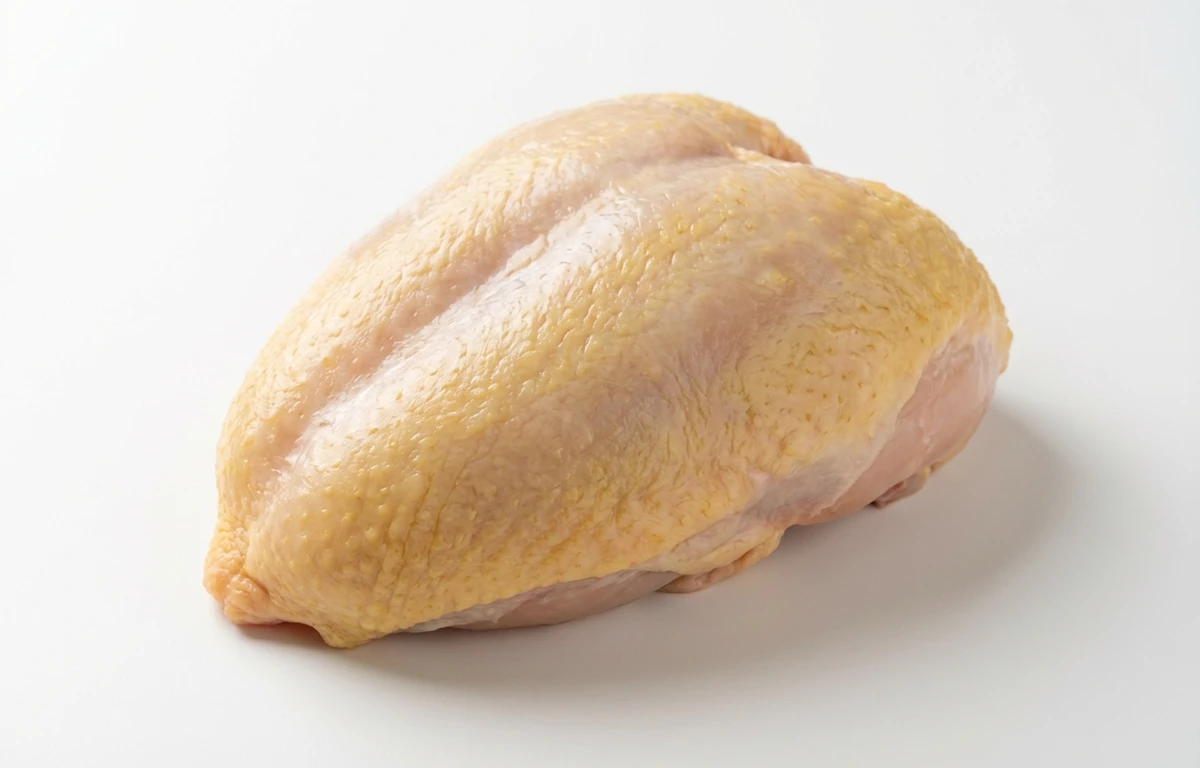
country hen breast with skin.
VegetarianVeganGluten-freeDairy-freeNut-freePeanut-freeSoy-freeEgg-freeShellfish-freeHoney-freeAlcohol-free
SERVING
CALORIES
180
PROTEIN
22.1g
CARBS
0g
FAT
10.2g
FIBER
0g
This ingredient is flagged as naturally gluten-free. Per 100 g, it provides 28.9 µg of vitamin K.
NUTRITION PROFILE · per 100 g
Everything in this ingredient.
MACRONUTRIENTS
Calories180kcal—
Protein22.1g44%
Carbohydrates0g0%
Fiber0g0%
Sugar0g0%
Total fat10.2g13%
Saturated fat0.42g2%
Trans fat0g—
Cholesterol66mg22%
Water66.5g—
MINERALS
Sodium23.1mg1%
Potassium365mg8%
Calcium12.5mg1%
Iron1.1mg6%
Magnesium22mg5%
Phosphorus222mg18%
Zinc0.78mg7%
Copper0.13mg14%
Manganese0.01mg0%
Selenium20.1µg37%
VITAMINS
Vitamin A8.5µg1%
Vitamin C0mg0%
Vitamin D0.80µg4%
Vitamin E0.36mg2%
Vitamin K28.9µg24%
Thiamin (B1)0.11mg9%
Riboflavin (B2)0.04mg3%
Niacin (B3)5.6mg35%
Pantothenic acid (B5)0.81mg16%
Vitamin B60.59mg35%
Biotin (B7)3.1µg10%
Folate (B9)13µg3%
%DV based on a 2,000 cal diet. Source: USDA FoodData Central. A dash in the %DV column means there’s no established Daily Value for that nutrient.
MEASUREMENT CONVERSIONS
How much is what.
1 oz28.4g
1 lb453.6g
1 piece220g
HEALTH BENEFITS
Why eat it.
- ✓Excellent source of high-quality, complete protein, essential for muscle growth, repair, and maintenance.
- ✓Rich in B vitamins, particularly niacin (B3) and vitamin B6, which support energy metabolism, nervous system function, and red blood cell formation.
- ✓The skin provides flavor and moisture during cooking and contains monounsaturated fats, though it also increases the overall calorie and saturated fat content.
COOKING TIPS
In the kitchen.
- 1Pat the skin thoroughly dry with a paper towel before cooking to achieve a crispy, golden-brown texture when roasting or pan-searing.
- 2Cook to a safe internal temperature of 165°F (74°C), measured with a meat thermometer in the thickest part of the breast, to eliminate harmful bacteria.
- 3Country hens can be tougher than young broiler chickens; consider braising, stewing, or slow-roasting to ensure the meat becomes tender and flavorful.
- 4Season generously under the skin as well as on top to infuse the meat with flavor during the cooking process.
STORAGE
Keep it fresh.
- Store raw hen breast in the refrigerator at or below 40°F (4°C) and cook within 1-2 days. Keep it on the bottom shelf in a sealed container to prevent cross-contamination.
- For long-term storage, freeze at 0°F (-18°C) in an airtight container or freezer bag. It can be stored for up to 9 months for optimal quality.
FAQ
Frequently asked questions.
Is country hen breast with skin healthy?
Yes, it is a nutrient-dense source of high-quality protein, B vitamins, and minerals like selenium. While the skin adds some saturated fat and calories, it also provides monounsaturated fats and helps keep the meat moist during cooking.
How much protein is in country hen breast?
A 100g serving of country hen breast contains approximately 22.08g of protein. This makes it an excellent choice for muscle repair, growth, and maintaining a healthy metabolism.
Is country hen breast with skin keto-friendly?
Yes, it is highly keto-friendly as it contains 0g of carbohydrates and a moderate amount of fat. The inclusion of the skin provides the fats necessary for those following a ketogenic lifestyle.
Is country hen breast gluten-free?
In its natural, unprocessed state, country hen breast is 100% gluten-free. Always check labels if the meat has been pre-marinated or seasoned, as those additives may contain gluten.
What does country hen taste like compared to standard broiler chicken?
Country hen typically has a deeper, more robust flavor and a slightly firmer texture than mass-produced broiler chickens. The skin is often thicker and renders more flavorful fat when roasted or fried.
How long can I store raw country hen breast in the refrigerator?
Raw country hen breast should be stored in the coldest part of the refrigerator and used within 1 to 2 days. For longer storage, wrap it tightly in freezer-safe packaging and freeze for up to 9 months.
How do I know if the hen breast has spoiled?
Check for a sour or ammonia-like smell, a slimy or tacky texture on the skin, and any grayish or greenish discoloration. If any of these signs are present, the meat is no longer safe to consume and should be discarded.



















