
Loading...
Per 100g
Nutrition data source: USDA FoodData Central
Common measurement equivalents in grams
Canned cream-style corn is a good source of energy and provides essential minerals like potassium and magnesium. It also contains dietary fiber which supports digestive health and B vitamins for metabolism. However, it is often higher in sodium and sugar than plain corn, so it should be consumed in moderation.
A 100g serving of canned cream-style corn contains approximately 76 calories and 17.1g of carbohydrates. It is a low-fat food with only 0.6g of fat and provides about 1.7g of protein per serving.
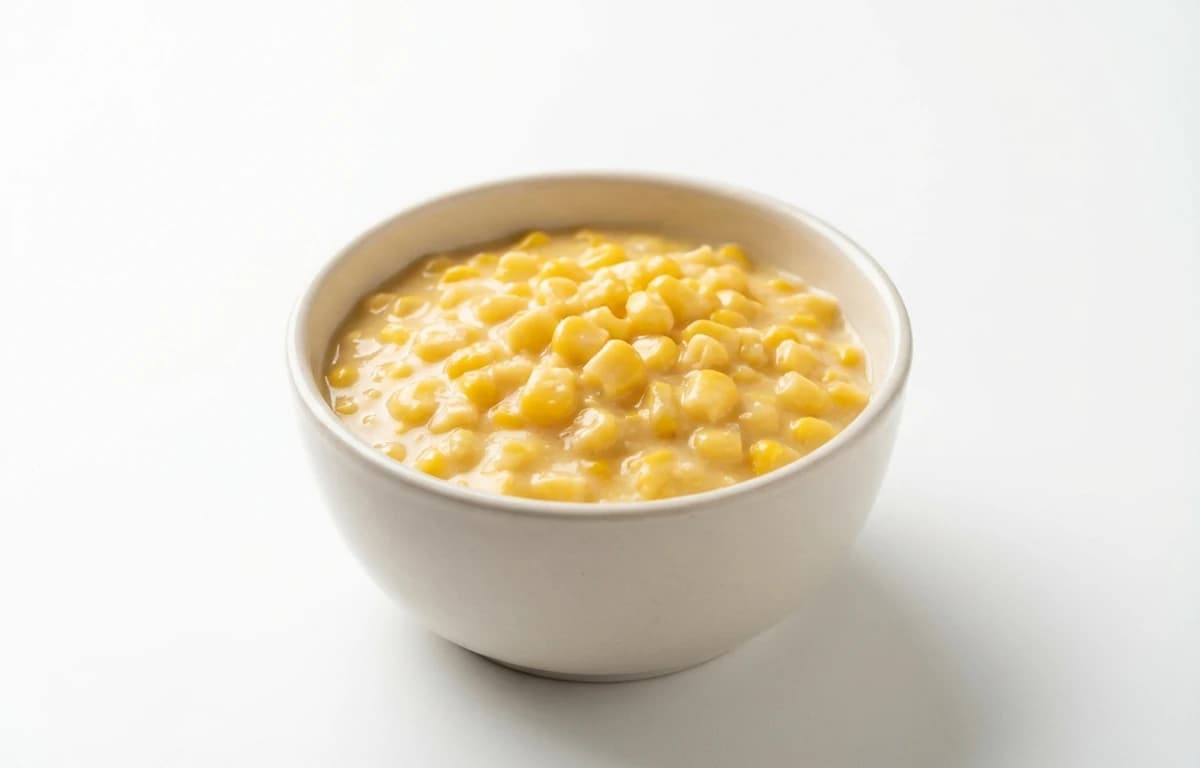
Most commercial canned cream-style corn does not actually contain dairy. The 'creamy' texture is created by mixing whole kernels with a thick liquid made from the milky residue of scraped corn and added starches. Always check the label for milk solids if you have a severe dairy allergy.
Yes, most brands of canned cream-style corn are vegan as they use cornstarch and sugar for thickening rather than animal-derived fats. However, you should always verify the ingredient list to ensure no honey or dairy-based flavorings were added.
Generally, cream-style corn is gluten-free because it typically uses cornstarch as a thickener. However, some brands may use modified food starch derived from wheat or process the corn in facilities with cross-contamination. Look for a certified gluten-free label to be certain.
No, cream-style corn is not keto-friendly due to its high carbohydrate and sugar content. With over 17g of carbs per 100g, it can quickly exceed the daily carb limits required to maintain ketosis.
cream-style corn, canned is a versatile ingredient found in cuisines around the world. With 76 calories per 100g and 1.7 grams of protein, it's a nutritious addition to many dishes.
Explore more ingredients in the vegetable category with complete nutrition information.
View all vegetable →Discover 1 recipes featuring cream-style corn, canned with step-by-step instructions.
Browse recipes →It is most commonly used as a base for corn chowders, corn puddings, and moist cornbread recipes. It can also be served as a simple side dish, often enhanced with a touch of butter, salt, and black pepper.
You can substitute whole kernels if you process them first. To do this, pulse half of the whole kernels in a blender with a splash of water or milk and a teaspoon of cornstarch, then mix it back with the remaining whole kernels to mimic the thick, saucy consistency.
Once opened, transfer the corn to an airtight glass or plastic container and refrigerate it. It will remain safe and fresh for 3 to 4 days. Never store the corn in the original open tin can as it can affect the flavor and safety.
Yes, you can freeze cream-style corn for up to 3 months in a freezer-safe container. Note that the texture may become slightly more watery after thawing, so it is best used in cooked recipes like soups or casseroles rather than served as a standalone side.