
Other
crème fraîche.
VegetarianVeganGluten-freeDairy-freeNut-freePeanut-freeSoy-freeEgg-freeShellfish-freeHoney-freeAlcohol-freeFermented
ALSO KNOWN AS
creme fraiche
SERVING
CALORIES
393
PROTEIN
2.4g
CARBS
2.5g
FAT
40g
FIBER
0g
NUTRITION PROFILE · per 100 g
Everything in this ingredient.
MACRONUTRIENTS
Calories393kcal—
Protein2.4g5%
Carbohydrates2.5g1%
Fiber0g0%
Sugar2.5g5%
Total fat40g51%
Saturated fat25g125%
Trans fat1.5g—
Cholesterol125mg42%
Water54g—
MINERALS
Sodium40mg2%
Potassium100mg2%
Calcium80mg6%
Iron0.10mg1%
Magnesium8.0mg2%
Phosphorus70mg6%
Zinc0.30mg3%
Copper0.01mg1%
Manganese0.01mg0%
Selenium1.5µg3%
VITAMINS
Vitamin A350µg39%
Vitamin C0.50mg1%
Vitamin D0.10µg1%
Vitamin E0.80mg5%
Vitamin K1.5µg1%
Thiamin (B1)0.02mg2%
Riboflavin (B2)0.12mg9%
Niacin (B3)0.10mg1%
Pantothenic acid (B5)0.30mg6%
Vitamin B60.03mg2%
Folate (B9)5.0µg1%
Vitamin B120.30µg13%
%DV based on a 2,000 cal diet. Source: USDA FoodData Central. A dash in the %DV column means there’s no established Daily Value for that nutrient.
MEASUREMENT CONVERSIONS
How much is what.
1 cup228g
1 tablespoon14.3g
1 teaspoon4.8g
1 ml1g
1 liter950g
HEALTH BENEFITS
Why eat it.
- ✓Contains probiotics from the fermentation process, which can support a healthy gut microbiome.
- ✓Provides fat-soluble vitamins such as Vitamin A, essential for vision and immune function, and Vitamin K2, important for bone and heart health.
- ✓The high fat content aids in the absorption of fat-soluble vitamins from other foods consumed in the same meal.
- ✓It is a source of calcium, which is crucial for maintaining strong bones and teeth.
COOKING TIPS
In the kitchen.
- 1Its high fat content prevents it from curdling in hot dishes, making it an excellent choice for enriching soups, stews, and sauces without splitting.
- 2Can be whipped into a thick, tangy cream to serve as a topping for desserts, fresh fruit, or savory dishes like blinis and caviar.
- 3Use as a base for creamy salad dressings or dips by whisking with herbs, lemon juice, or vinegar.
- 4Serve a dollop on spicy or rich dishes like chili, curry, or baked potatoes to add a cooling, tangy counterpoint.
STORAGE
Keep it fresh.
- Store in the refrigerator at or below 40°F (4°C) in its original, tightly sealed container.
- Once opened, use within 5 to 7 days for optimal freshness and to prevent spoilage.
- Avoid freezing, as it will cause the fat and liquid to separate, resulting in a grainy, undesirable texture upon thawing.
FAQ
Frequently asked questions.
Is crème fraîche healthy?
Crème fraîche provides beneficial probiotics for gut health and fat-soluble vitamins like A and K2. However, it is very high in calories and saturated fat (40g per 100g), so it should be consumed in moderation as part of a balanced diet.
How many calories and fat are in crème fraîche?
A 100g serving of crème fraîche contains approximately 393 calories and 40g of fat. It is a calorie-dense dairy product, though it is relatively low in carbohydrates and protein, with about 2.5g and 2.4g respectively.
Is crème fraîche keto-friendly?
Yes, crème fraîche is highly keto-friendly due to its high fat content and low carbohydrate count (2.5g per 100g). It is an excellent way to add healthy fats to a ketogenic diet while keeping carb intake minimal.
Is crème fraîche lactose-free?
No, crème fraîche is not lactose-free as it is made from dairy cream. However, because it is a fermented product, some of the lactose is broken down by bacteria, which may make it slightly easier to digest for those with mild lactose sensitivity.
Can I boil crème fraîche in sauces?
Yes, one of the primary advantages of crème fraîche is that it does not curdle or 'break' when boiled. Its high fat content makes it much more stable under high heat compared to sour cream or yogurt.
What does crème fraîche taste like?
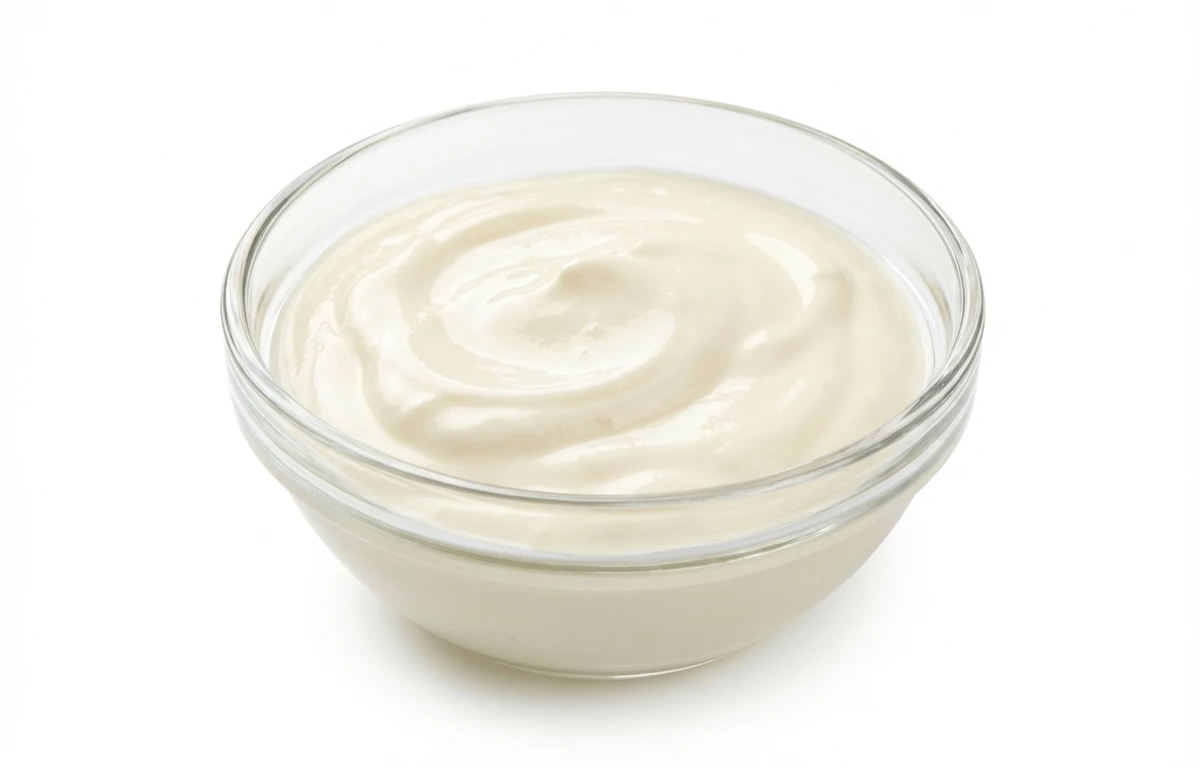
Crème fraîche has a rich, buttery, and velvety texture with a subtle tanginess. It is less acidic and sour than traditional sour cream, offering a more refined and nutty flavor profile.
Can I substitute crème fraîche with sour cream?
You can substitute sour cream for crème fraîche in cold preparations, but avoid doing so in hot sauces. Sour cream has a lower fat content and will likely curdle if boiled, whereas crème fraîche remains smooth.
How should I store crème fraîche and how long does it last?
Store crème fraîche in the coldest part of your refrigerator in its original container. Once opened, it typically stays fresh for 7 to 10 days; if you see mold or notice a sharp, unpleasant odor, it should be discarded.
Can I freeze crème fraîche?
Freezing is not recommended because it ruins the texture. When thawed, the emulsion usually breaks, resulting in a grainy, separated consistency that lacks the signature smoothness of fresh crème fraîche.
What are the main health benefits of crème fraîche?
It is a source of calcium for bone health and contains probiotics that support the gut microbiome. Additionally, its high fat content helps your body absorb fat-soluble vitamins (A, D, E, and K) from other foods in your meal.



















