
Spice
cubeb pepper.
VegetarianVeganGluten-freeDairy-freeNut-freePeanut-freeSoy-freeEgg-freeShellfish-freeHoney-freeAlcohol-free
ALSO KNOWN AS
tailed pepperjava pepperpiper cubebakabab chinishitalchinicubeb berry
SERVING
CALORIES
331
PROTEIN
10.4g
CARBS
64.8g
FAT
3.3g
FIBER
25.3g
NUTRITION PROFILE · per 100 g
Everything in this ingredient.
MACRONUTRIENTS
Calories331kcal—
Protein10.4g21%
Carbohydrates64.8g24%
Fiber25.3g90%
Sugar0.60g1%
Total fat3.3g4%
Saturated fat1.0g5%
Trans fat0g—
Cholesterol0mg0%
Water12.5g—
MINERALS
Sodium20mg1%
Potassium1329mg28%
Calcium443mg34%
Iron28.9mg161%
Magnesium171mg41%
Phosphorus158mg13%
Zinc1.1mg10%
Copper1.3mg144%
Manganese12.8mg557%
Selenium4.9µg9%
VITAMINS
Vitamin A27µg3%
Vitamin C0mg0%
Vitamin D0µg0%
Vitamin E1.0mg7%
Vitamin K164µg136%
Thiamin (B1)0.10mg8%
Riboflavin (B2)0.20mg15%
Niacin (B3)1.1mg7%
Pantothenic acid (B5)1.4mg28%
Vitamin B60.30mg18%
Folate (B9)17µg4%
Vitamin B120µg0%
%DV based on a 2,000 cal diet. Source: USDA FoodData Central. A dash in the %DV column means there’s no established Daily Value for that nutrient.
MEASUREMENT CONVERSIONS
How much is what.
1 cup130g
1 tablespoon7.8g
1 teaspoon2.6g
1 oz28.4g
1 lb453.6g
1 ml0.5g
1 liter520g
HEALTH BENEFITS
Why eat it.
- ✓Acts as a natural digestive aid to reduce bloating
- ✓Contains essential oils with antimicrobial properties
- ✓Traditionally used to relieve respiratory congestion
- ✓May help reduce inflammation in the urinary tract
- ✓Supports oral health and freshens breath
COOKING TIPS
In the kitchen.
- 1Lightly toast whole berries before grinding to enhance aroma
- 2Use as a substitute for allspice or black pepper in spice blends
- 3Pairs exceptionally well with meat stews and gin-based cocktails
STORAGE
Keep it fresh.
- Store whole berries in an airtight glass container
- Keep in a cool, dark, and dry place away from sunlight
- Grind only as needed to preserve volatile aromatic oils
FAQ
Frequently asked questions.
What does cubeb pepper taste like?
It has a complex flavor profile that is peppery and pungent, with distinct notes of allspice, pine, and a slightly bitter, eucalyptus-like finish.
How can I distinguish cubeb pepper from regular black pepper?
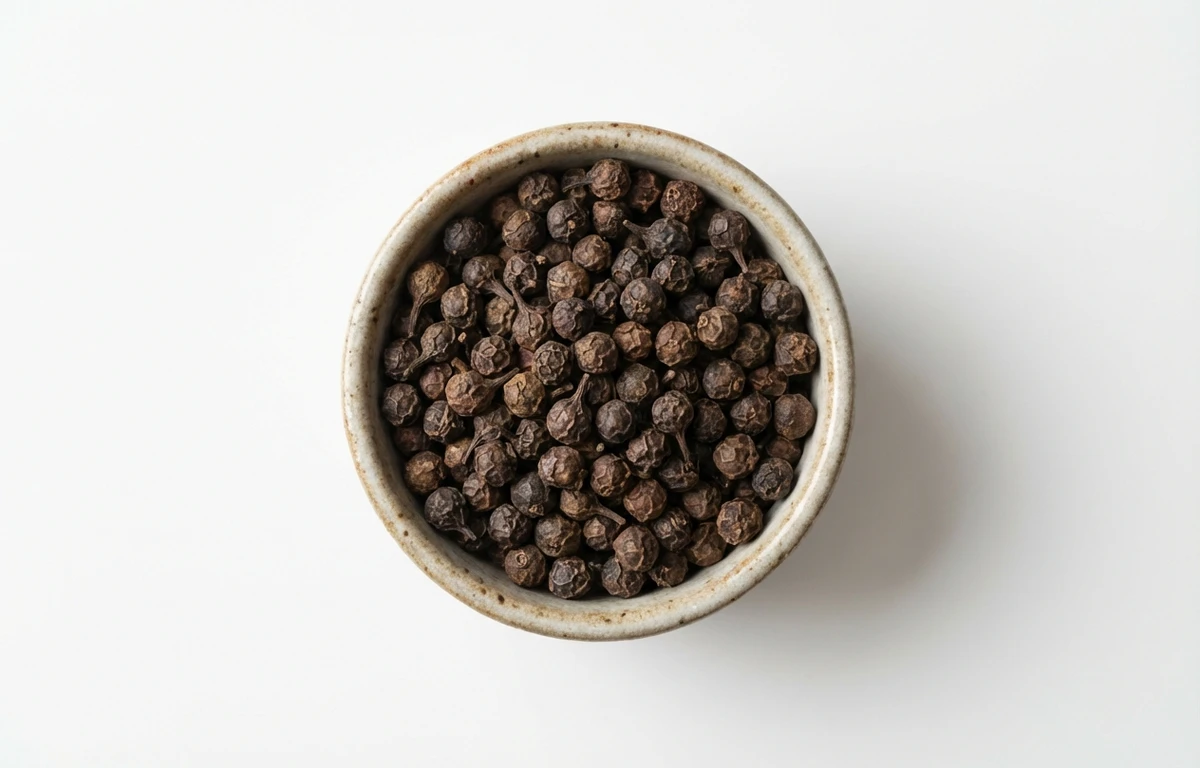
Cubeb pepper berries have a distinctive small stalk or 'tail' attached to them, which is why they are often called 'tailed pepper'.
What is a good substitute for cubeb pepper?
A mixture of black peppercorns and a pinch of allspice or cloves can mimic its warm, aromatic, and slightly medicinal flavor.
How long does whole cubeb pepper last?
When stored properly in an airtight container in a cool, dark place, whole cubeb berries can maintain their potency for 2 to 3 years.
Is cubeb pepper used in any famous spice blends?
Yes, it is a traditional ingredient in some versions of the North African spice blend Ras el Hanout and is also used in Indonesian curries.
Can cubeb pepper be used in sweet dishes?
Yes, its aromatic qualities make it suitable for spiced cakes, gingerbread, and fruit compotes, similar to how one might use allspice.
How should I prepare cubeb pepper for cooking?
It is best to grind the whole berries using a spice grinder or mortar and pestle just before adding them to your dish to ensure maximum flavor.
Is cubeb pepper the same as Szechuan pepper?
No, they are from different botanical families. Cubeb is a true pepper (Piperaceae), while Szechuan pepper is from the citrus family and has a numbing effect.
Where is cubeb pepper primarily grown?
It is native to Indonesia, particularly the islands of Java and Sumatra, which is why it is often called Java pepper.



















