
Vegetable
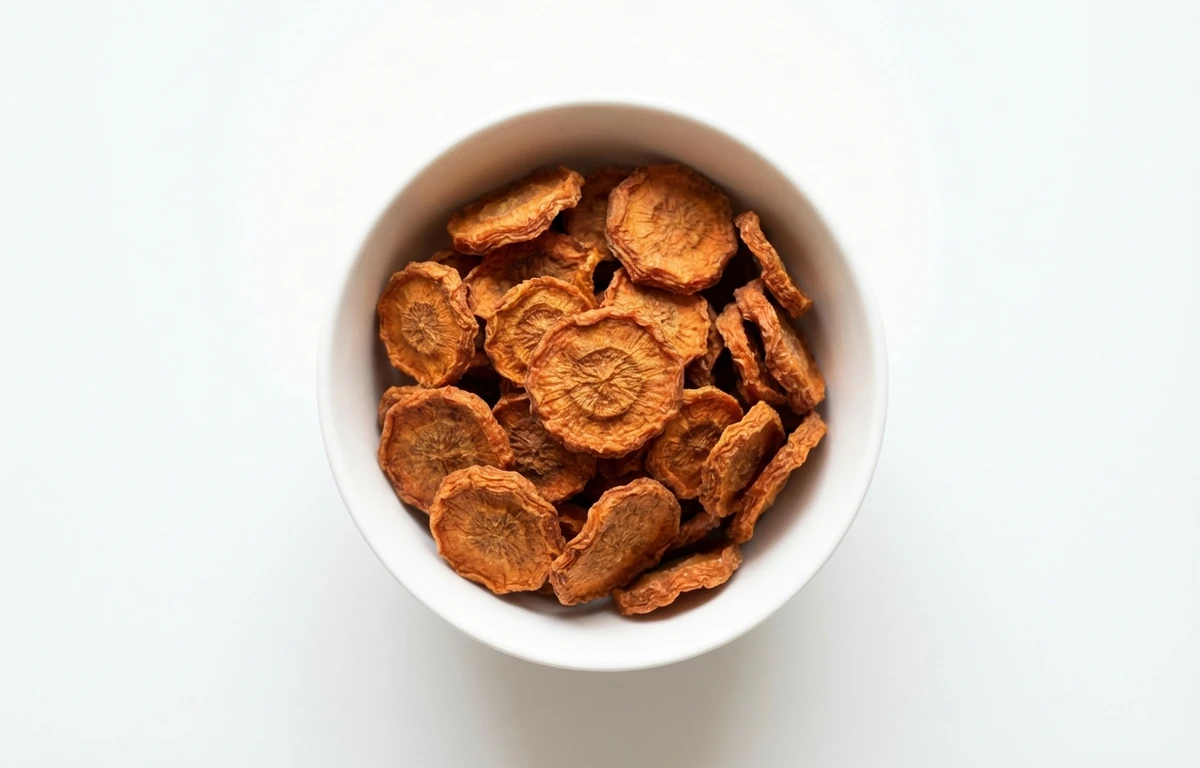
dehydrated carrot.
VegetarianVeganGluten-freeDairy-freeNut-freePeanut-freeSoy-freeEgg-freeShellfish-freeHoney-freeAlcohol-free
SERVING
CALORIES
341
PROTEIN
8.1g
CARBS
79.6g
FAT
1.5g
FIBER
23.6g
NUTRITION PROFILE · per 100 g
Everything in this ingredient.
MACRONUTRIENTS
Calories341kcal—
Protein8.1g16%
Carbohydrates79.6g29%
Fiber23.6g84%
Sugar38.8g78%
Total fat1.5g2%
Saturated fat0.26g1%
Trans fat0g—
Cholesterol0mg0%
Water4.0g—
MINERALS
Sodium275mg12%
Potassium2540mg54%
Calcium212mg16%
Iron3.9mg22%
Magnesium118mg28%
Phosphorus346mg28%
Zinc1.6mg14%
Copper0.37mg41%
Manganese1.1mg49%
Selenium8.6µg16%
VITAMINS
Vitamin A3423µg380%
Vitamin C14.6mg16%
Vitamin D0µg0%
Vitamin E5.5mg36%
Vitamin K108µg90%
Thiamin (B1)0.53mg44%
Riboflavin (B2)0.42mg32%
Niacin (B3)6.6mg41%
Pantothenic acid (B5)1.5mg29%
Vitamin B61.0mg61%
Folate (B9)55µg14%
Vitamin B120µg0%
%DV based on a 2,000 cal diet. Source: USDA FoodData Central. A dash in the %DV column means there’s no established Daily Value for that nutrient.
MEASUREMENT CONVERSIONS
How much is what.
1 cup74g
1 tablespoon4.6g
1 teaspoon1.5g
1 ml0.3g
1 liter308.3g
HEALTH BENEFITS
Why eat it.
- ✓Concentrated source of beta-carotene, which the body converts to Vitamin A, essential for vision health and immune function.
- ✓Rich in antioxidants that help protect the body from free radical damage and oxidative stress.
- ✓A good source of dietary fiber, which aids in digestion, promotes gut health, and helps regulate blood sugar levels.
- ✓Lightweight and shelf-stable, making it a convenient and nutrient-dense option for long-term storage, hiking, and emergency food supplies.
COOKING TIPS
In the kitchen.
- 1Rehydrate by soaking in hot water, broth, or other cooking liquid for 15-30 minutes before use in recipes like soups, stews, or casseroles.
- 2Add directly to slow-cooking dishes like pot roasts or braises, as they will rehydrate and soften during the extended cooking time.
- 3Grind into a fine powder to use as a natural food coloring or to boost the nutrient content of smoothies, sauces, baked goods, and pasta dough.
- 4Can be eaten as a crunchy snack or used as a topping for salads and yogurt if prepared as dehydrated carrot chips.
STORAGE
Keep it fresh.
- Store in a cool, dark, and dry place, such as a pantry or cupboard, inside an airtight container to prevent moisture absorption.
- For optimal longevity, consider vacuum-sealing or adding an oxygen absorber packet to the storage container, extending shelf life to over a year.
FAQ
Frequently asked questions.
Is dehydrated carrot healthy?
Yes, dehydrated carrots are very healthy. They are a concentrated source of nutrients, including beta-carotene (which converts to Vitamin A), dietary fiber, and antioxidants. Their shelf-stable nature makes them a convenient way to add vegetable nutrition to your diet.
What are the main nutritional benefits of dehydrated carrots?
Dehydrated carrots are particularly rich in beta-carotene, essential for vision health and immune function. They also provide a good amount of dietary fiber, aiding digestion and promoting gut health. Additionally, they contain antioxidants that help protect the body from oxidative stress.
How many calories and carbohydrates are in dehydrated carrots?
Per 100g, dehydrated carrots contain approximately 341 calories and 79.57g of carbohydrates. They also offer 8.1g of protein and 1.49g of fat, making them a calorie-dense and carb-rich food due to the removal of water.
Are dehydrated carrots suitable for a vegan or gluten-free diet?
Yes, dehydrated carrots are naturally vegan and gluten-free. They consist solely of carrots from which water has been removed, with no animal products or gluten-containing ingredients added during processing.
Can people with diabetes eat dehydrated carrots?
Dehydrated carrots are high in carbohydrates, with nearly 80g per 100g, which can impact blood sugar levels. While they offer fiber and nutrients, individuals with diabetes should consume them in moderation and account for their carbohydrate content in their meal planning.
How do you rehydrate and cook with dehydrated carrots?
To rehydrate, simply soak dehydrated carrots in hot water for 15-30 minutes, or until tender. They can then be added directly to soups, stews, casseroles, or sauces, where they will absorb liquid and soften during cooking. They are also great in trail mixes or as a crunchy snack.
What do dehydrated carrots taste like compared to fresh carrots?
Dehydrated carrots have a more concentrated, slightly sweeter, and earthier flavor than fresh carrots due to the removal of water. When rehydrated, they regain much of their original taste and texture, though they may be slightly chewier than fresh.
How should dehydrated carrots be stored to maintain freshness?
Dehydrated carrots should be stored in an airtight container, such as a sealed jar or Mylar bag, to protect them from moisture and oxygen. Keep them in a cool, dark, and dry place, like a pantry or cupboard, away from direct sunlight and heat.
How long do dehydrated carrots typically last?
When stored properly in an airtight container in a cool, dark place, dehydrated carrots can last for several years, often 5-10 years or even longer. Their long shelf life makes them an excellent emergency food staple.
Are dehydrated carrots as nutritious as fresh carrots?
Dehydrated carrots retain most of their nutritional value, especially beta-carotene, which is quite stable. While some heat-sensitive vitamins (like Vitamin C) might be slightly reduced during the dehydration process, the concentration of other nutrients and fiber increases due to water removal.



















