
Protein
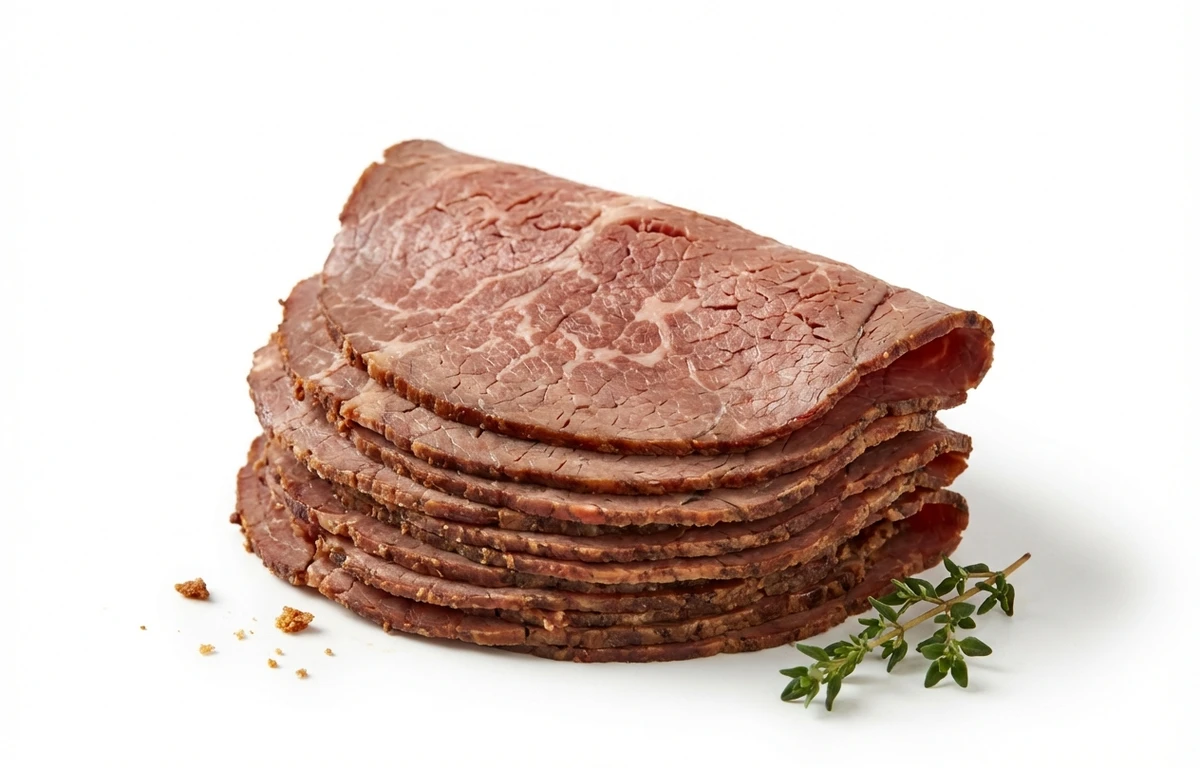
deli roast beef.
VegetarianVeganGluten-freeDairy-freeNut-freePeanut-freeSoy-freeEgg-freeShellfish-freeHoney-freeAlcohol-free
ALSO KNOWN AS
sliced roast beefcold cut roast beef
SERVING
CALORIES
140
PROTEIN
19.5g
CARBS
2.1g
FAT
5.8g
FIBER
0g
NUTRITION PROFILE · per 100 g
Everything in this ingredient.
MACRONUTRIENTS
Calories140kcal—
Protein19.5g39%
Carbohydrates2.1g1%
Fiber0g0%
Sugar1.2g2%
Total fat5.8g7%
Saturated fat2.3g12%
Trans fat0.10g—
Cholesterol50mg17%
Water70.5g—
MINERALS
Sodium950mg41%
Potassium280mg6%
Calcium10mg1%
Iron2.2mg12%
Magnesium18mg4%
Phosphorus160mg13%
Zinc3.5mg32%
Copper0.08mg9%
Manganese0.01mg0%
Selenium22.5µg41%
VITAMINS
Vitamin A0µg0%
Vitamin C0mg0%
Vitamin D0.10µg1%
Vitamin E0.15mg1%
Vitamin K1.2µg1%
Thiamin (B1)0.05mg4%
Riboflavin (B2)0.15mg12%
Niacin (B3)4.2mg26%
Pantothenic acid (B5)0.40mg8%
Vitamin B60.30mg18%
Folate (B9)5.0µg1%
Vitamin B121.8µg75%
%DV based on a 2,000 cal diet. Source: USDA FoodData Central. A dash in the %DV column means there’s no established Daily Value for that nutrient.
MEASUREMENT CONVERSIONS
How much is what.
1 cup140g
1 oz28.4g
1 lb453.6g
HEALTH BENEFITS
Why eat it.
- ✓Excellent source of high-quality complete protein
- ✓Rich in Vitamin B12 for nerve function
- ✓Provides bioavailable heme iron to prevent anemia
- ✓Good source of zinc for immune support
- ✓Low in carbohydrates compared to other deli meats
COOKING TIPS
In the kitchen.
- 1Best served cold or at room temperature to maintain texture
- 2If heating, do so briefly to avoid making the meat tough and dry
- 3Layer slices loosely in sandwiches to create more volume and better mouthfeel
STORAGE
Keep it fresh.
- Keep refrigerated at all times in an airtight container
- Consume within 3 to 5 days of purchase from the deli counter
- Can be frozen for up to 2 months if tightly wrapped in moisture-proof foil
FAQ
Frequently asked questions.
How long does deli roast beef last in the fridge?
Freshly sliced deli roast beef typically lasts 3 to 5 days when stored properly in an airtight container in the refrigerator.
Can you freeze deli roast beef?
Yes, you can freeze it for up to 2 months. For best results, wrap it tightly in plastic wrap and then place it in a freezer bag to prevent freezer burn.
Is deli roast beef healthy?
It is high in protein and iron, but it is also high in sodium due to the curing process. It should be consumed in moderation as part of a balanced diet.
What is a good substitute for deli roast beef?
Deli turkey breast, ham, or thinly sliced leftover homemade roast beef are the best alternatives.
Is deli roast beef gluten-free?
While beef is naturally gluten-free, some deli brands use fillers or seasonings that contain gluten. Always check the label for certification.
How can I tell if deli roast beef has gone bad?
Discard the meat if it has a slimy texture, an off-smell (sour or ammonia-like), or if the color has turned grey or greenish.
Why is deli roast beef so high in sodium?
Sodium is used as both a preservative and a flavor enhancer during the curing and roasting process of commercial deli meats.
What are the best ways to use deli roast beef?
It is most commonly used in sandwiches, wraps, and sliders, but it also works well chopped in salads or served on a charcuterie board.



















