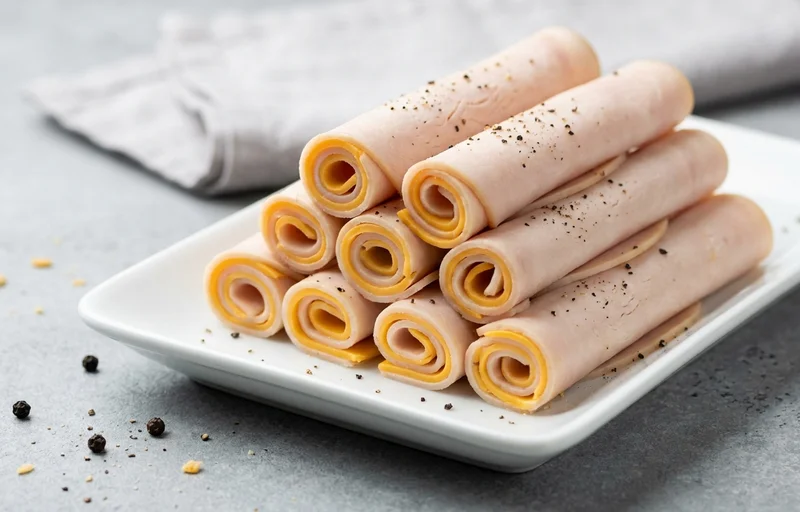
Protein2 recipes
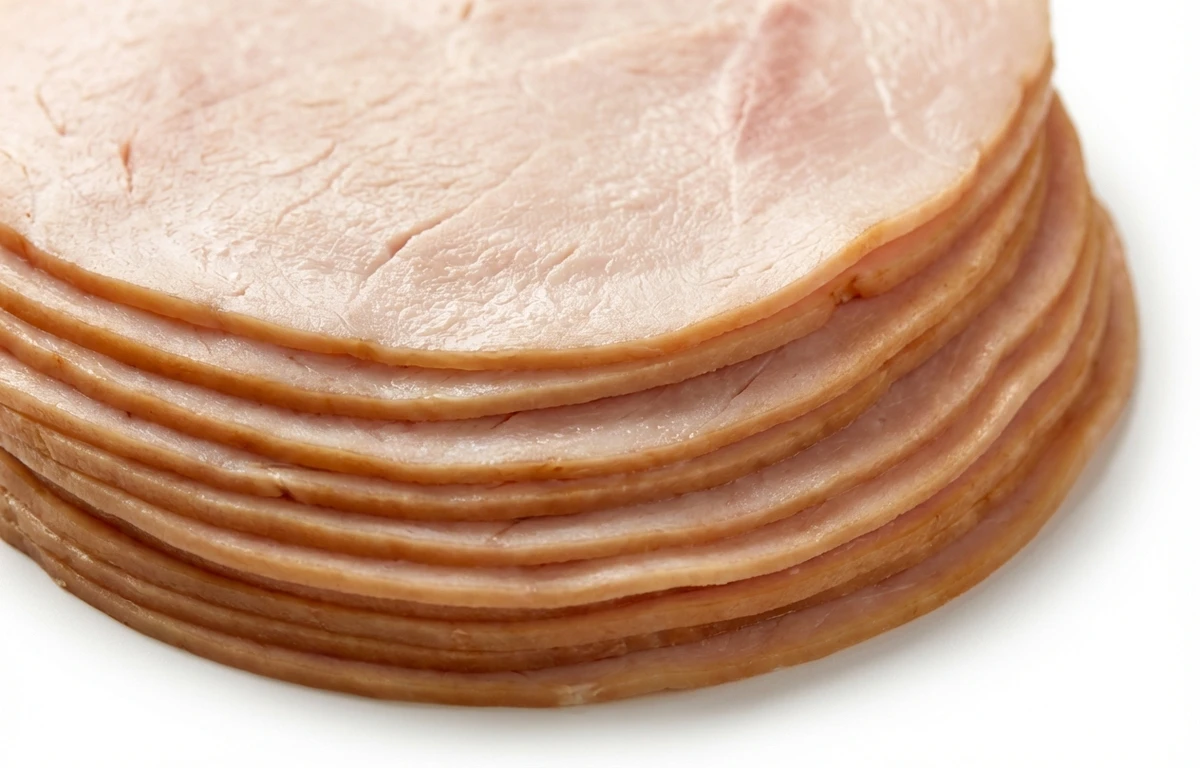
deli turkey.
VegetarianVeganGluten-freeDairy-freeNut-freePeanut-freeSoy-freeEgg-freeShellfish-freeHoney-freeAlcohol-free
ALSO KNOWN AS
sliced turkeyturkey cold cutsturkey breast deli meatlunch meat turkeyturkey slices
SERVING
CALORIES
104
PROTEIN
17.1g
CARBS
2.1g
FAT
2.2g
FIBER
0g
NUTRITION PROFILE · per 100 g
Everything in this ingredient.
MACRONUTRIENTS
Calories104kcal—
Protein17.1g34%
Carbohydrates2.1g1%
Fiber0g0%
Sugar1.5g3%
Total fat2.2g3%
Saturated fat0.60g3%
Trans fat0g—
Cholesterol48mg16%
Water74.5g—
MINERALS
Sodium950mg41%
Potassium250mg5%
Calcium15mg1%
Iron1.1mg6%
Magnesium20mg5%
Phosphorus180mg14%
Zinc1.5mg14%
Copper0.06mg7%
Manganese0.02mg1%
Selenium22.5µg41%
VITAMINS
Vitamin A0µg0%
Vitamin C0mg0%
Vitamin D0.10µg1%
Vitamin E0.15mg1%
Vitamin K0.20µg0%
Thiamin (B1)0.05mg4%
Riboflavin (B2)0.12mg9%
Niacin (B3)5.2mg33%
Pantothenic acid (B5)0.55mg11%
Vitamin B60.35mg21%
Folate (B9)4.0µg1%
Vitamin B121.1µg46%
%DV based on a 2,000 cal diet. Source: USDA FoodData Central. A dash in the %DV column means there’s no established Daily Value for that nutrient.
MEASUREMENT CONVERSIONS
How much is what.
1 oz28.4g
1 lb453.6g
1 piece28g
HEALTH BENEFITS
Why eat it.
- ✓High quality lean protein source
- ✓Rich in B vitamins for energy metabolism
- ✓Contains selenium which supports thyroid function
- ✓Low in saturated fat compared to red meats
- ✓Convenient source of essential amino acids
COOKING TIPS
In the kitchen.
- 1No cooking required as it is pre-cooked and ready to eat
- 2Can be lightly pan-seared for a warm sandwich or wrap
- 3Dice and add to omelets or salads for a quick protein boost
STORAGE
Keep it fresh.
- Keep refrigerated at all times below 40°F (4°C)
- Consume within 3 to 5 days of opening the package
- Store in an airtight container or original resealable bag to prevent drying
FAQ
Frequently asked questions.
How long does deli turkey last in the fridge?
Once opened, deli turkey typically lasts 3 to 5 days. If unopened, refer to the 'use by' date on the package.
Can you freeze deli turkey?
Yes, you can freeze it for up to 2 months. For best results, wrap it tightly in plastic wrap and then place it in a freezer bag.
Is deli turkey high in sodium?
Yes, most deli meats are processed with significant amounts of salt for preservation and flavor. Look for 'low-sodium' versions if monitoring salt intake.
What are the best substitutes for deli turkey?
Cooked chicken breast, deli ham, roast beef, or plant-based deli slices are the best alternatives.
Is deli turkey gluten-free?
Pure turkey is gluten-free, but some deli brands use fillers or seasonings that contain gluten. Always check the label for a gluten-free certification.
What should I look for when buying deli turkey?
Look for 'nitrate-free' or 'uncured' options and check for minimal additives or fillers on the ingredient list.
How many slices of deli turkey make a serving?
A standard serving is usually 2 to 3 ounces, which is approximately 2 to 4 thin slices depending on the thickness.
Is deli turkey considered a processed meat?
Yes, because it is cured, seasoned, or pressed into a shape, it is classified as a processed meat.
Can pregnant women eat deli turkey?
Health experts often recommend that pregnant women heat deli meats until steaming hot (165°F) to eliminate the risk of Listeria.
RECIPES
Cook with deli turkey.
2 recipes · sorted by what’s quick