
Other
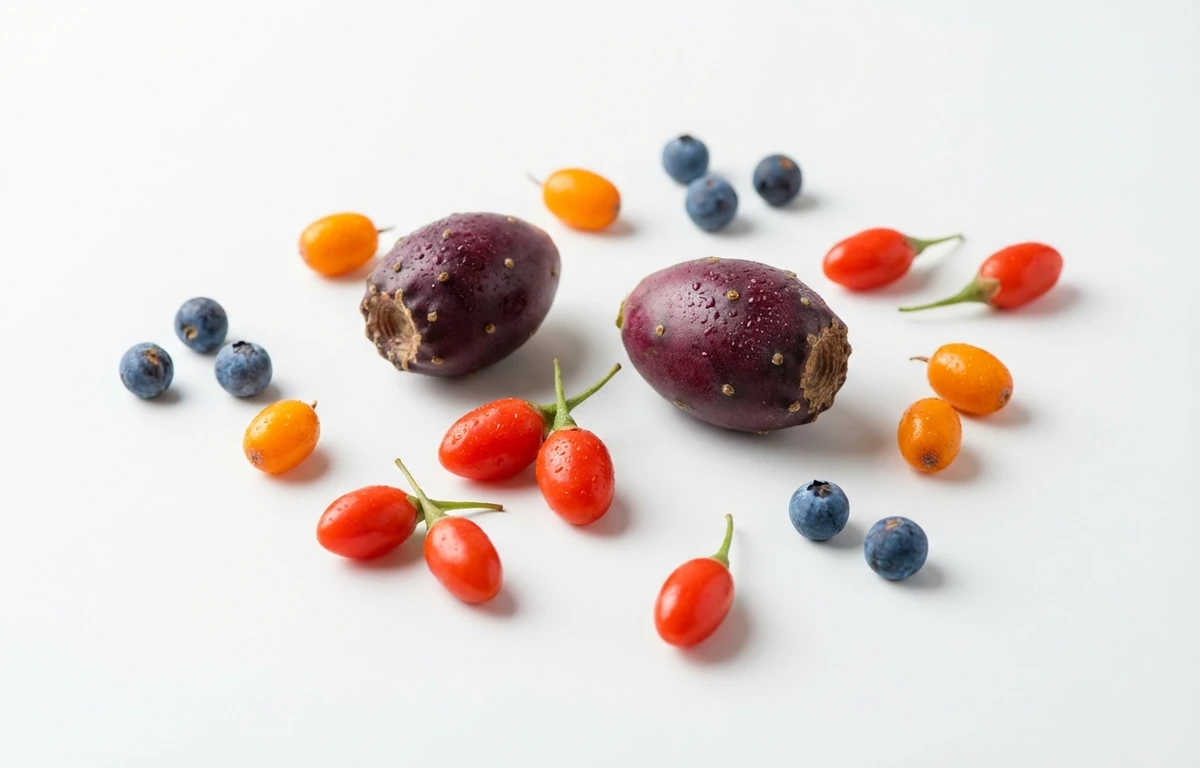
desert berry.
VegetarianVeganGluten-freeDairy-freeNut-freePeanut-freeSoy-freeEgg-freeShellfish-freeHoney-freeAlcohol-free
ALSO KNOWN AS
ker
SERVING
CALORIES
50
PROTEIN
1.5g
CARBS
12g
FAT
0.50g
FIBER
3.0g
This ingredient is flagged as naturally gluten-free.
NUTRITION PROFILE · per 100 g
Everything in this ingredient.
MACRONUTRIENTS
Calories50kcal—
Protein1.5g3%
Carbohydrates12g4%
Fiber3.0g11%
Sugar8.2g16%
Total fat0.50g1%
Saturated fat0.05g0%
Water80g—
MINERALS
Sodium5.0mg0%
Potassium200mg4%
Calcium30mg2%
Iron1.0mg6%
Magnesium20mg5%
Phosphorus30mg2%
Zinc0.25mg2%
VITAMINS
Vitamin A45µg5%
Vitamin C15mg17%
Thiamin (B1)0.03mg3%
Riboflavin (B2)0.04mg3%
Niacin (B3)0.40mg3%
Vitamin B60.06mg4%
%DV based on a 2,000 cal diet. Source: USDA FoodData Central. A dash in the %DV column means there’s no established Daily Value for that nutrient.
MEASUREMENT CONVERSIONS
How much is what.
1 cup150g
1 tablespoon9.4g
1 teaspoon3.1g
1 ml0.6g
1 liter625g
COOKING TIPS
In the kitchen.
- 1Incorporate dried desert berries into trail mixes, granola, oatmeal, or yogurt for a chewy texture and sweet-tart flavor.
- 2Rehydrate dried berries by soaking them in warm water for 10-15 minutes before adding to baked goods, salads, or savory grain dishes.
- 3Simmer with water and a sweetener to create a simple syrup or compote for desserts, pancakes, or beverages.
- 4Brew into a herbal tea, either on their own or combined with other ingredients like ginger and citrus, for a nutrient-rich drink.
STORAGE
Keep it fresh.
- Store fresh desert berries in a breathable container in the refrigerator's crisper drawer for up to one week.
- Keep dried desert berries in an airtight container in a cool, dark, and dry place, like a pantry, for 6-12 months.
FAQ
Frequently asked questions.
Is desert berry keto-friendly?
Desert berries are not typically considered keto-friendly due to their carbohydrate content. With 12g of carbs per 100g, they would quickly exceed the strict daily carb limits of a ketogenic diet. Small portions might fit, but they are generally higher in carbs than most keto-approved berries.
Is desert berry vegan and gluten-free?
Yes, as a natural fruit, desert berry is inherently vegan and gluten-free. It contains no animal products or gluten-containing grains, making it suitable for individuals following these dietary restrictions.
How can I use desert berries in cooking?
Desert berries are versatile. They can be eaten fresh, added to smoothies, yogurts, or oatmeal. They also work well in baked goods like muffins, pies, or tarts, and can be made into jams, sauces, or even dried for a chewy snack.
What does desert berry taste like?
Desert berries typically have a unique sweet-tart flavor profile, often described as a blend of cranberry and cherry with earthy undertones. The exact taste can vary slightly depending on ripeness and specific variety.
How should I store desert berries?
Fresh desert berries should be stored in the refrigerator, ideally in a breathable container or a single layer on a paper towel to absorb excess moisture. They typically last for 3-5 days. For longer storage, they can be frozen.



















