
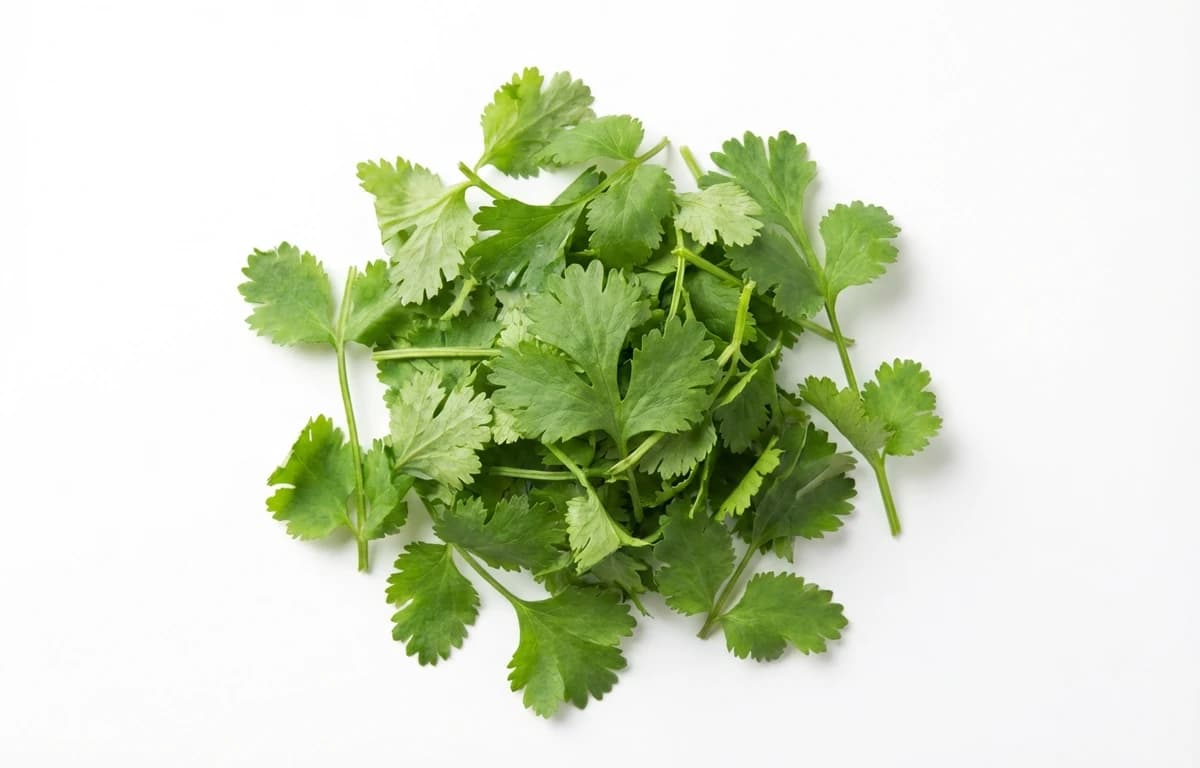
dhonepata
Also known as:
Loading...
Also known as:
Per 100g
Nutrition data source: USDA FoodData Central
Yes, dhonepata (coriander leaves) is very healthy. It's packed with antioxidants like beta-carotene and quercetin, essential for protecting cells. It's also a good source of Vitamin K, crucial for blood clotting and bone health, and has antimicrobial properties.
Dhonepata is low in calories (23 cal per 100g) but rich in vitamins and minerals. It provides Vitamin K, Vitamin A (from beta-carotene), and Vitamin C. It also offers a small amount of protein (2.13g per 100g) and dietary fiber, contributing to overall well-being.
Yes, dhonepata can be beneficial for weight loss due to its very low-calorie content and high nutrient density. Incorporating it into meals adds flavor without significant calories, helping to create satisfying, healthy dishes. Its fiber content can also aid in satiety.
Yes, dhonepata is naturally both vegan and gluten-free. As a fresh herb, it contains no animal products or gluten-containing grains, making it suitable for a wide range of dietary preferences and restrictions.
Yes, dhonepata is generally considered beneficial for diabetics. Research suggests it may help lower blood sugar levels by promoting enzyme activity that removes sugar from the blood. It's a low-carb, nutrient-dense herb that can be safely incorporated into a diabetic diet.
Dhonepata is widely used as a garnish and flavoring agent in various cuisines, especially South Asian, Mexican, and Middle Eastern dishes. It's often added fresh to curries, chutneys, salads, salsas, soups, and stews just before serving to preserve its vibrant flavor.
dhonepata is a versatile ingredient found in cuisines around the world. With 23 calories per 100g and 2.13 grams of protein, it's a nutritious addition to many dishes.
Explore more ingredients in the herb category with complete nutrition information.
View all herb →Dhonepata can be eaten both raw and cooked. It's most commonly added raw as a garnish to retain its fresh, pungent flavor. While it can be cooked, its delicate flavor diminishes significantly with heat, so it's best added at the very end of cooking or used fresh.
To keep dhonepata fresh longer, trim the ends of the stems and place them in a glass of water, like a bouquet, then cover loosely with a plastic bag and refrigerate. Alternatively, wash, dry thoroughly, and wrap in a damp paper towel before placing in an airtight container in the fridge.
Fresh dhonepata will have vibrant green leaves and firm, crisp stems. Avoid bunches with yellowed, wilted, or slimy leaves, or those with a strong, unpleasant odor, as these are signs of spoilage.
Dhonepata has a distinctive, fresh, citrusy, and slightly peppery flavor with earthy undertones. However, some people have a genetic predisposition that makes it taste like soap or dirt. Its aroma is strong and aromatic.