
Condiment1 recipes
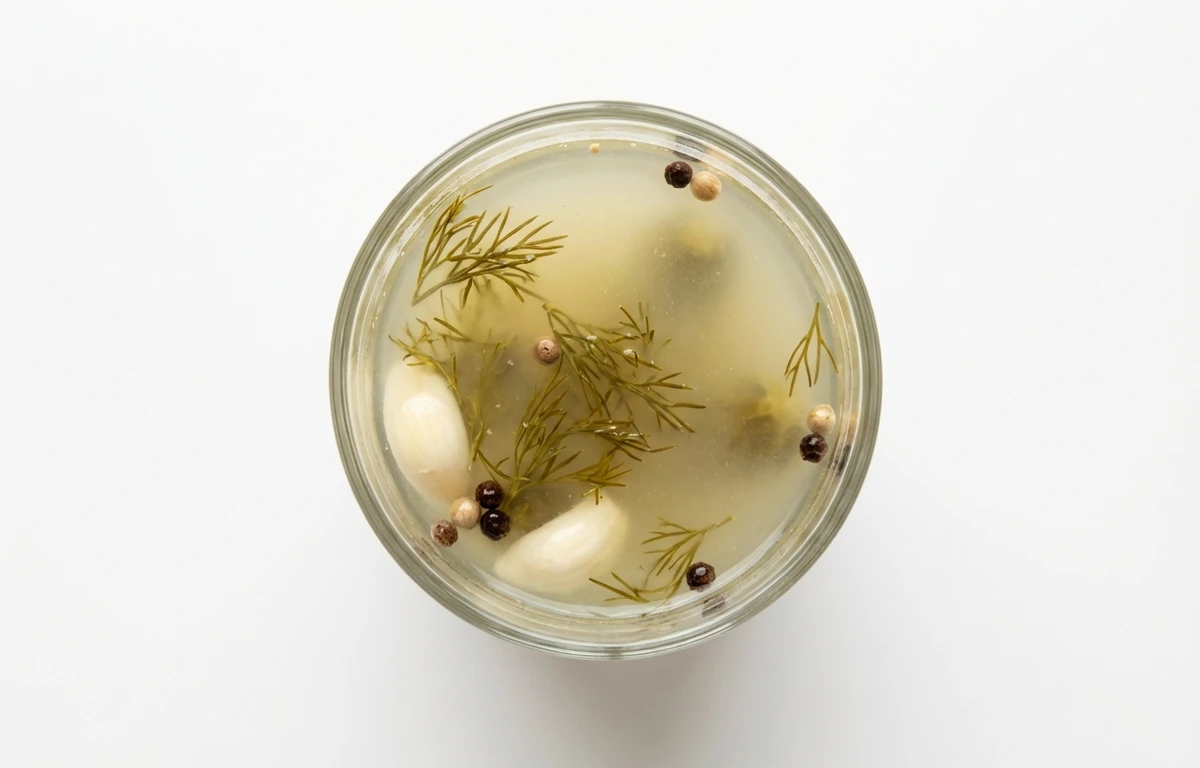
dill pickle juice.
VegetarianVeganGluten-freeDairy-freeNut-freePeanut-freeSoy-freeEgg-freeShellfish-freeHoney-freeAlcohol-freeFermented
ALSO KNOWN AS
pickle brinedill pickle brinepickle waterachar ka pani
SERVING
CALORIES
12
PROTEIN
0.20g
CARBS
2.5g
FAT
0.10g
FIBER
0g
NUTRITION PROFILE · per 100 g
Everything in this ingredient.
MACRONUTRIENTS
Calories12kcal—
Protein0.20g0%
Carbohydrates2.5g1%
Fiber0g0%
Sugar1.1g2%
Total fat0.10g0%
Saturated fat0g0%
Trans fat0g—
Cholesterol0mg0%
Water94g—
MINERALS
Sodium1050mg46%
Potassium70mg1%
Calcium15mg1%
Iron0.10mg1%
Magnesium4.0mg1%
Phosphorus12mg1%
Zinc0.05mg0%
Copper0.02mg2%
Manganese0.03mg1%
Selenium0.10µg0%
VITAMINS
Vitamin A2.0µg0%
Vitamin C1.0mg1%
Vitamin D0µg0%
Vitamin E0.01mg0%
Vitamin K12µg10%
Thiamin (B1)0.01mg1%
Riboflavin (B2)0.01mg1%
Niacin (B3)0.05mg0%
Pantothenic acid (B5)0.03mg1%
Vitamin B60.01mg1%
Folate (B9)1.0µg0%
Vitamin B120µg0%
%DV based on a 2,000 cal diet. Source: USDA FoodData Central. A dash in the %DV column means there’s no established Daily Value for that nutrient.
MEASUREMENT CONVERSIONS
How much is what.
1 cup245g
1 tablespoon15.3g
1 teaspoon5.1g
1 oz28.9g
1 lb453.6g
1 ml1g
1 liter1020g
HEALTH BENEFITS
Why eat it.
- ✓Helps soothe muscle cramps due to electrolyte content
- ✓Contains vinegar which may help regulate blood sugar levels
- ✓Provides a source of antioxidants like Vitamin C and E
- ✓May support gut health if naturally fermented (contains probiotics)
- ✓Effective for rehydration after intense exercise
COOKING TIPS
In the kitchen.
- 1Use as a brine for chicken or pork to tenderize and add flavor
- 2Add a splash to potato salad or macaroni salad for extra tang
- 3Use as a substitute for vinegar in salad dressings or marinades
STORAGE
Keep it fresh.
- Store in a sealed glass jar in the refrigerator
- Can be kept for up to 6 months if refrigerated properly
- Avoid using metal containers as the acid can react with the metal
FAQ
Frequently asked questions.
How long does dill pickle juice last in the fridge?
Dill pickle juice can last for up to 6 months in the refrigerator when stored in an airtight glass container.
Can I freeze pickle juice?
Yes, you can freeze pickle juice in ice cube trays to use later in drinks, soups, or as a quick addition to recipes.
Is pickle juice good for hydration?
Yes, it is high in sodium and potassium, which are essential electrolytes that help the body recover after sweating.
What can I substitute for pickle juice?
A mixture of apple cider vinegar or white vinegar with salt and a pinch of dried dill is the best substitute.
Does all pickle juice contain probiotics?
No, only naturally fermented pickles (usually found in the refrigerated section) contain live probiotics; vinegar-based shelf-stable pickles do not.
Is pickle juice high in sugar?
Dill pickle juice is generally very low in sugar, unlike sweet pickle or bread and butter pickle juice.
How can I use pickle juice in cocktails?
It is famously used in 'Pickleback' shots (following a shot of whiskey) or added to Bloody Marys for extra depth.
Can I reuse pickle juice to make more pickles?
You can reuse it once to quick-pickle sliced vegetables like onions or carrots in the fridge, but it shouldn't be used for canning again.
Is pickle juice safe for everyone?
Due to its very high sodium content, individuals with hypertension or those on low-sodium diets should consume it sparingly.
RECIPES
Cook with dill pickle juice.
1 recipes · sorted by what’s quick



















