
Other1 recipes
distiller's yeast.
VegetarianVeganGluten-freeDairy-freeNut-freePeanut-freeSoy-freeEgg-freeShellfish-freeHoney-freeAlcohol-free
ALSO KNOWN AS
distilling yeastturbo yeast
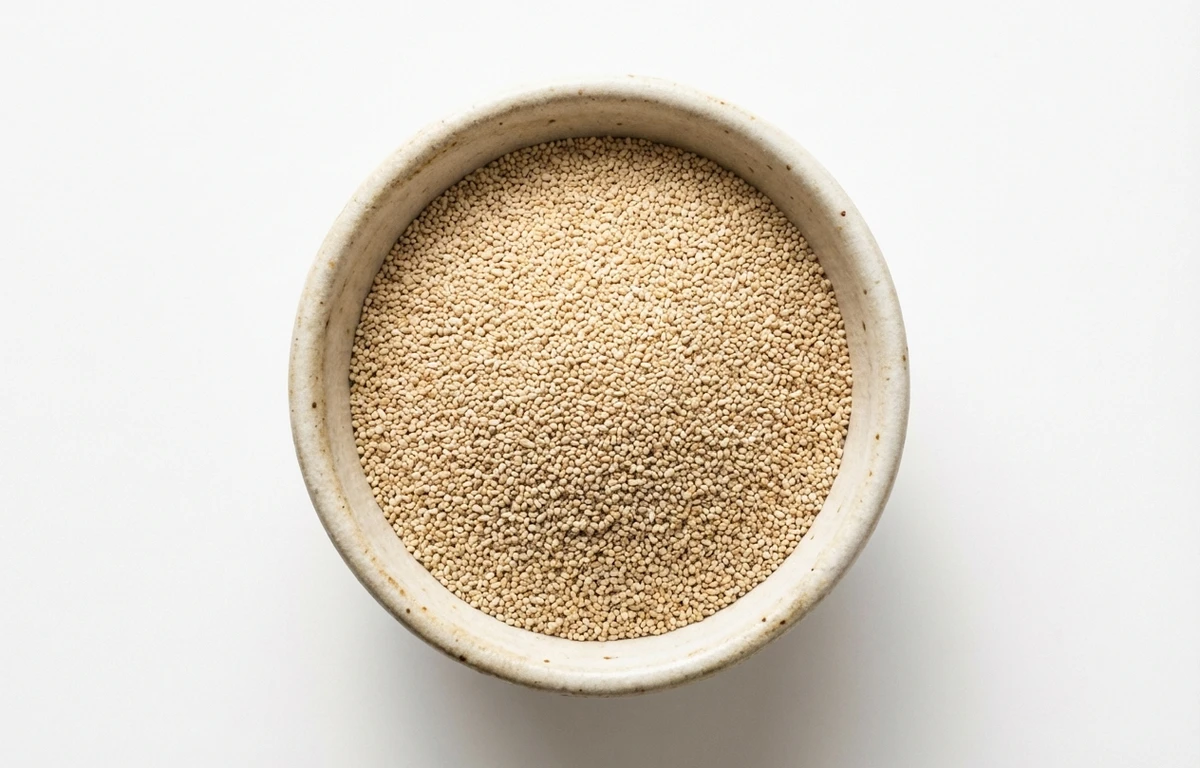
SERVING
CALORIES
325
PROTEIN
45g
CARBS
38g
FAT
4.0g
FIBER
25g
This ingredient is flagged as naturally gluten-free. Per 100 g, it provides 0 µg of vitamin K.
NUTRITION PROFILE · per 100 g
Everything in this ingredient.
MACRONUTRIENTS
Calories325kcal—
Protein45g90%
Carbohydrates38g14%
Fiber25g89%
Sugar0g0%
Total fat4.0g5%
Saturated fat0.60g3%
Trans fat0g—
Cholesterol0mg0%
Water5.0g—
MINERALS
Sodium50mg2%
Potassium2000mg43%
Calcium100mg8%
Iron5.0mg28%
Magnesium130mg31%
Phosphorus1000mg80%
Zinc10mg91%
Copper0.50mg56%
Manganese0.50mg22%
Selenium150µg273%
VITAMINS
Vitamin A0µg0%
Vitamin C0mg0%
Vitamin D0µg0%
Vitamin E0mg0%
Vitamin K0µg0%
Thiamin (B1)10mg833%
Riboflavin (B2)4.0mg308%
Niacin (B3)40mg250%
Pantothenic acid (B5)10mg200%
Vitamin B63.0mg176%
Folate (B9)2000µg500%
Vitamin B120µg0%
%DV based on a 2,000 cal diet. Source: USDA FoodData Central. A dash in the %DV column means there’s no established Daily Value for that nutrient.
MEASUREMENT CONVERSIONS
How much is what.
1 cup160g
1 tablespoon12g
1 teaspoon4g
1 oz28.4g
1 lb453.6g
HEALTH BENEFITS
Why eat it.
- ✓Extremely high in B-complex vitamins for energy metabolism
- ✓Excellent source of complete plant-based protein
- ✓High dietary fiber content supports digestive health
- ✓Contains beta-glucans which may help manage cholesterol
COOKING TIPS
In the kitchen.
- 1Rehydrate in warm water (30-35°C) for 15 minutes before adding to the fermentation vessel
- 2Avoid using for standard bread baking as it produces different flavor esters than baker's yeast
- 3Ensure the mash or wash has adequate nutrients, as distiller's yeast is often high-performance
STORAGE
Keep it fresh.
- Store in a cool, dry, and dark place to maintain cell viability
- Keep in an airtight container or vacuum-sealed bag to prevent moisture ingress
- Refrigeration or freezing is recommended for long-term storage of opened packages
FAQ
Frequently asked questions.
How long does distiller's yeast last?
Unopened, it can last up to 2 years in a cool, dry place. Once opened, it should be used within 3-4 months if refrigerated.
What is the difference between distiller's yeast and baker's yeast?
Distiller's yeast is bred for high alcohol tolerance (often up to 20% ABV) and specific flavor profiles, whereas baker's yeast is optimized for CO2 production.
Can I use distiller's yeast to make bread?
Technically yes, but it may result in a very dense loaf with unusual 'off' flavors compared to traditional bread yeast.
What is 'Turbo Yeast'?
Turbo yeast is a mix of distiller's yeast and complex nutrients designed to ferment sugar into alcohol very quickly and at high concentrations.
Is distiller's yeast gluten-free?
Pure yeast is a fungus and naturally gluten-free, but some brands may be grown on grain-based mediums. Always check the label for certified gluten-free status.
How do I know if my yeast is still active?
Perform a proofing test: mix a small amount with warm water and sugar. If it foams and bubbles within 10 minutes, it is active.
What can I use as a substitute for distiller's yeast?
Wine yeast or champagne yeast are the best substitutes for high-alcohol fermentations. Brewer's yeast can be used for lower-alcohol washes.
Does distiller's yeast contain vitamins?
Yes, it is naturally very high in B-vitamins like Thiamine, Riboflavin, and Niacin, similar to nutritional yeast.
What temperature is best for distiller's yeast?
Most strains perform best between 20°C and 30°C (68°F - 86°F), though some specialized strains can handle higher temperatures.
RECIPES
Cook with distiller's yeast.
1 recipes · sorted by what’s quick



















