
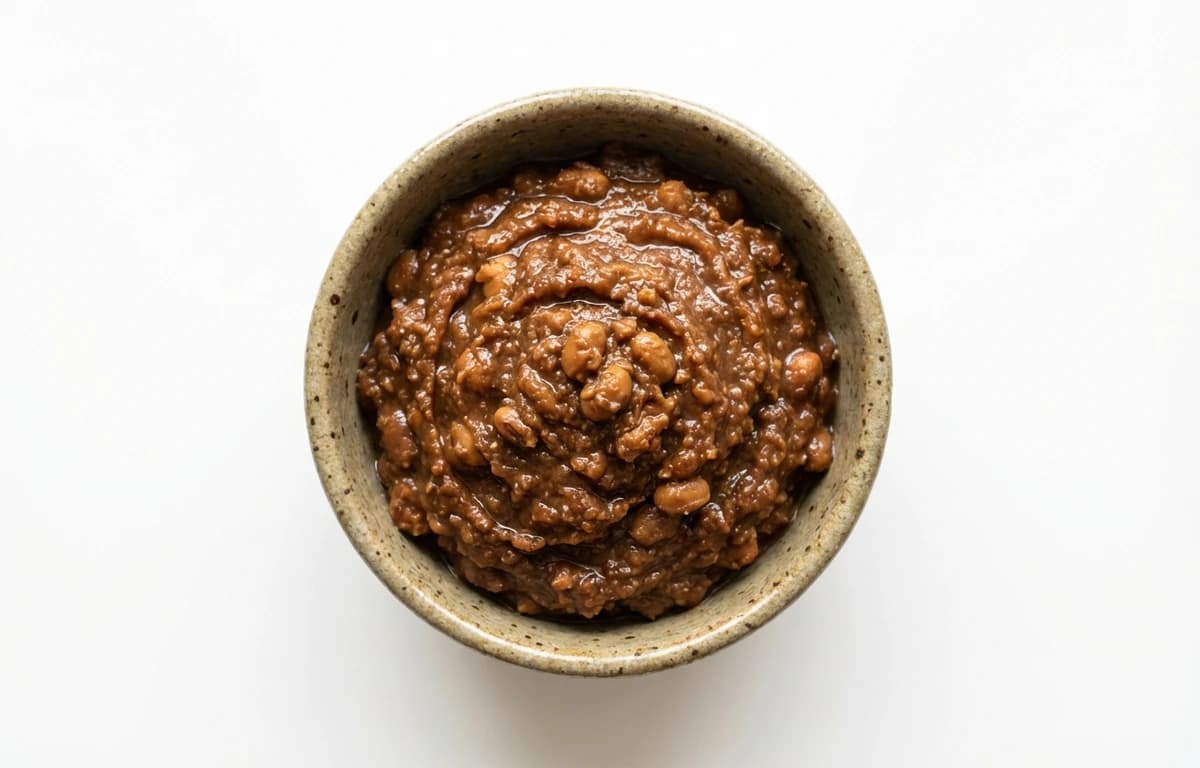
Doenjang
Also known as: Korean soybean paste, fermented soybean paste, Korean miso, toenjang
Loading...
Also known as: Korean soybean paste, fermented soybean paste, Korean miso, toenjang
Per 100g
Nutrition data source: USDA FoodData Central
Common measurement equivalents in grams
Doenjang is a traditional Korean fermented soybean paste made from boiled soybeans that are dried and fermented for months in brine.
It should be kept in its original container or an airtight jar in the refrigerator. It can last for a year or more if kept clean.
No. While both are fermented soybean pastes, Doenjang is fermented longer, has a coarser texture, a much stronger 'funky' aroma, and a saltier profile than most miso.
The closest substitute is Japanese red miso, though you may need to use more of it as it is milder. Chinese yellow bean paste is also an alternative.
Not always. While traditional Doenjang is made only with soy and salt, many commercial brands add wheat flour as a filler. Always check the label for gluten-free certification.
Yes, it is frequently eaten raw as a component of dipping sauces like Ssamjang or used as a spread for fresh vegetables.
Oxidation causes the paste to darken. This is normal and does not mean the paste has gone bad, though the flavor may become slightly more intense.
Look for fuzzy mold growth on the surface, an off-putting sour smell (different from its usual fermented scent), or a change in texture to watery.
Doenjang is a versatile ingredient found in cuisines around the world. With 190 calories per 100g and 13 grams of protein, it's a nutritious addition to many dishes.
Explore more ingredients in the condiment category with complete nutrition information.
View all condiment →Yes, it is very high in sodium due to the brine used in fermentation. It should be used as a seasoning rather than a primary bulk ingredient.
Yes, you can freeze it in small portions, but because of its high salt content, it doesn't freeze solid and stays fresh for a very long time in the fridge anyway.