
Other
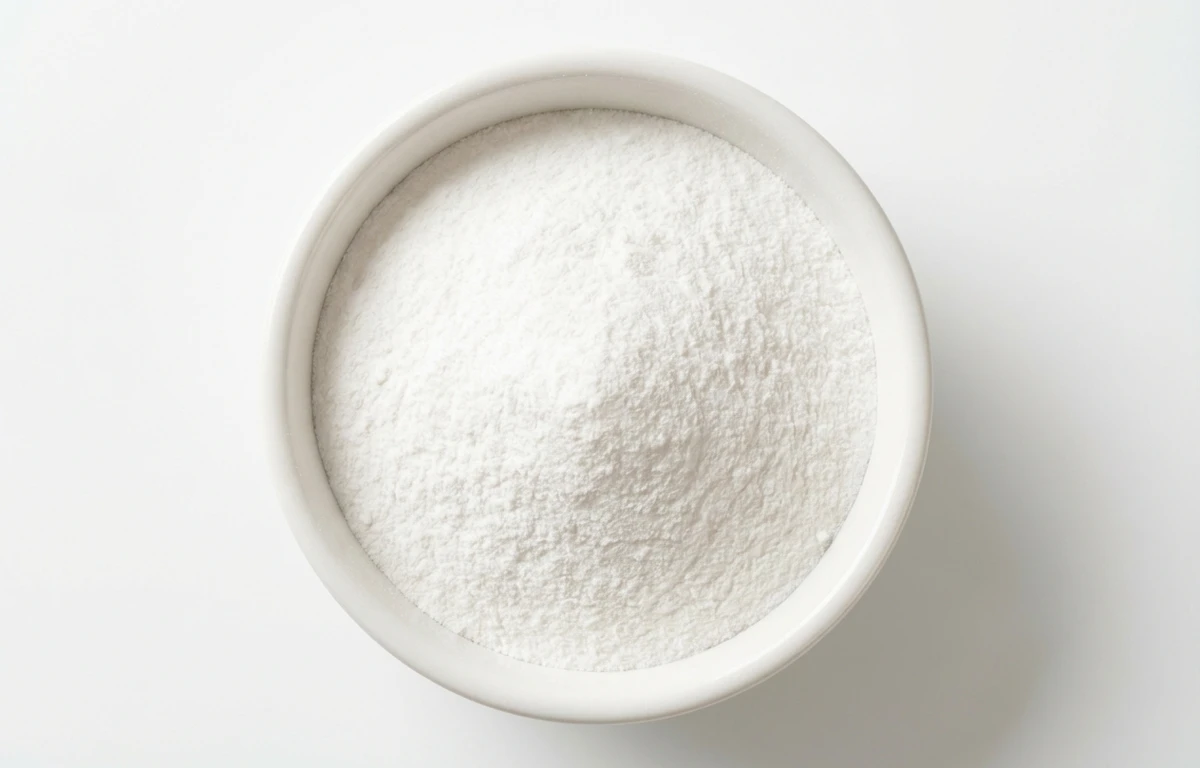
double-acting sodium aluminum sulfate baking powder.
VegetarianVeganGluten-freeDairy-freeNut-freePeanut-freeSoy-freeEgg-freeShellfish-freeHoney-freeAlcohol-free
ALSO KNOWN AS
double-acting baking powder
SERVING
CALORIES
53
PROTEIN
0g
CARBS
27.7g
FAT
0g
FIBER
0g
This ingredient is flagged as naturally gluten-free. Per 100 g, it provides 0 µg of vitamin K.
NUTRITION PROFILE · per 100 g
Everything in this ingredient.
MACRONUTRIENTS
Calories53kcal—
Protein0g0%
Carbohydrates27.7g10%
Fiber0g0%
Sugar0g0%
Total fat0g0%
Saturated fat0g0%
Trans fat0g—
Cholesterol0mg0%
Water5.0g—
MINERALS
Sodium10600mg461%
Potassium20mg0%
Calcium5876mg452%
Iron11mg61%
Magnesium15mg4%
Phosphorus9060mg725%
Zinc0.58mg5%
Copper0.02mg2%
Manganese0.41mg18%
Selenium0.70µg1%
VITAMINS
Vitamin A0µg0%
Vitamin C0mg0%
Vitamin D0µg0%
Vitamin E0mg0%
Vitamin K0µg0%
Thiamin (B1)0mg0%
Riboflavin (B2)0mg0%
Niacin (B3)0mg0%
Pantothenic acid (B5)0mg0%
Vitamin B60mg0%
Folate (B9)0µg0%
Vitamin B120µg0%
%DV based on a 2,000 cal diet. Source: USDA FoodData Central. A dash in the %DV column means there’s no established Daily Value for that nutrient.
MEASUREMENT CONVERSIONS
How much is what.
1 cup192g
1 tablespoon13.8g
1 teaspoon4.6g
1 oz28.4g
1 lb453.6g
1 ml0.9g
1 liter850g
HEALTH BENEFITS
Why eat it.
- ✓Provides a significant source of dietary calcium
- ✓Essential for creating light textures in gluten-free baking
- ✓Low calorie contribution to final baked goods
- ✓Helps improve the digestibility of dense batters
COOKING TIPS
In the kitchen.
- 1Sift with dry ingredients to ensure even distribution and prevent bitter spots
- 2Bake batters immediately after mixing to capture the first release of gas
- 3Avoid over-mixing the batter once wet ingredients are added to preserve lift
STORAGE
Keep it fresh.
- Store in a cool, dry place away from heat and moisture
- Keep the container tightly sealed to prevent premature activation
- Do not store in the refrigerator as condensation can ruin the powder
FAQ
Frequently asked questions.
Is double-acting sodium aluminum sulfate baking powder healthy?
Double-acting sodium aluminum sulfate baking powder is not consumed for its nutritional benefits but rather for its function as a leavening agent in baked goods. While it contains sodium and aluminum, the amounts used in typical recipes are very small. Concerns about aluminum intake from baking powder are generally considered low for most people when consumed in moderation as part of a balanced diet.
What are the nutritional facts for double-acting baking powder?
Per 100g, double-acting sodium aluminum sulfate baking powder contains approximately 53 calories, 0g protein, 27.7g carbohydrates, and 0g fat. However, baking powder is used in very small quantities (typically teaspoons per recipe), so its contribution to the overall nutritional profile of a baked good is negligible.
Is the aluminum in sodium aluminum sulfate baking powder safe to consume?
The aluminum in baking powder is in a bound form (sodium aluminum sulfate) and is generally considered safe by regulatory bodies like the FDA. While some concerns about aluminum intake exist, studies have shown that the amount absorbed from baking powder is minimal and unlikely to pose a health risk for most individuals when consumed as part of a normal diet.
Is double-acting sodium aluminum sulfate baking powder gluten-free?
Most commercial double-acting baking powders, including those with sodium aluminum sulfate, are naturally gluten-free. They typically use cornstarch as a filler, which is gluten-free. However, it's always best to check the product label for specific allergen statements or gluten-free certification if you have severe sensitivities.
Is double-acting sodium aluminum sulfate baking powder vegan?
Yes, double-acting sodium aluminum sulfate baking powder is typically vegan. Its primary ingredients are leavening acids (like sodium aluminum sulfate), baking soda (sodium bicarbonate), and a starch (like cornstarch), none of which are animal-derived. It does not contain dairy, eggs, or other animal products.
How does double-acting baking powder work?
Double-acting baking powder releases carbon dioxide gas in two distinct stages. The first release occurs when it's mixed with liquid ingredients, and the second, more significant release happens when it's exposed to heat during baking. This two-stage action provides a consistent and powerful rise, resulting in light and airy baked goods.
What is double-acting baking powder used for?
It is primarily used as a leavening agent in quick breads, cakes, muffins, pancakes, and other baked goods that don't rely on yeast for rising. Its double-acting nature ensures a reliable lift and tender texture without the need for long fermentation times, making it ideal for recipes that need to be prepared quickly.
How do you know if double-acting baking powder is still fresh and active?
You can test its freshness by mixing a teaspoon of baking powder with about half a cup of hot water. If it fizzes vigorously, it's still active and good to use. If there's little to no fizz, it has lost its potency and should be replaced for optimal baking results.
Can I substitute double-acting baking powder with baking soda?
No, baking soda is not a direct substitute for baking powder. Baking soda requires an acidic ingredient (like buttermilk, lemon juice, or vinegar) to react and produce carbon dioxide gas, while baking powder already contains the necessary acid. Substituting baking soda for baking powder will likely result in dense baked goods with a soapy or metallic taste.



















