
Dairy
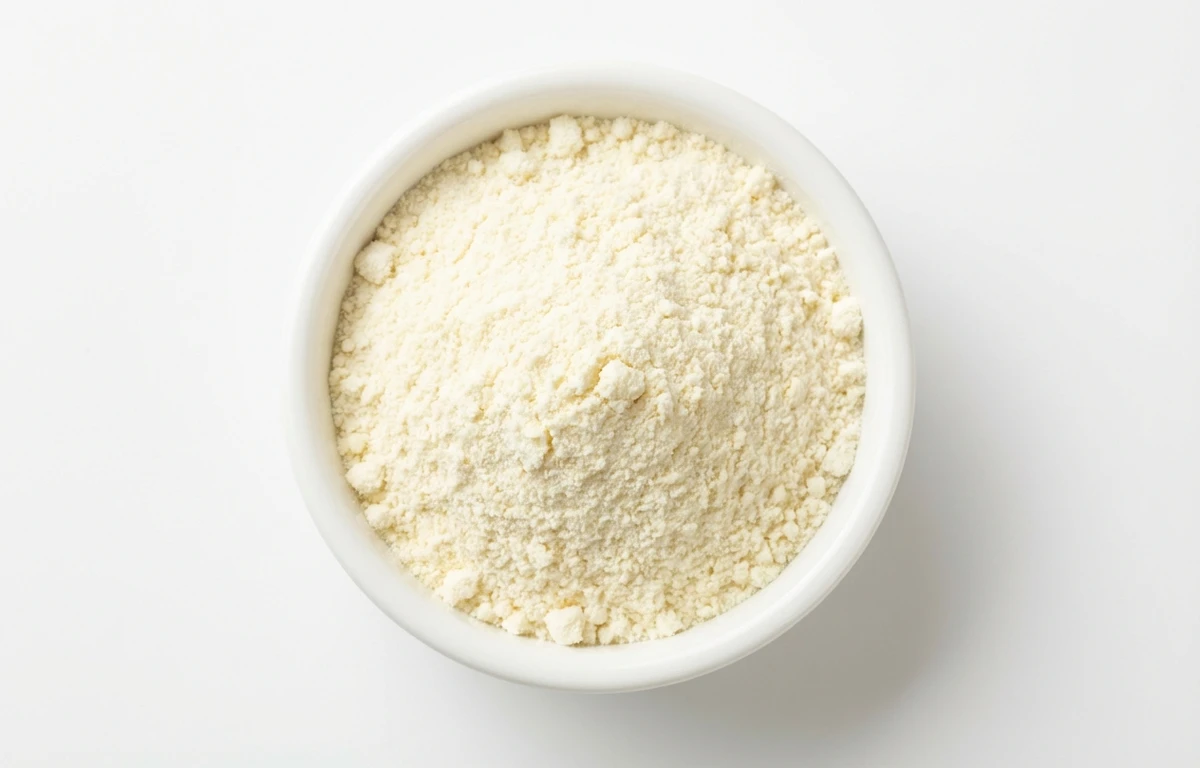
dried buttermilk.
VegetarianVeganGluten-freeDairy-freeNut-freePeanut-freeSoy-freeEgg-freeShellfish-freeHoney-freeAlcohol-freeFermented
SERVING
CALORIES
387
PROTEIN
34.3g
CARBS
49g
FAT
5.8g
FIBER
0g
NUTRITION PROFILE · per 100 g
Everything in this ingredient.
MACRONUTRIENTS
Calories387kcal—
Protein34.3g69%
Carbohydrates49g18%
Fiber0g0%
Sugar49g98%
Total fat5.8g7%
Saturated fat3.6g18%
Cholesterol69mg23%
Water3.0g—
MINERALS
Sodium517mg22%
Potassium1592mg34%
Calcium1184mg91%
Iron0.30mg2%
Magnesium110mg26%
Phosphorus933mg75%
Zinc4.0mg37%
Copper0.11mg12%
Manganese0.02mg1%
Selenium20.3µg37%
VITAMINS
Vitamin A49µg5%
Vitamin C5.7mg6%
Vitamin D0.50µg3%
Vitamin E0.10mg1%
Vitamin K0.40µg0%
Thiamin (B1)0.39mg33%
Riboflavin (B2)1.6mg122%
Niacin (B3)0.88mg6%
Pantothenic acid (B5)3.2mg63%
Vitamin B60.34mg20%
Folate (B9)47µg12%
Vitamin B123.8µg159%
%DV based on a 2,000 cal diet. Source: USDA FoodData Central. A dash in the %DV column means there’s no established Daily Value for that nutrient.
MEASUREMENT CONVERSIONS
How much is what.
1 cup120g
1 tablespoon6.5g
1 teaspoon2.2g
1 ml0.4g
1 liter433.3g
HEALTH BENEFITS
Why eat it.
- ✓Provides calcium and phosphorus, which are essential for strong bones and teeth.
- ✓Contains probiotics (live bacterial cultures) that can support a healthy gut microbiome.
- ✓A good source of high-quality protein (casein and whey) for muscle maintenance and repair.
- ✓Lower in fat and calories than whole milk powder, making it a lighter option in recipes.
COOKING TIPS
In the kitchen.
- 1To reconstitute into liquid buttermilk, whisk 1/4 cup of powder into 1 cup of water until smooth.
- 2For baking, add the powder directly to the dry ingredients and add the corresponding amount of water to the wet ingredients for a tender crumb and tangy flavor.
- 3Use as a coating for fried chicken or fish by dredging the pieces in the powder before frying for a crisp, flavorful crust.
- 4Incorporate into marinades for poultry or pork; the acidity helps to tenderize the meat.
STORAGE
Keep it fresh.
- Store in a cool, dark, and dry place, such as a pantry or cupboard, away from heat and moisture.
- Keep in an airtight container after opening to prevent clumping and preserve freshness for up to a year.
FAQ
Frequently asked questions.
Is dried buttermilk healthy and what are its nutritional benefits?
Yes, dried buttermilk offers several health benefits. It's a good source of high-quality protein, calcium, and phosphorus, which are essential for strong bones and teeth. Additionally, it can contain beneficial probiotics that support a healthy gut microbiome, and it's lower in fat and calories compared to whole milk powder.
How much protein and calories are in dried buttermilk?
Per 100 grams, dried buttermilk contains approximately 387 calories and a significant 34.3 grams of protein. It also provides about 49 grams of carbohydrates and 5.78 grams of fat, making it a nutrient-dense ingredient.
Is dried buttermilk vegan or dairy-free?
No, dried buttermilk is not vegan or dairy-free. It is a dairy product derived from milk, specifically the liquid left over after churning butter. Therefore, it contains milk proteins and lactose.
Is dried buttermilk gluten-free?
Yes, dried buttermilk is naturally gluten-free. It is made solely from dairy and does not contain wheat, barley, or rye. However, always check the product label to ensure no gluten-containing ingredients were added during processing or if there's a risk of cross-contamination.
Is dried buttermilk suitable for people with lactose intolerance?
While dried buttermilk is a dairy product and contains lactose, the fermentation process used to make buttermilk can reduce its lactose content compared to regular milk. Some individuals with mild lactose intolerance might tolerate it better, but those with severe intolerance should still exercise caution or avoid it.
How do I reconstitute dried buttermilk for use in recipes?
To reconstitute dried buttermilk, mix 1 part dried buttermilk powder with 4 parts water. For example, to make 1 cup of liquid buttermilk, combine 1/4 cup of dried buttermilk powder with 1 cup of water. Whisk well until smooth, and let it sit for a few minutes before using to allow the powder to fully dissolve and hydrate.
What does dried buttermilk taste like and what can it be used for?
Dried buttermilk, when reconstituted, has a characteristic tangy, slightly sour, and creamy flavor, similar to fresh buttermilk. It's excellent for baking, adding moisture and tenderness to pancakes, biscuits, cakes, and breads. It can also be used in marinades, dressings, and creamy sauces.
How should I store dried buttermilk to maintain its freshness?
Dried buttermilk should be stored in a cool, dry place, away from direct sunlight and moisture. Keep it in an airtight container to prevent clumping and absorbency of odors. Refrigeration is not typically necessary for unopened packages but can extend shelf life once opened.
How long does dried buttermilk last?
When stored properly in an airtight container in a cool, dry place, dried buttermilk can last for up to 12-18 months. Always check the 'best by' date on the packaging. Once opened, its quality may slowly diminish over time, but it generally remains safe to use for several months.
Does dried buttermilk contain probiotics?
Yes, dried buttermilk can contain probiotics, which are beneficial live bacterial cultures. These cultures are responsible for the fermentation process that gives buttermilk its characteristic tang. However, the number and viability of probiotics can vary depending on the processing and storage conditions of the dried product.



















