
Other2 recipes
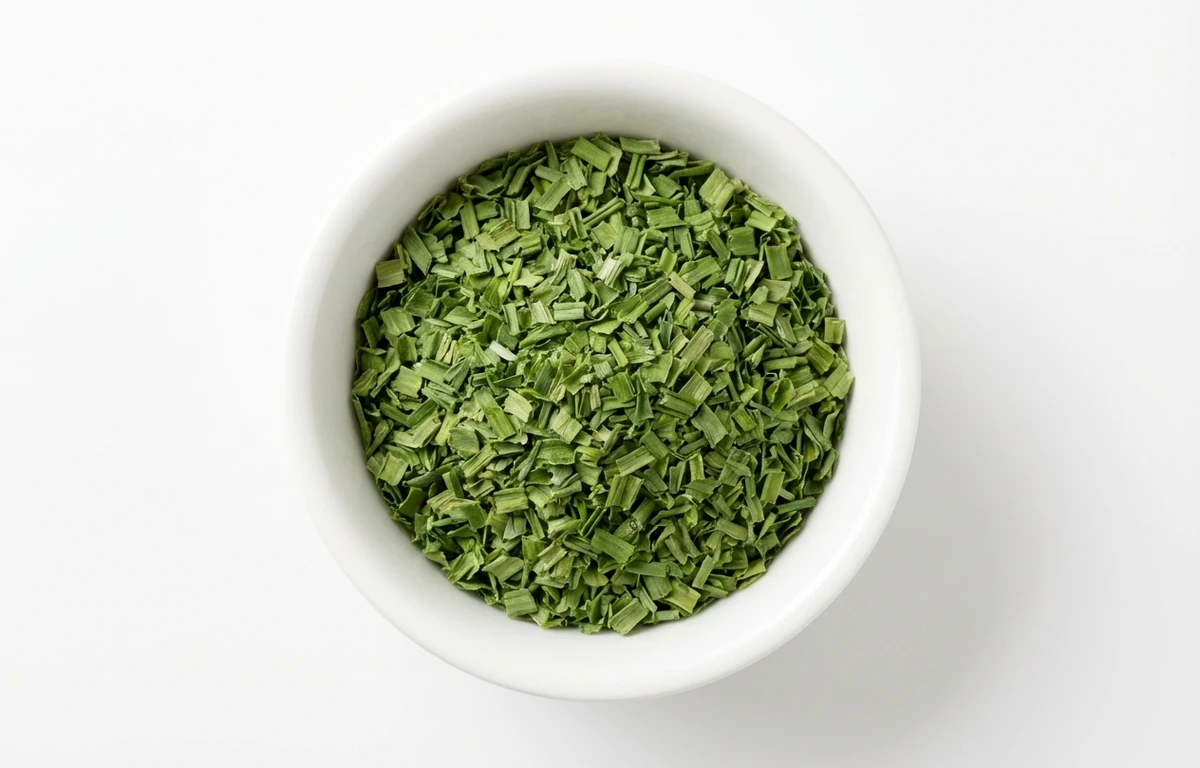
dried chives.
VegetarianVeganGluten-freeDairy-freeNut-freePeanut-freeSoy-freeEgg-freeShellfish-freeHoney-freeAlcohol-free
ALSO KNOWN AS
dehydrated chivesfreeze-dried chivessukhi chivesdried allium schoenoprasum
SERVING
CALORIES
311
PROTEIN
21.2g
CARBS
64.3g
FAT
3.5g
FIBER
26.2g
This ingredient is flagged as naturally gluten-free. Per 100 g, it provides 1500 µg of vitamin K.
NUTRITION PROFILE · per 100 g
Everything in this ingredient.
MACRONUTRIENTS
Calories311kcal—
Protein21.2g42%
Carbohydrates64.3g23%
Fiber26.2g94%
Sugar4.5g9%
Total fat3.5g4%
Saturated fat0.60g3%
Trans fat0g—
Cholesterol0mg0%
Water2.0g—
MINERALS
Sodium122mg5%
Potassium2960mg63%
Calcium920mg71%
Iron16mg89%
Magnesium242mg58%
Phosphorus450mg36%
Zinc4.0mg36%
Copper0.50mg56%
Manganese2.3mg100%
Selenium4.5µg8%
VITAMINS
Vitamin A1200µg133%
Vitamin C60mg67%
Vitamin D0µg0%
Vitamin E2.5mg17%
Vitamin K1500µg1250%
Thiamin (B1)0.40mg33%
Riboflavin (B2)1.2mg92%
Niacin (B3)2.8mg18%
Pantothenic acid (B5)1.0mg20%
Vitamin B61.4mg82%
Folate (B9)250µg63%
Vitamin B120µg0%
%DV based on a 2,000 cal diet. Source: USDA FoodData Central. A dash in the %DV column means there’s no established Daily Value for that nutrient.
MEASUREMENT CONVERSIONS
How much is what.
1 cup24g
1 tablespoon1.5g
1 teaspoon0.5g
1 oz28.4g
1 lb453.6g
1 ml0.1g
1 liter100g
HEALTH BENEFITS
Why eat it.
- ✓Supports healthy digestion
COOKING TIPS
In the kitchen.
- 1Add at the end of cooking to preserve delicate flavor
- 2Mix into butter or cream cheese for a quick spread
- 3Rehydrate in a small amount of water or oil before adding to dry mixes
STORAGE
Keep it fresh.
- Store in an airtight container in a cool, dark place
- Keep away from direct sunlight to prevent color fading
- Avoid moisture to prevent clumping and spoilage
FAQ
Frequently asked questions.
How long do dried chives last?
When stored in a cool, dark place in an airtight container, dried chives maintain peak flavor for 1 to 2 years.
Can I substitute dried chives for fresh?
Yes, use 1 teaspoon of dried chives for every 1 tablespoon of fresh chives (a 1:3 ratio).
Do dried chives need to be rehydrated?
They do not require rehydration if added to moist dishes like soups or sauces, but for dry dishes, soaking them in a teaspoon of water for a minute helps.
Are dried chives considered Jain-friendly?
No, chives belong to the Allium family (like onion and garlic) and are generally avoided in strict Jain and Sattvic diets.
How can I tell if dried chives have gone bad?
If they have lost their bright green color, have no aroma when rubbed between fingers, or show signs of mold/moisture, they should be discarded.
What are the best uses for dried chives?
They are excellent in baked potatoes, omelets, creamy salad dressings, herb butters, and as a garnish for soups.
Do dried chives contain gluten?
Pure dried chives are naturally gluten-free, but always check labels for potential cross-contamination in processing facilities.
Can I freeze dried chives?
Freezing is not necessary for dried herbs and can actually introduce moisture which ruins the texture; room temperature storage is best.
How do dried chives compare to dried green onions?
Chives have a more delicate, mild onion flavor, while dried green onions (scallions) are slightly more pungent and have a larger texture.
RECIPES
Cook with dried chives.
2 recipes · sorted by what’s quick



















