Nuts Seeds10 recipes
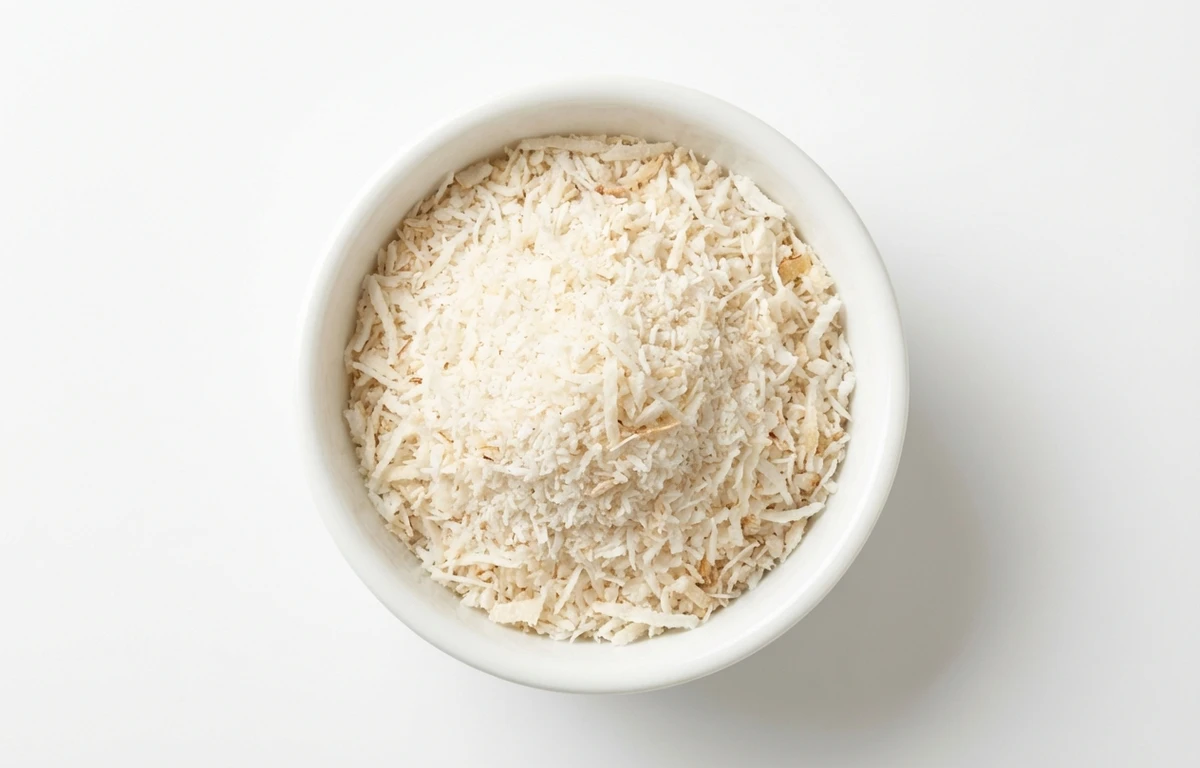
dried coconut.
VegetarianVeganGluten-freeDairy-freeNut-freePeanut-freeSoy-freeEgg-freeShellfish-freeHoney-freeAlcohol-free
ALSO KNOWN AS
dried coconutcoprakopracreamed coconutdried creamed coconut meatunsweetened coconutdried unsweetened coconut meatshredded coconutnariyal ka buradaunsweetened desiccated coconutgrated dried coconutDessicated Coconut
SERVING
CALORIES
660
PROTEIN
6.9g
CARBS
23.6g
FAT
64.5g
FIBER
16.3g
NUTRITION PROFILE · per 100 g
Everything in this ingredient.
MACRONUTRIENTS
Calories660kcal—
Protein6.9g14%
Carbohydrates23.6g9%
Fiber16.3g58%
Sugar7.3g15%
Total fat64.5g83%
Saturated fat57.2g286%
Cholesterol0mg0%
Water3.0g—
MINERALS
Sodium37mg2%
Potassium543mg12%
Calcium26mg2%
Iron3.3mg18%
Magnesium90mg21%
Phosphorus206mg16%
Zinc2.0mg18%
Copper0.80mg89%
Manganese2.8mg120%
Selenium18.5µg34%
VITAMINS
Vitamin A0µg0%
Vitamin C1.5mg2%
Vitamin D0µg0%
Vitamin E0.44mg3%
Vitamin K0.30µg0%
Thiamin (B1)0.06mg5%
Riboflavin (B2)0.10mg8%
Niacin (B3)0.60mg4%
Pantothenic acid (B5)0.80mg16%
Vitamin B60.30mg18%
Folate (B9)9.0µg2%
Vitamin B120µg0%
%DV based on a 2,000 cal diet. Source: USDA FoodData Central. A dash in the %DV column means there’s no established Daily Value for that nutrient.
MEASUREMENT CONVERSIONS
How much is what.
1 cup95g
1 tablespoon5.9g
1 teaspoon2g
1 ml0.4g
1 liter393.3g
HEALTH BENEFITS
Why eat it.
- ✓Rich in dietary fiber, which supports digestive health and promotes feelings of fullness.
- ✓Excellent source of manganese, an essential mineral for bone health, metabolism, and antioxidant function.
- ✓Contains medium-chain triglycerides (MCTs), a type of fat that is easily absorbed and used by the body for energy.
- ✓Provides important minerals such as copper, selenium, and iron.
COOKING TIPS
In the kitchen.
- 1Toast dried coconut in a dry skillet over medium-low heat until fragrant and lightly golden to enhance its nutty flavor before using as a topping for yogurt, oatmeal, or salads.
- 2Rehydrate shredded coconut by soaking it in warm water or milk for 20-30 minutes to soften its texture for use in baked goods or curries.
- 3Use as a gluten-free 'breading' for chicken, shrimp, or fish to create a crispy and flavorful crust.
- 4Incorporate directly into batters for cookies, cakes, and muffins to add texture, moisture, and a distinct tropical flavor.
STORAGE
Keep it fresh.
- Store in an airtight container in a cool, dark, and dry place like a pantry for up to 6 months.
- For longer-term storage, place the airtight container in the refrigerator or freezer, where it can last for over a year.
FAQ
Frequently asked questions.
Is dried coconut healthy?
Dried coconut offers several health benefits, being rich in dietary fiber for digestive health and an excellent source of manganese, which supports bone health and metabolism. It also contains beneficial medium-chain triglycerides (MCTs) for energy. However, it is high in calories and saturated fat, so moderation is key.
What are the nutritional values of dried coconut?
Per 100g, dried coconut contains approximately 660 calories, 6.88g of protein, 23.65g of carbohydrates, and 64.53g of fat. It also provides essential minerals like copper, selenium, and iron.
Is dried coconut good for weight loss?
While dried coconut is calorie-dense, its high fiber content can promote feelings of fullness and aid digestion, which might indirectly support weight management by reducing overall intake. However, due to its high calorie and fat content, portion control is crucial when incorporating it into a weight loss diet.
Is dried coconut vegan and gluten-free?
Yes, dried coconut is naturally vegan as it is a plant-based product derived solely from coconuts. It is also naturally gluten-free, making it suitable for individuals following a gluten-free diet.
Is dried coconut keto-friendly?
Dried coconut can be keto-friendly due to its high fat content and moderate net carbs, especially unsweetened varieties. Its MCTs are also beneficial for ketogenic diets. Always check labels for added sugars, which would increase carb count.
Can diabetics eat dried coconut?
Diabetics can consume dried coconut in moderation, especially unsweetened versions. Its fiber content can help manage blood sugar levels, but the natural sugars and calorie density should be considered. Always monitor portion sizes and check for any added sugars.
What does dried coconut taste like and how is it commonly used?
Dried coconut has a sweet, nutty, and distinctly tropical flavor. It is widely used in baking for cakes, cookies, and granola, as a topping for desserts and yogurts, and in savory dishes like curries and stir-fries to add texture and flavor.
Can dried coconut be rehydrated?
Yes, dried coconut can be rehydrated by soaking it in warm water, milk, or coconut milk for about 20-30 minutes. This process softens the coconut, making it more pliable and suitable for certain recipes or for a fresher texture.
How should I store dried coconut to keep it fresh?
To maintain freshness, store dried coconut in an airtight container in a cool, dark place away from direct sunlight and moisture. For extended shelf life, especially in humid climates, refrigeration or freezing is recommended.
What is the difference between shredded, flaked, and desiccated coconut?
These terms primarily refer to the size and texture of the dried coconut pieces. Desiccated coconut is very finely ground, shredded coconut is in longer, thinner strands, and flaked coconut consists of larger, broader pieces. All are dried coconut, just processed differently.
RECIPES
Cook with dried coconut.
10 recipes · sorted by what’s quick