fruit1 recipes
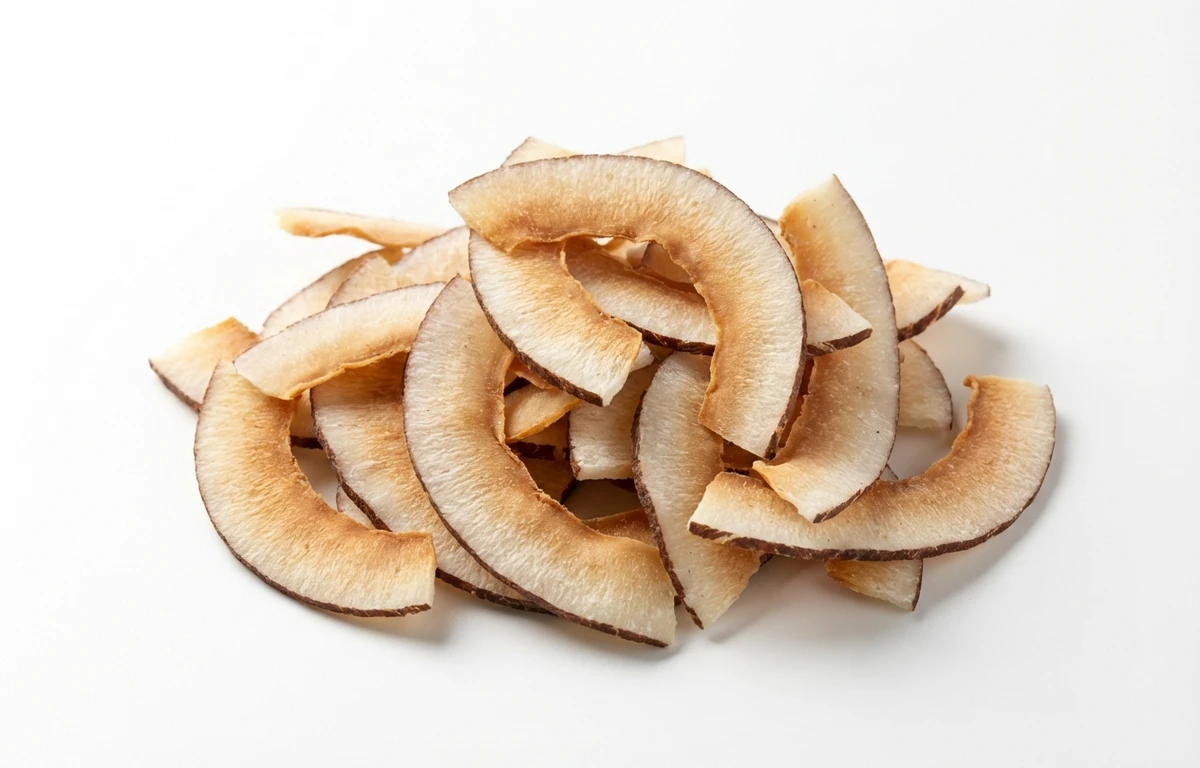
Dried Coconut Slices.
VegetarianVeganGluten-freeDairy-freeNut-freePeanut-freeSoy-freeEgg-freeShellfish-freeHoney-freeAlcohol-free
ALSO KNOWN AS
dried coconut chipsdesiccated coconut sliceskopra slicessukha nariyal slices
SERVING
CALORIES
660
PROTEIN
6.9g
CARBS
23.7g
FAT
64.5g
FIBER
16.3g
NUTRITION PROFILE · per 100 g
Everything in this ingredient.
MACRONUTRIENTS
Calories660kcal—
Protein6.9g14%
Carbohydrates23.7g9%
Fiber16.3g58%
Sugar7.4g15%
Total fat64.5g83%
Saturated fat57.2g286%
Trans fat0g—
Cholesterol0mg0%
Water3.0g—
MINERALS
Sodium37mg2%
Potassium543mg12%
Calcium26mg2%
Iron3.3mg18%
Magnesium90mg21%
Phosphorus206mg16%
Zinc2.0mg18%
Copper0.80mg89%
Manganese2.7mg117%
Selenium18.5µg34%
VITAMINS
Vitamin A0µg0%
Vitamin C0.80mg1%
Vitamin D0µg0%
Vitamin E0.44mg3%
Vitamin K0µg0%
Thiamin (B1)0.06mg5%
Riboflavin (B2)0.10mg8%
Niacin (B3)0.60mg4%
Pantothenic acid (B5)0.30mg6%
Vitamin B60.30mg18%
Folate (B9)9.0µg2%
Vitamin B120µg0%
%DV based on a 2,000 cal diet. Source: USDA FoodData Central. A dash in the %DV column means there’s no established Daily Value for that nutrient.
MEASUREMENT CONVERSIONS
How much is what.
1 cup65g
1 tablespoon4.5g
1 teaspoon1.5g
1 oz28.4g
1 lb453.6g
HEALTH BENEFITS
Why eat it.
- ✓High in dietary fiber which supports digestive health
- ✓Rich in manganese, essential for bone health and metabolism
- ✓Contains medium-chain triglycerides (MCTs) for quick energy
- ✓Provides essential minerals like copper and iron for blood health
- ✓Contains antioxidants that help protect cells from oxidative stress
COOKING TIPS
In the kitchen.
- 1Toast slices in a dry skillet over medium heat for 2-3 minutes until golden for enhanced flavor
- 2Use as a crunchy, gluten-free topping for smoothie bowls, yogurt, or salads
- 3Incorporate into homemade granola or trail mixes for natural sweetness and texture
STORAGE
Keep it fresh.
- Store in an airtight container in a cool, dry, and dark place
- Refrigerate or freeze to extend shelf life and prevent the oils from turning rancid
- Keep away from strong-smelling foods as coconut absorbs odors easily
FAQ
Frequently asked questions.
How long do dried coconut slices last?
When stored in an airtight container in a cool, dry place, they typically last 6 to 12 months. Refrigeration can extend this further.
Can dried coconut slices be frozen?
Yes, they freeze very well. Place them in a freezer-safe bag; they can last up to 18 months in the freezer.
How can I tell if dried coconut has gone bad?
Check for a yellowed appearance, a sour or soapy smell (rancidity), or any signs of mold if moisture has entered the package.
What is the difference between sweetened and unsweetened slices?
Unsweetened slices contain only the natural sugars of the fruit, while sweetened versions have added sugar or corn syrup, significantly increasing the calorie count.
Are dried coconut slices the same as coconut chips?
Yes, 'chips' and 'slices' are often used interchangeably, though chips are sometimes sliced thinner and toasted.
Can I substitute shredded coconut for coconut slices?
Yes, you can substitute by weight, but the texture will be much finer. Slices provide more crunch and visual appeal.
Are coconut slices considered a nut allergen?
While the FDA classifies coconut as a tree nut, many people with tree nut allergies can safely eat coconut. Always consult a doctor if you have a severe allergy.
How do I toast dried coconut slices?
Spread them in a single layer on a baking sheet at 325°F (165°C) for 5-10 minutes, or toss in a dry pan over medium heat until fragrant and golden.
Are dried coconut slices healthy?
They are nutrient-dense and high in fiber, but also very high in saturated fat and calories, so they should be consumed in moderation.
Do I need to soak dried coconut slices before using?
Usually no, they are meant to be eaten dry for crunch. However, if using in certain baked goods or curries, you can rehydrate them in warm water or milk for 15 minutes.
RECIPES
Cook with dried coconut slices.
1 recipes · sorted by what’s quick