
Herb
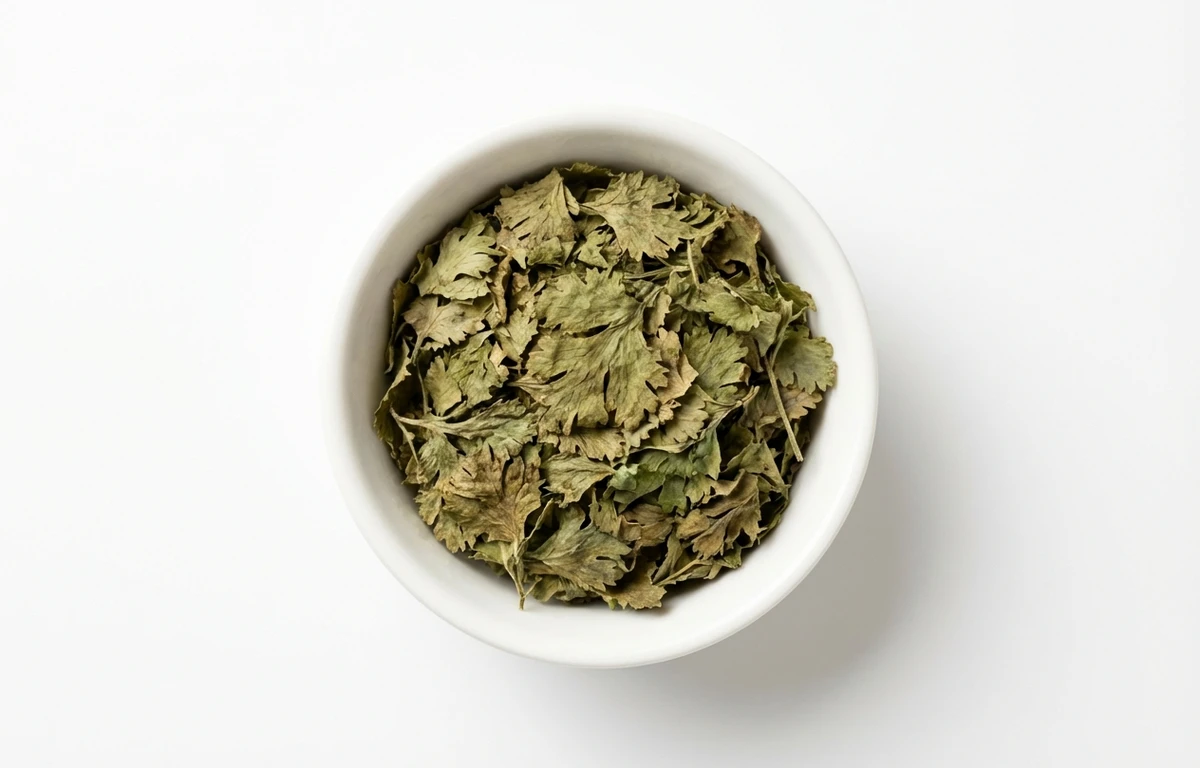
dried coriander leaf.
VegetarianVeganGluten-freeDairy-freeNut-freePeanut-freeSoy-freeEgg-freeShellfish-freeHoney-freeAlcohol-free
ALSO KNOWN AS
dried cilantrodehydrated coriandersukha dhaniya pattadried chinese parsleycilantro flakescoriander flakes
SERVING
CALORIES
279
PROTEIN
21.9g
CARBS
52.1g
FAT
4.8g
FIBER
10.4g
NUTRITION PROFILE · per 100 g
Everything in this ingredient.
MACRONUTRIENTS
Calories279kcal—
Protein21.9g44%
Carbohydrates52.1g19%
Fiber10.4g37%
Sugar7.3g15%
Total fat4.8g6%
Saturated fat0.11g1%
Trans fat0g—
Cholesterol0mg0%
Water7.3g—
MINERALS
Sodium211mg9%
Potassium4466mg95%
Calcium1246mg96%
Iron42.5mg236%
Magnesium694mg165%
Phosphorus634mg51%
Zinc4.7mg43%
Copper1.8mg200%
Manganese9.8mg426%
Selenium0µg0%
VITAMINS
Vitamin A293µg33%
Vitamin C567mg630%
Vitamin D0µg0%
Vitamin E0mg0%
Vitamin K1360µg1133%
Thiamin (B1)1.3mg104%
Riboflavin (B2)1.5mg115%
Niacin (B3)10.7mg67%
Pantothenic acid (B5)0mg0%
Vitamin B60.60mg35%
Folate (B9)274µg69%
Vitamin B120µg0%
%DV based on a 2,000 cal diet. Source: USDA FoodData Central. A dash in the %DV column means there’s no established Daily Value for that nutrient.
MEASUREMENT CONVERSIONS
How much is what.
1 cup20g
1 tablespoon2.4g
1 teaspoon0.8g
1 oz28.4g
1 lb453.6g
1 ml0.1g
1 liter80g
HEALTH BENEFITS
Why eat it.
- ✓Extremely high in Vitamin K for bone health
- ✓Rich in antioxidants that fight oxidative stress
- ✓Contains antimicrobial compounds
- ✓High potassium content supports heart health
- ✓Good source of plant-based iron
COOKING TIPS
In the kitchen.
- 1Rub the dried leaves between your palms before adding to release trapped oils
- 2Add to cooked dishes near the end of the process to maintain flavor
- 3Use a 1:3 ratio when substituting for fresh (1 tsp dried = 1 tbsp fresh)
STORAGE
Keep it fresh.
- Store in an airtight glass container to preserve volatile oils
- Keep in a cool, dark, and dry place away from direct sunlight
- Avoid storing above the stove where heat and steam can degrade quality
FAQ
Frequently asked questions.
How long does dried coriander leaf last?
When stored properly in an airtight container in a cool, dark place, it maintains its best flavor for 1 to 3 years.
Can I freeze dried coriander leaf?
There is no need to freeze dried herbs; it can actually introduce moisture which ruins the texture and flavor.
How do I know if my dried coriander has gone bad?
If the color has turned from green to brown and it no longer has a distinct aroma when crushed, it has lost its potency.
What is the best substitute for dried coriander leaf?
Fresh cilantro is best (use 3x the amount). Otherwise, dried parsley or dried chervil can provide a similar herbal look, though the flavor differs.
Is dried coriander leaf the same as coriander seeds?
No. Dried coriander leaf (cilantro) comes from the leaves of the plant and has a citrusy, herbal flavor, while coriander seeds are the dried fruit and have a warm, nutty, spicy flavor.
How do I prepare dried coriander for cooking?
No washing or cutting is needed. Simply measure and crush the flakes slightly with your fingers as you add them to the dish.
Does drying coriander change its nutritional value?
Drying concentrates minerals and fat-soluble vitamins like Vitamin K, but it significantly reduces heat-sensitive vitamins like Vitamin C compared to fresh leaves.
What dishes are best for dried coriander leaf?
It works best in liquid-based dishes like soups, stews, curries, and marinades where it has time to rehydrate and infuse.
Is dried coriander leaf safe for a Jain diet?
Yes, it is a leaf and not a root vegetable, making it suitable for Jain and Sattvic diets.



















