
Other10 recipes
dried dill.
VegetarianVeganGluten-freeDairy-freeNut-freePeanut-freeSoy-freeEgg-freeShellfish-freeHoney-freeAlcohol-free
ALSO KNOWN AS
dried dill weeddried dill leavessukha soaunakkia chathakuppakoyasoppu drieddried dilldill weed flakesdried shepu
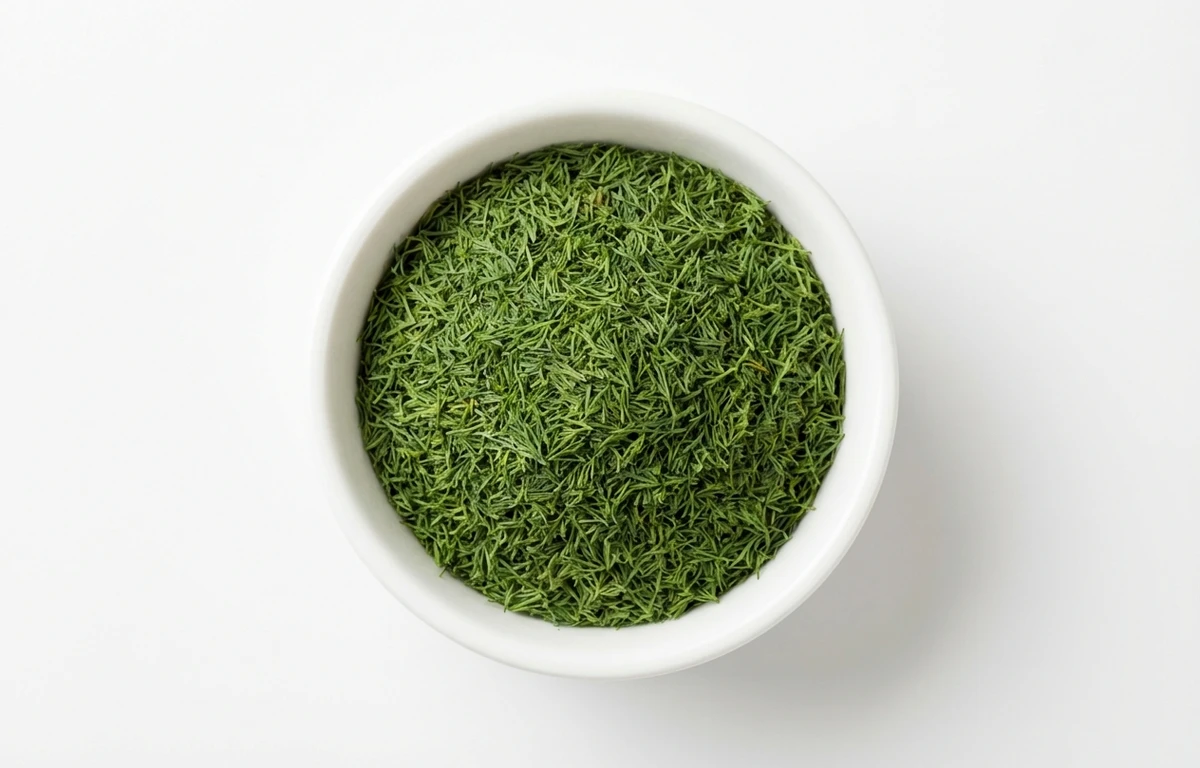
SERVING
CALORIES
343
PROTEIN
20g
CARBS
55.8g
FAT
4.4g
FIBER
13.6g
This ingredient is flagged as naturally gluten-free. Per 100 g, it provides 0 µg of vitamin K.
NUTRITION PROFILE · per 100 g
Everything in this ingredient.
MACRONUTRIENTS
Calories343kcal—
Protein20g40%
Carbohydrates55.8g20%
Fiber13.6g49%
Sugar0g0%
Total fat4.4g6%
Saturated fat0.25g1%
Trans fat0g—
Cholesterol0mg0%
Water7.3g—
MINERALS
Sodium208mg9%
Potassium3308mg70%
Calcium1784mg137%
Iron48.8mg271%
Magnesium451mg107%
Phosphorus543mg43%
Zinc3.3mg30%
Copper0.42mg47%
Manganese4.8mg209%
Selenium4.6µg8%
VITAMINS
Vitamin A293µg33%
Vitamin C1.5mg2%
Vitamin D0µg0%
Vitamin E0mg0%
Vitamin K0µg0%
Thiamin (B1)0.42mg35%
Riboflavin (B2)0.28mg22%
Niacin (B3)2.8mg18%
Pantothenic acid (B5)0mg0%
Vitamin B60.25mg15%
Folate (B9)10µg3%
Vitamin B120µg0%
%DV based on a 2,000 cal diet. Source: USDA FoodData Central. A dash in the %DV column means there’s no established Daily Value for that nutrient.
MEASUREMENT CONVERSIONS
How much is what.
1 cup14g
1 tablespoon1.8g
1 teaspoon0.6g
1 oz28.4g
1 lb453.6g
1 ml0.1g
1 liter60g
HEALTH BENEFITS
Why eat it.
- ✓Contains essential oils that may aid digestion
- ✓High iron content supports healthy blood oxygen levels
COOKING TIPS
In the kitchen.
- 1Add dried dill at the end of cooking to preserve its delicate aroma
- 2Use 1 teaspoon of dried dill for every 1 tablespoon of fresh dill
- 3Rub the dried leaves between your palms before adding to release oils
STORAGE
Keep it fresh.
- Store in an airtight container in a cool, dark place
- Keep away from direct sunlight to prevent color and flavor fading
- Avoid storing near the stove as heat degrades the essential oils
FAQ
Frequently asked questions.
How long does dried dill last?
Dried dill typically maintains its best quality for 1 to 3 years if stored properly in an airtight container in a cool, dark place.
How can I tell if dried dill has gone bad?
If the herb has lost its bright green color and turned greyish-brown, or if it no longer has a strong aroma when rubbed, it has lost its potency.
What is the best substitute for dried dill?
Fresh dill is the best substitute (use 3x the amount). Otherwise, dried tarragon or dried fennel fronds can provide a similar profile.
Is dried dill weed the same as dill seed?
No. Dried dill weed comes from the leaves and is mild and grassy. Dill seed is more pungent, bitter, and has a flavor similar to caraway.
Can I freeze dried dill?
There is no need to freeze dried dill; it is shelf-stable. Freezing may actually introduce moisture which ruins the texture.
What dishes pair best with dried dill?
It pairs excellently with fish (especially salmon), potato salads, yogurt-based dips like Tzatziki, and pickles.
Does dried dill have the same nutrients as fresh?
Dried dill is more concentrated in minerals like calcium and iron per gram, but loses some vitamin C during the drying process.
How do I pick the best quality dried dill?
Look for a vibrant green color rather than a dull yellow or brown, and ensure the packaging is airtight.
RECIPES
Cook with dried dill.
10 recipes · sorted by what’s quick



















