Vegetable10 recipes
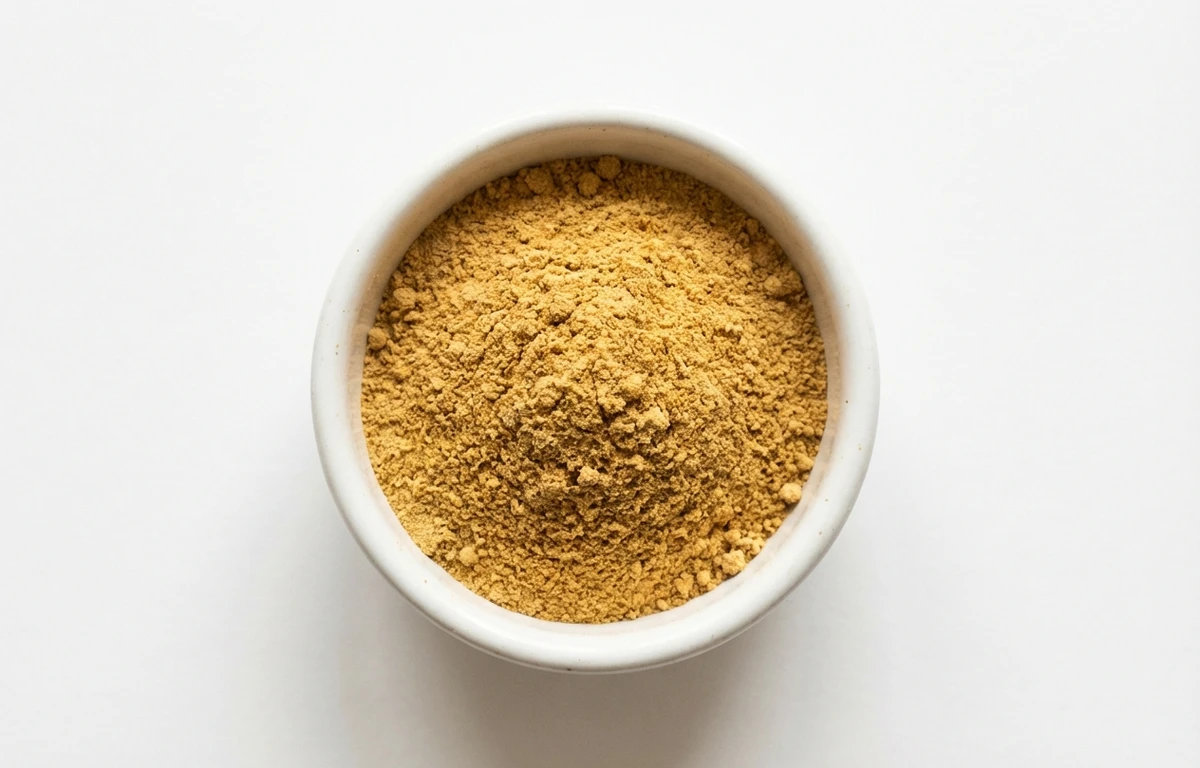
dried ginger powder.
VegetarianVeganGluten-freeDairy-freeNut-freePeanut-freeSoy-freeEgg-freeShellfish-freeHoney-freeAlcohol-free
ALSO KNOWN AS
sonth powderginger powderdry ginger powderadrak powderdried ginger powderdry gingerground gingersonthsunthsaunthshunti powdersukku powderdried ground ginger
SERVING
CALORIES
335
PROTEIN
9.0g
CARBS
71.6g
FAT
4.2g
FIBER
14.1g
This ingredient is flagged as naturally gluten-free. Per 100 g, it provides 0 µg of vitamin K.
NUTRITION PROFILE · per 100 g
Everything in this ingredient.
MACRONUTRIENTS
Calories335kcal—
Protein9.0g18%
Carbohydrates71.6g26%
Fiber14.1g50%
Sugar3.4g7%
Total fat4.2g5%
Saturated fat1.3g7%
Trans fat0g—
Cholesterol0mg0%
Water9.4g—
MINERALS
Sodium32mg1%
Potassium1320mg28%
Calcium114mg9%
Iron19.8mg110%
Magnesium214mg51%
Phosphorus168mg13%
Zinc4.7mg43%
Copper0.48mg53%
Manganese33.3mg1448%
Selenium0µg0%
VITAMINS
Vitamin A0µg0%
Vitamin C0.70mg1%
Vitamin D0µg0%
Vitamin E0mg0%
Vitamin K0µg0%
Thiamin (B1)0.05mg4%
Riboflavin (B2)0.17mg13%
Niacin (B3)9.6mg60%
Pantothenic acid (B5)0.48mg10%
Vitamin B60.63mg37%
Folate (B9)13µg3%
Vitamin B120µg0%
%DV based on a 2,000 cal diet. Source: USDA FoodData Central. A dash in the %DV column means there’s no established Daily Value for that nutrient.
MEASUREMENT CONVERSIONS
How much is what.
1 cup100g
1 tablespoon6g
1 teaspoon2g
1 oz28.4g
1 lb453.6g
1 ml2.5g
HEALTH BENEFITS
Why eat it.
- ✓Aids digestion and relieves gastrointestinal distress
- ✓Effective in reducing nausea and motion sickness
COOKING TIPS
In the kitchen.
- 1Use 1/4 teaspoon of powder to replace 1 tablespoon of fresh grated ginger
- 2Add to spice blends like chai masala or curry powder for a warm, spicy kick
- 3Incorporate into baked goods like gingerbread or cookies for a concentrated flavor
STORAGE
Keep it fresh.
- Store in an airtight glass container to preserve volatile oils
- Keep in a cool, dark, and dry place away from direct sunlight
- Avoid using a wet spoon to prevent clumping and mold growth
FAQ
Frequently asked questions.
How long does dried ginger powder last?
When stored in an airtight container in a cool, dark place, it typically maintains its potency for 1 to 2 years.
Can I substitute fresh ginger with ginger powder?
Yes, use 1/4 teaspoon of ground ginger for every 1 tablespoon of fresh grated ginger. Note that the flavor profile is more concentrated and less citrusy.
How can I tell if my ginger powder has gone bad?
If the powder has lost its strong, pungent aroma or if the color has significantly faded, it is likely stale and should be replaced.
Is ginger powder considered a root vegetable for religious diets?
Yes, since it is derived from the ginger rhizome, it is considered a root vegetable and is typically avoided in strict Jain diets.
What are the best uses for dried ginger powder?
It is excellent for spice rubs, marinades, masala chai, gingerbread, cookies, and traditional Indian gravies like 'Sonth' chutney.
Does ginger powder contain gluten?
Pure ginger powder is naturally gluten-free, but always check labels for potential cross-contamination in processing facilities.
Can I freeze ginger powder?
While possible, it is not necessary if kept dry. Freezing can sometimes introduce moisture which leads to clumping.
What is the difference between 'Sonth' and fresh ginger?
Sonth is dried and ground ginger; it is much more concentrated, hotter, and has a different chemical composition (more shogaols) than fresh ginger (more gingerols).
How do I pick the best quality ginger powder?
Look for a fine texture, a pale yellow to light tan color, and a very sharp, spicy aroma.
RECIPES
Cook with dried ginger powder.
10 recipes · sorted by what’s quick