
Fruit
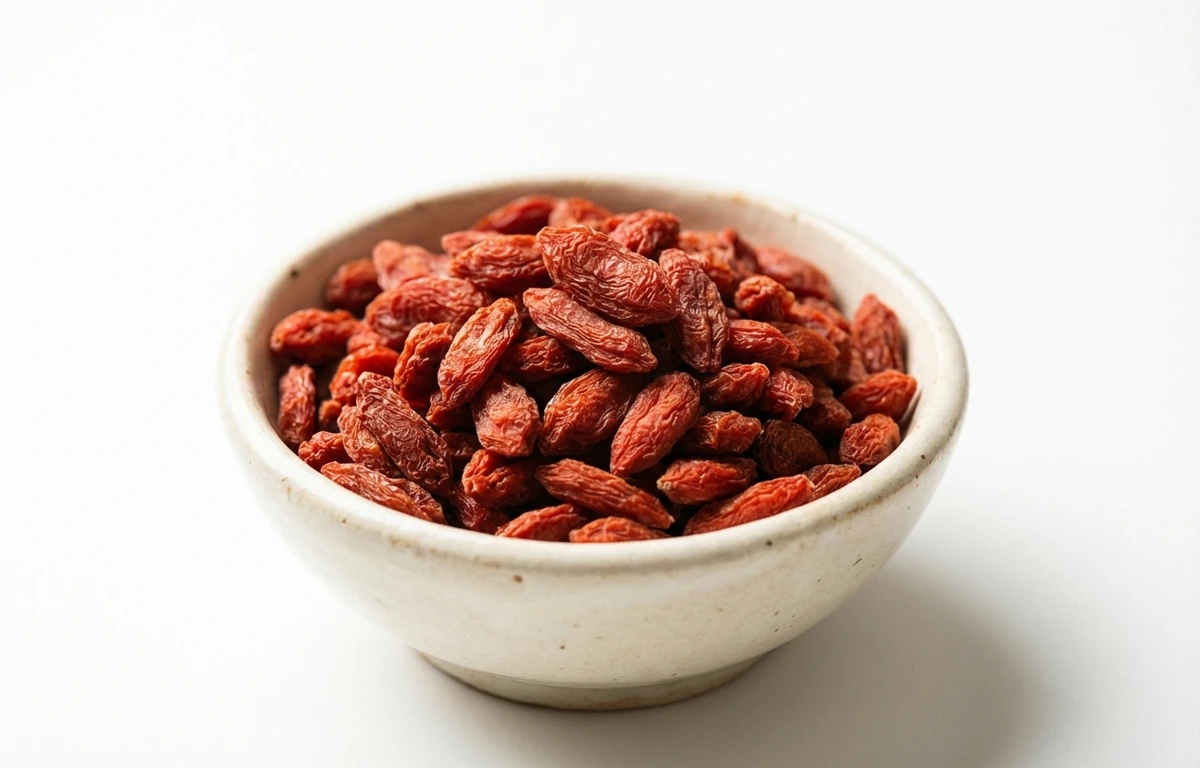
dried goji berries.
VegetarianVeganGluten-freeDairy-freeNut-freePeanut-freeSoy-freeEgg-freeShellfish-freeHoney-freeAlcohol-free
ALSO KNOWN AS
dried wolfberriesdried lycium berriesdried gouqidried gou qi zidried red goji berries
SERVING
CALORIES
349
PROTEIN
14.3g
CARBS
77.1g
FAT
0.40g
FIBER
13g
NUTRITION PROFILE · per 100 g
Everything in this ingredient.
MACRONUTRIENTS
Calories349kcal—
Protein14.3g29%
Carbohydrates77.1g28%
Fiber13g46%
Sugar45.6g91%
Total fat0.40g1%
Saturated fat0g0%
Trans fat0g—
Cholesterol0mg0%
Water7.5g—
MINERALS
Sodium298mg13%
Potassium1132mg24%
Calcium190mg15%
Iron6.8mg38%
Magnesium108mg26%
Phosphorus194mg16%
Zinc2.7mg25%
Copper0.80mg89%
Manganese0.50mg22%
Selenium0.10µg0%
VITAMINS
Vitamin A450µg50%
Vitamin C48.4mg54%
Vitamin D0µg0%
Vitamin E0.80mg5%
Vitamin K0µg0%
Thiamin (B1)0.15mg13%
Riboflavin (B2)1.3mg100%
Niacin (B3)4.3mg27%
Vitamin B120µg0%
%DV based on a 2,000 cal diet. Source: USDA FoodData Central. A dash in the %DV column means there’s no established Daily Value for that nutrient.
MEASUREMENT CONVERSIONS
How much is what.
1 cup115g
1 tablespoon9g
1 teaspoon3g
1 oz28.4g
1 lb453.6g
1 piece0.3g
HEALTH BENEFITS
Why eat it.
- ✓High in antioxidants like zeaxanthin for eye health
- ✓Supports immune system function with vitamins A and C
- ✓Promotes healthy skin and reduces UV damage effects
- ✓Helps stabilize blood sugar levels
- ✓Contains all 8 essential amino acids
COOKING TIPS
In the kitchen.
- 1Rehydrate in warm water for 10-15 minutes before adding to smoothies or salads
- 2Add to soups or stews during the last 10 minutes of cooking for a sweet-tart flavor
- 3Mix into oatmeal, yogurt, or granola for a nutrient-dense texture boost
STORAGE
Keep it fresh.
- Store in a cool, dark, and dry place in an airtight container
- Keep away from moisture to prevent clumping and mold
- Can be refrigerated to maintain freshness for up to 1 year
FAQ
Frequently asked questions.
How long do dried goji berries last?
When stored in an airtight container in a cool, dry place, they typically last for 12 to 18 months.
Do I need to wash dried goji berries before eating?
It is recommended to give them a quick rinse under cold water to remove any dust or debris from the drying process.
What is a good substitute for dried goji berries?
Dried cranberries, tart cherries, or raisins are the best substitutes, though they differ slightly in nutritional profile.
Can dried goji berries be frozen?
Yes, they can be frozen in an airtight bag for up to 2 years to preserve their nutritional value.
How do I pick high-quality dried goji berries?
Look for berries that are bright red, not overly dark or brown, and ensure they are not stuck together in a large clump.
Are dried goji berries high in sugar?
They contain natural sugars (about 45g per 100g), so they should be consumed in moderation, especially by those monitoring glucose.
Can I eat dried goji berries raw?
Yes, they can be eaten raw as a snack, though some find them slightly tough and prefer them rehydrated.
What do dried goji berries taste like?
They have a unique flavor profile that is slightly sweet, tart, and herbal, often compared to a cross between a cranberry and a tomato.
Are they safe for everyone?
Generally yes, but they may interact with certain medications like blood thinners (warfarin), so consult a doctor if on medication.
How many should I eat per day?
A typical recommended serving is about 15-30 grams (roughly a small handful) per day.



















