
Loading...
Per 100g
Nutrition data source: USDA FoodData Central
Common measurement equivalents in grams
When stored in an airtight container in a cool, dry place, they typically last 6 to 12 months. After this, they may lose their color and heat.
Guntur chilies are known for high heat, ranging from 30,000 to 40,000 Scoville Heat Units (SHU), making them much spicier than Kashmiri chilies.
Yes, freezing them in a vacuum-sealed or heavy-duty freezer bag helps preserve their potency and deep red color for over a year.
For heat, use dried Cayenne or Thai bird's eye chilies. For a balance of color and heat, a mix of Kashmiri and Arbol chilies works well.
Look for chilies with a deep red color, shiny skin without mold spots, and a sharp, pungent aroma. They should feel crisp, not leathery.
No. Guntur chilies are significantly spicier and have a higher capsaicin content, whereas Kashmiri chilies are prized for their mild heat and intense red color.
Do not wash them with water unless you are using them immediately. Instead, wipe them with a clean, dry cloth to remove any surface dust.
They are essential in Andhra cuisine, used in spicy curries, 'Pappu' (dal), pickles (Achar), and various spicy chutneys.
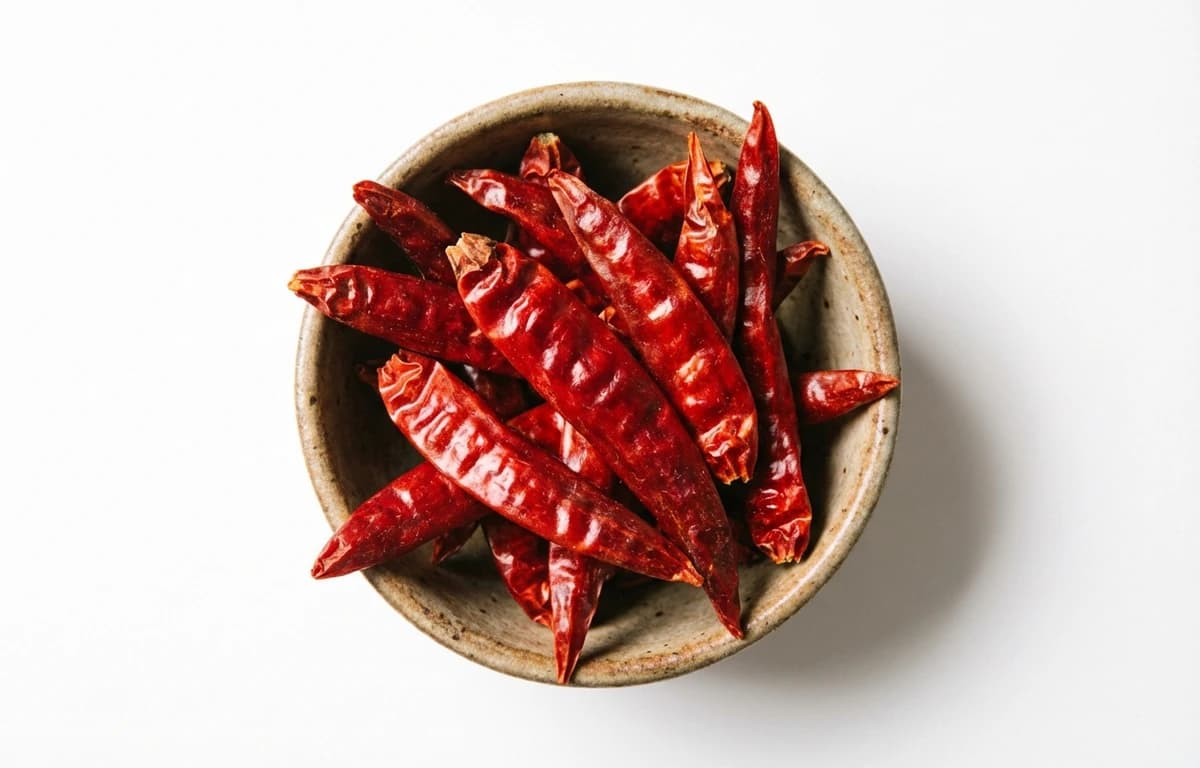
Dried Guntur Chilies is a versatile ingredient found in cuisines around the world. With 324 calories per 100g and 10.6 grams of protein, it's a nutritious addition to many dishes.
Explore more ingredients in the spice category with complete nutrition information.
View all spice →Discover 1 recipes featuring dried guntur chilies with step-by-step instructions.
Browse recipes →They are named after the Guntur district in Andhra Pradesh, India, which is one of the largest producers and exporters of chilies in the world.
Yes, whole dried Guntur chilies are naturally gluten-free. However, always check labels on pre-ground powders for potential anti-caking agents.