
Nut Seed
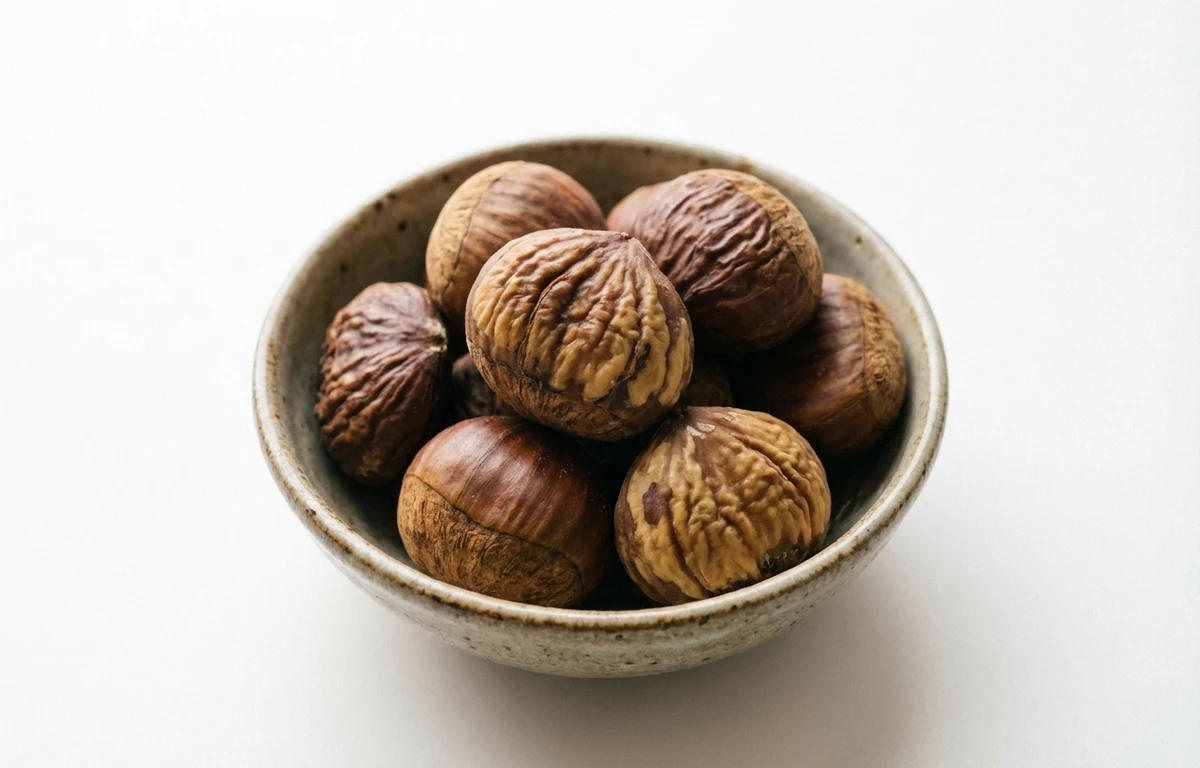
dried japanese chestnuts.
VegetarianVeganGluten-freeDairy-freeNut-freePeanut-freeSoy-freeEgg-freeShellfish-freeHoney-freeAlcohol-free
SERVING
CALORIES
370
PROTEIN
5.0g
CARBS
80g
FAT
2.3g
FIBER
11g
NUTRITION PROFILE · per 100 g
Everything in this ingredient.
MACRONUTRIENTS
Calories370kcal—
Protein5.0g10%
Carbohydrates80g29%
Fiber11g39%
Sugar18g36%
Total fat2.3g3%
Saturated fat0.40g2%
Trans fat0g—
Cholesterol0mg0%
Water8.0g—
MINERALS
Sodium10mg0%
Potassium950mg20%
Calcium50mg4%
Iron2.5mg14%
Magnesium90mg21%
Phosphorus160mg13%
Zinc1.0mg9%
Copper0.80mg89%
Manganese1.5mg65%
Selenium1.5µg3%
VITAMINS
Vitamin A2.0µg0%
Vitamin C25mg28%
Vitamin D0µg0%
Vitamin E0.50mg3%
Vitamin K0µg0%
Thiamin (B1)0.30mg25%
Riboflavin (B2)0.20mg15%
Niacin (B3)1.5mg9%
Pantothenic acid (B5)0.80mg16%
Vitamin B60.50mg29%
Folate (B9)110µg28%
Vitamin B120µg0%
%DV based on a 2,000 cal diet. Source: USDA FoodData Central. A dash in the %DV column means there’s no established Daily Value for that nutrient.
MEASUREMENT CONVERSIONS
How much is what.
1 cup155g
1 tablespoon9.7g
1 teaspoon3.2g
1 ml0.6g
1 liter645.8g
HEALTH BENEFITS
Why eat it.
- ✓Rich in dietary fiber, which supports digestive health and promotes satiety.
- ✓Good source of manganese, an essential mineral for bone formation, metabolism, and antioxidant function.
- ✓Provides complex carbohydrates for sustained energy release, making them a nutritious snack.
- ✓Contains antioxidants like gallic acid and ellagic acid, which help protect cells from oxidative damage.
COOKING TIPS
In the kitchen.
- 1Rehydrate dried chestnuts by soaking them in hot water for at least 30-60 minutes before use in savory dishes like stews, rice pilafs, or stuffings.
- 2Simmer rehydrated chestnuts in a sweet syrup of sugar, mirin, and a touch of soy sauce to create 'Kuri no Kanroni', a traditional Japanese candied chestnut dish.
- 3Grind dried chestnuts into a fine powder to use as a naturally sweet and nutty gluten-free flour in baked goods like cakes, cookies, and bread.
- 4After rehydrating, roast the chestnuts with a little oil and salt for a simple, delicious, and healthy snack.
STORAGE
Keep it fresh.
- Store in an airtight container in a cool, dark, and dry place, such as a pantry, for up to 6 months.
- For longer-term storage, place the airtight container in the refrigerator or freezer to prevent them from becoming rancid and to extend their shelf life to over a year.
FAQ
Frequently asked questions.
Are dried Japanese chestnuts healthy?
Yes, dried Japanese chestnuts are quite healthy. They are rich in dietary fiber, which supports digestive health and promotes satiety. They also provide manganese, an essential mineral for bone formation and metabolism, and contain antioxidants like gallic acid and ellagic acid.
What is the nutritional content of dried Japanese chestnuts?
Per 100g, dried Japanese chestnuts contain approximately 370 calories, 5g protein, 80g carbohydrates, and 2.3g fat. They are particularly noted for their high content of complex carbohydrates, providing sustained energy, and significant dietary fiber.
Are dried Japanese chestnuts good for weight loss?
While dried Japanese chestnuts are calorie-dense, their high dietary fiber content can promote satiety and help you feel full longer, potentially aiding in portion control. However, due to their caloric value, they should be consumed in moderation as part of a balanced diet for weight management.
Are dried Japanese chestnuts gluten-free?
Yes, chestnuts are naturally gluten-free. This makes dried Japanese chestnuts a suitable and safe food option for individuals with celiac disease or gluten sensitivity.
Can diabetics eat dried Japanese chestnuts?
Dried Japanese chestnuts are high in carbohydrates (80g per 100g), so diabetics should consume them in moderation and account for them in their daily carbohydrate intake. Their fiber content can help moderate blood sugar spikes compared to simple sugars, but portion control is crucial.
Are dried Japanese chestnuts vegan?
Yes, dried Japanese chestnuts are a plant-based food. They are entirely derived from the chestnut tree and contain no animal products, making them suitable for a vegan diet.
How do you prepare or eat dried Japanese chestnuts?
Dried Japanese chestnuts typically need to be rehydrated before use. Soak them in water for several hours or overnight until plump. Once rehydrated, they can be boiled, roasted, or added to stews, stuffings, and desserts. They can also be pureed for pastes or fillings.
What do dried Japanese chestnuts taste like?
Dried Japanese chestnuts have a sweet, slightly nutty, and earthy flavor. When cooked, they develop a starchy, floury texture similar to a baked potato but with a distinct sweetness. The drying process often intensifies their natural sugars.
How should I store dried Japanese chestnuts?
Store dried Japanese chestnuts in an airtight container in a cool, dark, and dry place, such as a pantry. Proper storage helps prevent moisture absorption and spoilage. When stored correctly, they can last for several months to up to a year.
Can dried Japanese chestnuts be used in baking?
Yes, once rehydrated and cooked, dried Japanese chestnuts are excellent for baking. They can be pureed into a paste for tarts, cakes, or fillings, or chopped and added to breads, muffins, and cookies to impart a unique sweet and nutty flavor and a tender texture.



















