
Loading...
Per 100g
Nutrition data source: USDA FoodData Central
Common measurement equivalents in grams
When stored in an airtight container in a cool, dark place, they can last for up to 12 months. After this, they may lose their color and potency.
No, they are known for being mild. They rank low on the Scoville scale (approx 1,000-2,000 SHU), making them prized for color rather than heat.
Byadgi chilies are the closest substitute. Alternatively, a mix of paprika (for color) and a small amount of cayenne (for heat) can be used.
Look for chilies that are deep red, have a wrinkled skin, and are not overly brittle or broken. Avoid those with grey or white spots which indicate mold.
Yes, freezing them in a vacuum-sealed bag or airtight container is an excellent way to preserve their color and flavor for over a year.
Remove the stems and seeds, soak the pods in hot water until soft, and then blend with a little of the soaking liquid into a smooth paste.
The color comes from the skin. If the chilies are old or have been exposed to light, the pigments degrade. Ensure you are using fresh, well-stored stock.
It is recommended to wipe them with a clean cloth or give them a quick rinse before soaking to remove any surface dust from the drying process.
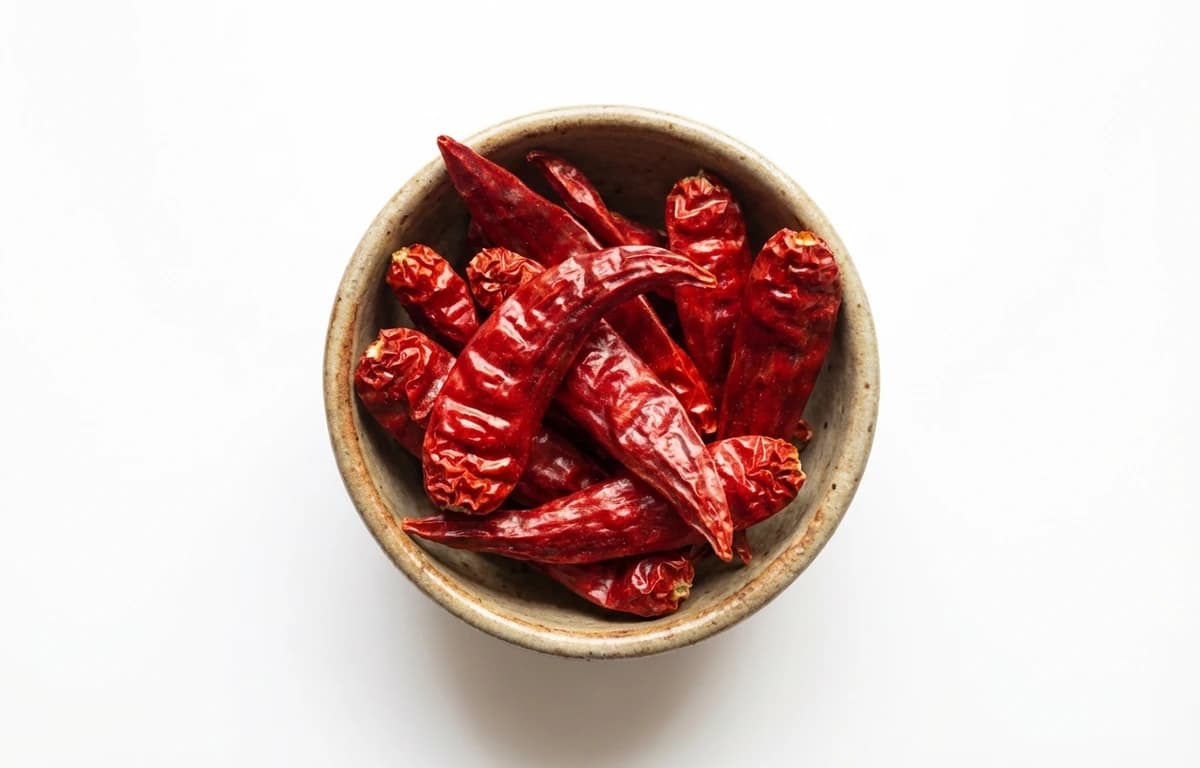
Dried Kashmiri Chilies is a versatile ingredient found in cuisines around the world. With 324 calories per 100g and 10.6 grams of protein, it's a nutritious addition to many dishes.
Explore more ingredients in the spice category with complete nutrition information.
View all spice →Discover 1 recipes featuring dried kashmiri chilies with step-by-step instructions.
Browse recipes →Yes, dried Kashmiri chilies are plant-based and are not root vegetables, making them suitable for Jain and Sattvic diets.