
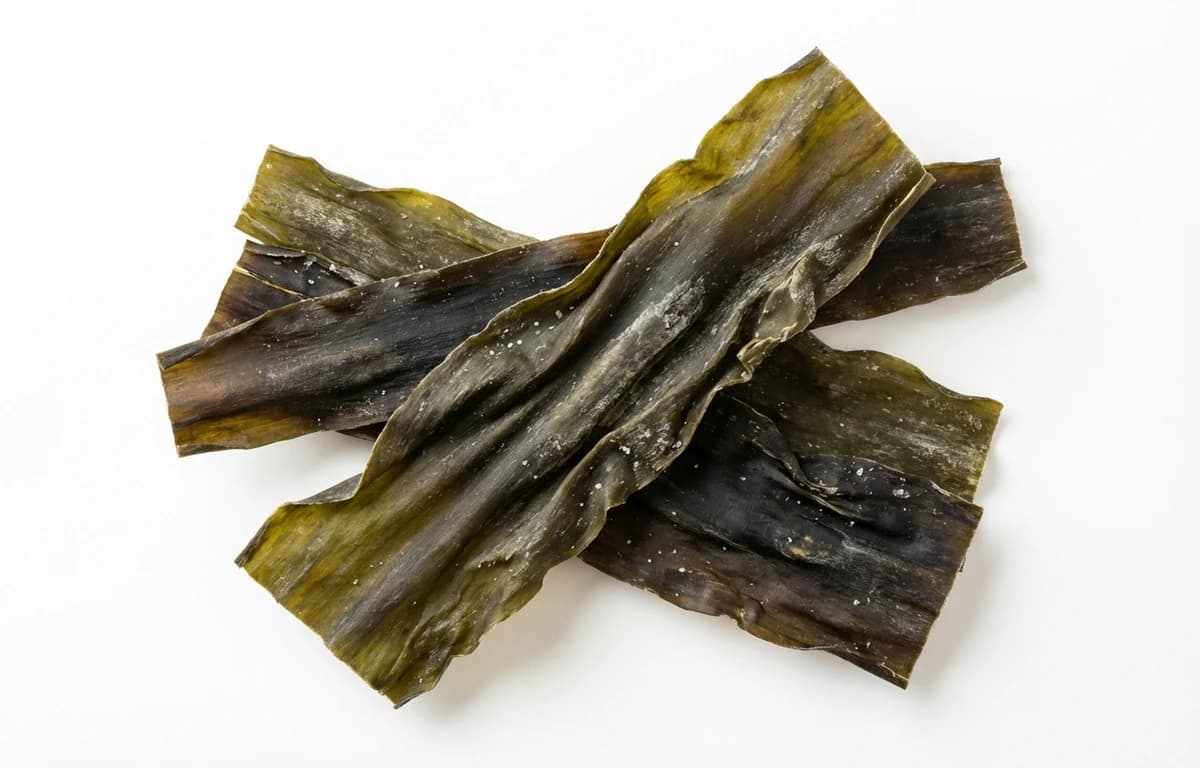
Dried Kelp
Also known as: kombu, konbu, haidai
Loading...
Also known as: kombu, konbu, haidai
Per 100g
Nutrition data source: USDA FoodData Central
Common measurement equivalents in grams
It is mannitol, a natural sugar that rises to the surface during drying. It provides the characteristic umami flavor and should not be washed off.
When stored in an airtight container in a cool, dry place, it can last for 2 to 3 years without losing its flavor.
For dashi (broth), you can start it in cold water. For salads or stir-fries, soak it in water for 10-20 minutes until it becomes pliable.
It is very tough and salty when dry. It is best rehydrated or simmered in liquids to soften the texture and release flavor.
Wakame is the closest substitute for texture, though it is thinner. For broth, a dash of soy sauce or mushroom powder can provide similar umami.
Yes, as a sea vegetable, it naturally contains high levels of sodium (over 2500mg per 100g). Use it sparingly if monitoring salt intake.
Kelp contains enzymes that help break down the complex sugars in beans, making them easier to digest and reducing flatulence.
Yes, due to its extremely high iodine content, excessive consumption can interfere with thyroid function. It is best used as a seasoning or base rather than a primary vegetable.
Dried Kelp is a versatile ingredient found in cuisines around the world. With 300 calories per 100g and 8.1 grams of protein, it's a nutritious addition to many dishes.
Explore more ingredients in the seaweed category with complete nutrition information.
View all seaweed →