
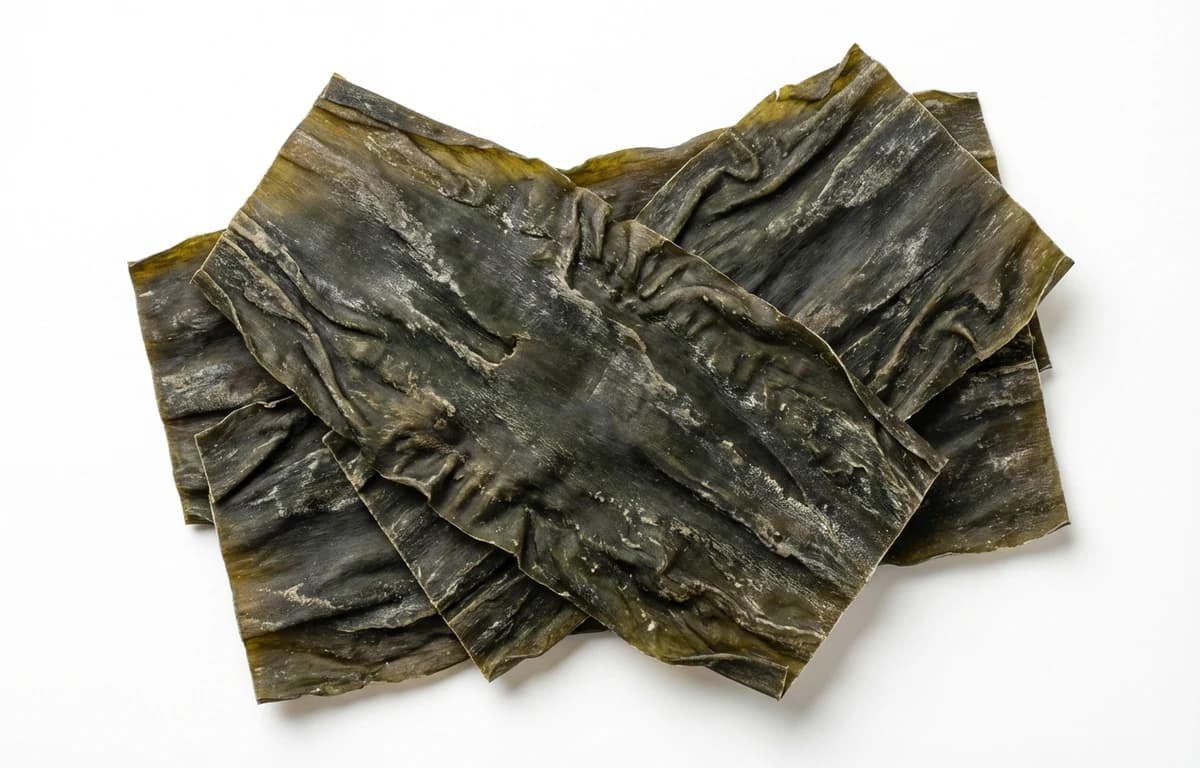
Dried Kombu
Also known as: Dried Kelp, Dashima, Haidai, Dried Sea Kelp, Sukkombu
Loading...
Also known as: Dried Kelp, Dashima, Haidai, Dried Sea Kelp, Sukkombu
Per 100g
Nutrition data source: USDA FoodData Central
Common measurement equivalents in grams
The white powder is called mannitol, a natural salt that rises to the surface during drying. It is a key source of umami and should not be washed off.
If stored in a cool, dry place in an airtight container, dried kombu can last for 2 to 3 years without losing its flavor.
No, do not wash it. Simply wipe it gently with a damp cloth to remove any dust or grit while preserving the flavorful white mannitol powder.
Dried wakame or kelp powder can be used, though they have different textures. For dashi, a vegan mushroom broth or instant dashi powder are alternatives.
Yes, the softened kombu can be sliced and used in salads, stir-fries, or simmered in soy sauce and mirin to make tsukudani.
Yes, kombu has one of the highest iodine contents of any food. It should be consumed in moderation, especially by those with thyroid conditions.
Kombu contains enzymes that help break down the complex sugars (oligosaccharides) in beans that cause flatulence, making them easier to digest.
Look for thick, dark green or nearly black pieces that are stiff and dry. Thicker pieces generally yield a better, more flavorful broth.
Dried Kombu is a versatile ingredient found in cuisines around the world. With 233 calories per 100g and 7.3 grams of protein, it's a nutritious addition to many dishes.
Explore more ingredients in the seaweed category with complete nutrition information.
View all seaweed →Discover 1 recipes featuring dried kombu with step-by-step instructions.
Browse recipes →