vegetable1 recipes
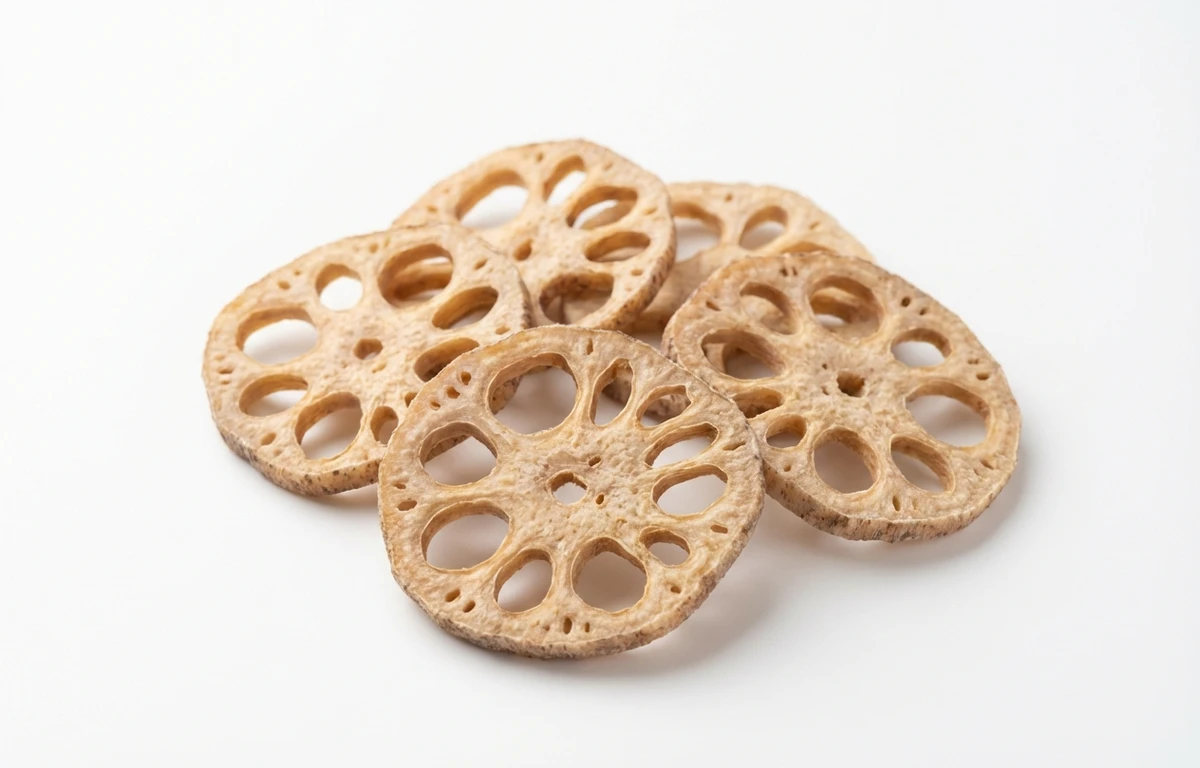
Dried Lotus Root.
VegetarianVeganGluten-freeDairy-freeNut-freePeanut-freeSoy-freeEgg-freeShellfish-freeHoney-freeAlcohol-free
ALSO KNOWN AS
dried renkondried kamal kakdidried lotus stem
SERVING
CALORIES
341
PROTEIN
8.5g
CARBS
79g
FAT
0.60g
FIBER
17.5g
NUTRITION PROFILE · per 100 g
Everything in this ingredient.
MACRONUTRIENTS
Calories341kcal—
Protein8.5g17%
Carbohydrates79g29%
Fiber17.5g63%
Sugar2.5g5%
Total fat0.60g1%
Saturated fat0.10g1%
Trans fat0g—
Cholesterol0mg0%
Water8.5g—
MINERALS
Sodium120mg5%
Potassium1600mg34%
Calcium110mg8%
Iron4.5mg25%
Magnesium95mg23%
Phosphorus310mg25%
Zinc1.4mg13%
Copper0.80mg89%
Manganese0.90mg39%
Selenium2.2µg4%
VITAMINS
Vitamin A0µg0%
Vitamin C25mg28%
Vitamin D0µg0%
Vitamin E0.50mg3%
Vitamin K0.50µg0%
Thiamin (B1)0.40mg33%
Riboflavin (B2)0.10mg8%
Niacin (B3)1.2mg8%
Pantothenic acid (B5)1.5mg30%
Vitamin B60.80mg47%
Folate (B9)35µg9%
Vitamin B120µg0%
%DV based on a 2,000 cal diet. Source: USDA FoodData Central. A dash in the %DV column means there’s no established Daily Value for that nutrient.
MEASUREMENT CONVERSIONS
How much is what.
1 cup30.3g
1 tablespoon1.9g
1 teaspoon0.6g
1 oz28.4g
1 lb453.6g
1 ml0.1g
1 liter126g
1 piece4g
HEALTH BENEFITS
Why eat it.
- ✓High dietary fiber supports digestive health and regularity
- ✓Excellent source of potassium which helps regulate blood pressure
- ✓Contains significant Vitamin C for immune system support
- ✓Rich in complex carbohydrates for sustained energy release
- ✓Provides essential minerals like iron and copper for blood health
COOKING TIPS
In the kitchen.
- 1Rehydrate by soaking in warm water for 2 to 4 hours before use
- 2Add directly to long-simmering soups or stews to soften naturally
- 3After rehydrating, blanch in boiling water with a little vinegar to maintain white color
STORAGE
Keep it fresh.
- Store in an airtight container in a cool, dark, and dry place
- Keep away from moisture to prevent mold growth and spoilage
- Can be stored for up to 12 months if kept properly sealed
FAQ
Frequently asked questions.
How long does dried lotus root last?
When stored in an airtight container in a cool, dry place, it can last for 6 to 12 months.
Do I need to soak dried lotus root before cooking?
Yes, it is very hard. Soak it in warm water for at least 2 hours or until it becomes pliable before adding to stir-fries.
What is a good substitute for dried lotus root?
Fresh lotus root is the best substitute. If unavailable, water chestnuts or bamboo shoots can provide a similar crunchy texture.
Can I freeze dried lotus root?
There is no need to freeze it while dry. However, once rehydrated or cooked, it can be frozen for up to 3 months.
How do I know if dried lotus root has gone bad?
Look for signs of mold, a sour or musty smell, or significant discoloration (dark brown or black spots).
Is dried lotus root gluten-free?
Yes, pure dried lotus root is naturally gluten-free.
What are the most common dishes using dried lotus root?
It is most commonly used in Chinese herbal soups, slow-cooked stews, and Japanese nimono (simmered dishes).
Does drying change the nutritional value?
Drying concentrates the calories, fiber, and minerals, but some heat-sensitive vitamins like Vitamin C may be lower than in fresh roots.
How do I pick the best quality dried lotus root?
Choose slices that are uniform in size, pale cream to light tan in color, and free from dark blemishes or holes caused by insects.
Is lotus root considered a root vegetable in Jain diets?
Yes, because it grows underwater/underground, it is generally avoided in strict Jain and some Sattvic diets.
RECIPES
Cook with dried lotus root.
1 recipes · sorted by what’s quick