
Vegetable
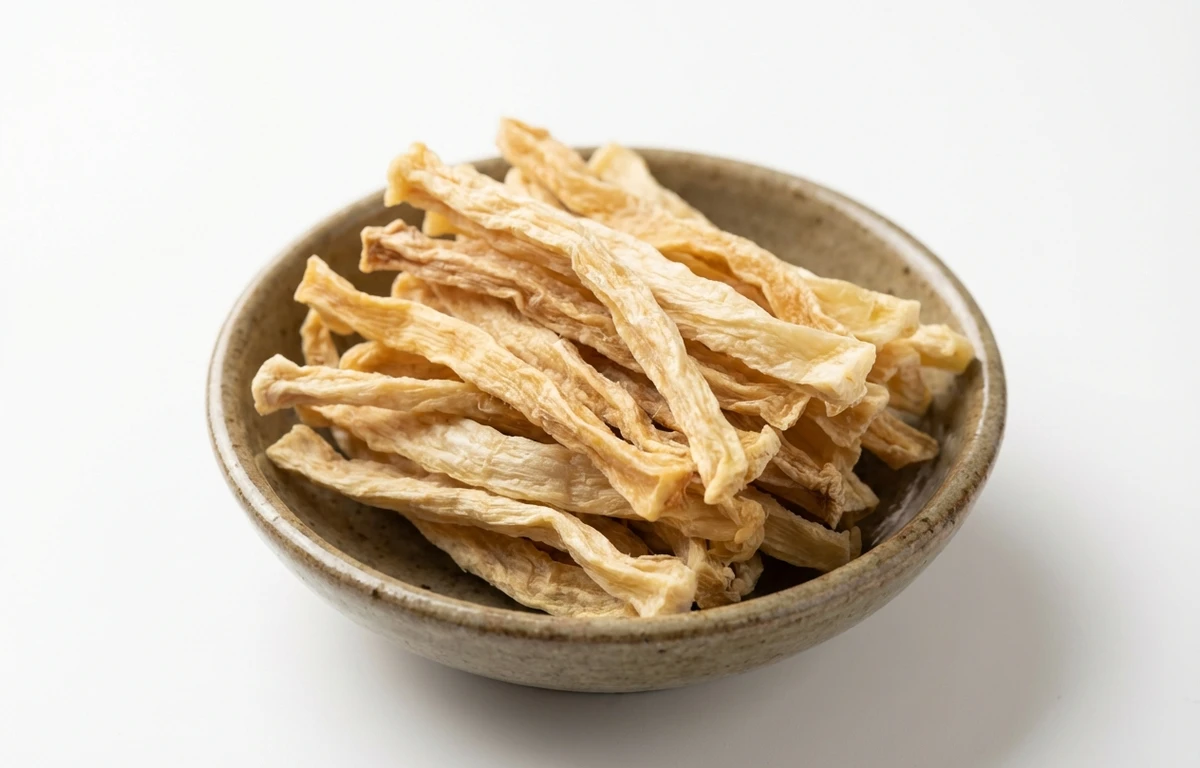
dried oriental radish.
VegetarianVeganGluten-freeDairy-freeNut-freePeanut-freeSoy-freeEgg-freeShellfish-freeHoney-freeAlcohol-free
ALSO KNOWN AS
dried radish
SERVING
CALORIES
271
PROTEIN
7.9g
CARBS
63.4g
FAT
0.72g
FIBER
23.9g
This ingredient is flagged as naturally gluten-free. Per 100 g, it provides 4.5 µg of vitamin K.
NUTRITION PROFILE · per 100 g
Everything in this ingredient.
MACRONUTRIENTS
Calories271kcal—
Protein7.9g16%
Carbohydrates63.4g23%
Fiber23.9g85%
Sugar37.3g75%
Total fat0.72g1%
Saturated fat0.22g1%
Trans fat0g—
Cholesterol0mg0%
Water19.7g—
MINERALS
Sodium278mg12%
Potassium3494mg74%
Calcium629mg48%
Iron6.7mg37%
Magnesium170mg40%
Phosphorus204mg16%
Zinc2.1mg19%
Copper1.6mg181%
Manganese0.54mg23%
Selenium0.70µg1%
VITAMINS
Vitamin A0µg0%
Vitamin C0mg0%
Vitamin D0µg0%
Vitamin E0.01mg0%
Vitamin K4.5µg4%
Thiamin (B1)0.27mg23%
Riboflavin (B2)0.68mg52%
Niacin (B3)3.4mg21%
Pantothenic acid (B5)1.9mg37%
Vitamin B60.62mg36%
Folate (B9)295µg74%
Vitamin B120µg0%
%DV based on a 2,000 cal diet. Source: USDA FoodData Central. A dash in the %DV column means there’s no established Daily Value for that nutrient.
MEASUREMENT CONVERSIONS
How much is what.
1 cup116g
1 tablespoon7.3g
1 teaspoon2.4g
1 ml0.5g
1 liter483.3g
HEALTH BENEFITS
Why eat it.
- ✓Low in calories and fat, making it a healthy addition to various dishes for flavor and texture without excess calories.
COOKING TIPS
In the kitchen.
- 1Rehydrate by soaking in warm water for 20-30 minutes, or until pliable. The soaking liquid can be reserved and used as a flavorful broth.
- 2The rehydrated radish has a chewy texture and a concentrated, sweet, and umami flavor, ideal for stews, soups, and braised dishes.
- 3In Korean cuisine, it's used to make a side dish called 'mu-mallaengi muchim' by seasoning the rehydrated strips with gochujang, soy sauce, and sesame oil.
- 4Finely chop after rehydrating and add to stir-fries or fillings for dumplings and savory pancakes for added texture and flavor.
STORAGE
Keep it fresh.
- Store in a cool, dark, and dry place, such as a pantry or cupboard, away from direct sunlight.
- Keep in an airtight container or a well-sealed bag to prevent moisture absorption, which can lead to mold.
FAQ
Frequently asked questions.
What are the main nutritional components of dried oriental radish?
Per 100g (dry weight), dried oriental radish contains approximately 271 calories, 7.9g protein, 63.37g carbohydrates, and 0.72g fat. It is particularly notable for its high fiber content, which contributes significantly to its carbohydrate profile.
How do you prepare dried oriental radish for cooking?
Dried oriental radish must be rehydrated before use. Typically, you soak it in warm water for 30 minutes to an hour, or until it becomes soft and pliable. After soaking, squeeze out any excess water thoroughly to remove bitterness and achieve the desired texture for cooking.
What does dried oriental radish taste and feel like?
Once rehydrated and cooked, dried oriental radish has a unique earthy, slightly pungent, and subtly sweet flavor. Its texture is distinctively chewy and somewhat fibrous, adding a satisfying bite and depth to various dishes.
What are common culinary uses for dried oriental radish?
Dried oriental radish is a staple in Korean cuisine, often used in hearty soups, stews, and braised dishes. It's commonly prepared as 'mucheong namul' (seasoned dried radish greens) or added to 'siraegi guk' (dried radish greens soup), where it contributes a rich flavor and chewy texture.
How should dried oriental radish be stored?
To maintain its quality, dried oriental radish should be stored in an airtight container in a cool, dry, and dark place. Protect it from direct sunlight and moisture, as these can degrade its quality and shorten its shelf life.
How long does dried oriental radish last?
When stored properly in a cool, dry environment, dried oriental radish has an excellent shelf life and can last for several months to over a year. Its dried nature makes it very stable, though its flavor might subtly mellow over extended periods.



















