
Spice10 recipes
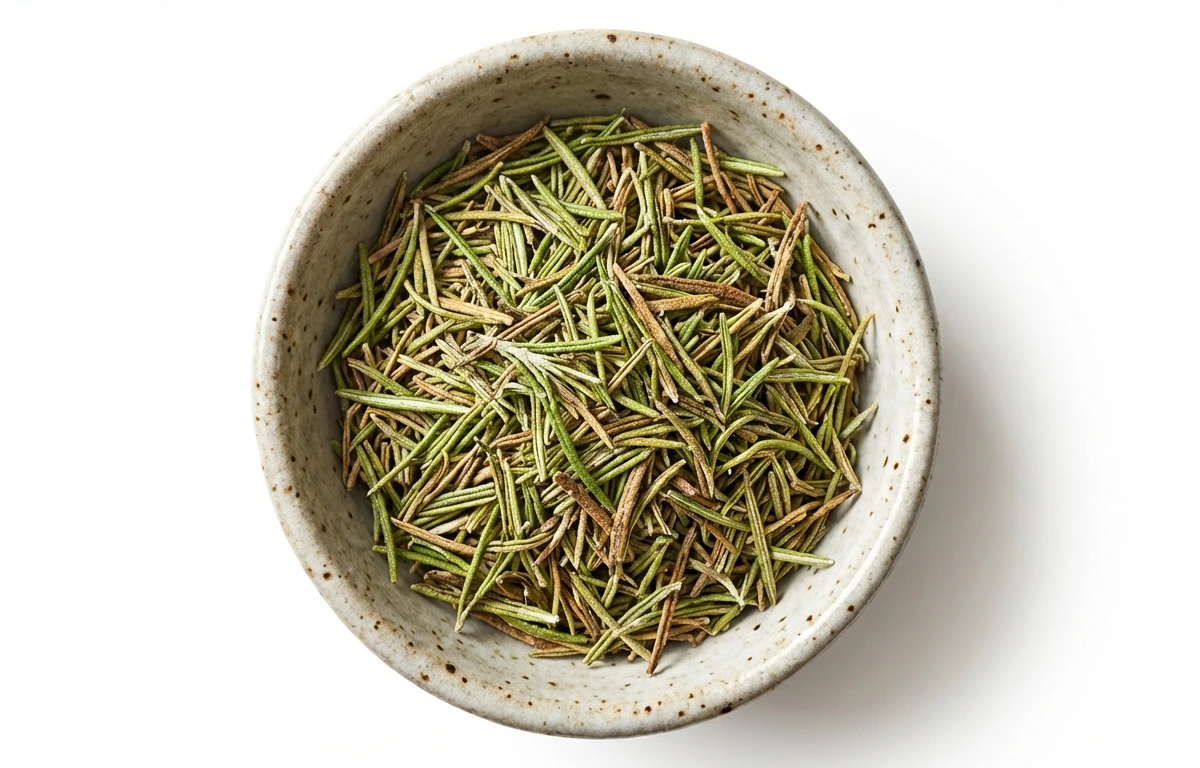
dried rosemary.
VegetarianVeganGluten-freeDairy-freeNut-freePeanut-freeSoy-freeEgg-freeShellfish-freeHoney-freeAlcohol-free
ALSO KNOWN AS
dried rosemary needlesdried rosemary leaves
SERVING
CALORIES
331
PROTEIN
4.9g
CARBS
64.1g
FAT
15.2g
FIBER
42.6g
NUTRITION PROFILE · per 100 g
Everything in this ingredient.
MACRONUTRIENTS
Calories331kcal—
Protein4.9g10%
Carbohydrates64.1g23%
Fiber42.6g152%
Sugar0g0%
Total fat15.2g20%
Saturated fat7.4g37%
Trans fat0g—
Cholesterol0mg0%
Water9.3g—
MINERALS
Sodium50mg2%
Potassium955mg20%
Calcium1280mg98%
Iron29.3mg163%
Magnesium220mg52%
Phosphorus70mg6%
Zinc3.2mg29%
Copper0.55mg61%
Manganese1.9mg81%
Selenium4.6µg8%
VITAMINS
Vitamin A156µg17%
Vitamin C61.2mg68%
Vitamin D0µg0%
Vitamin E0mg0%
Vitamin K0µg0%
Thiamin (B1)0.51mg43%
Riboflavin (B2)0.43mg33%
Niacin (B3)1.0mg6%
Pantothenic acid (B5)0mg0%
Vitamin B61.7mg102%
Folate (B9)307µg77%
Vitamin B120µg0%
%DV based on a 2,000 cal diet. Source: USDA FoodData Central. A dash in the %DV column means there’s no established Daily Value for that nutrient.
MEASUREMENT CONVERSIONS
How much is what.
1 cup52g
1 tablespoon3.3g
1 teaspoon1.2g
1 oz28.4g
1 lb453.6g
1 ml0.2g
1 liter210g
HEALTH BENEFITS
Why eat it.
- ✓Rich in antioxidants and anti-inflammatory compounds
- ✓May help improve digestion and gut health
- ✓Contains compounds that may enhance memory and concentration
- ✓Good source of iron and calcium in concentrated form
- ✓May help lower blood sugar levels
COOKING TIPS
In the kitchen.
- 1Crush the dried needles between your fingers before adding to release essential oils
- 2Add early in the cooking process for stews and roasts to allow flavors to meld
- 3Use sparingly as the flavor is much more concentrated than fresh rosemary
STORAGE
Keep it fresh.
- Store in an airtight container in a cool, dark, and dry place
- Keep away from direct sunlight to prevent flavor degradation
- Avoid storing near the stove where heat and steam can affect quality
FAQ
Frequently asked questions.
How long does dried rosemary last?
When stored properly in a cool, dark place, dried rosemary maintains its best flavor for 1 to 3 years.
How do I know if dried rosemary has gone bad?
It doesn't usually spoil, but it loses potency. Rub a small amount in your palm; if the aroma is weak or non-existent, it should be replaced.
What is the substitution ratio for fresh to dried rosemary?
Use 1 teaspoon of dried rosemary for every 1 tablespoon of fresh rosemary (a 1:3 ratio).
Can I freeze dried rosemary?
Freezing is not necessary for dried herbs and can introduce moisture. It is best kept in a dry, airtight container at room temperature.
What are the best food pairings for dried rosemary?
It pairs exceptionally well with roasted lamb, chicken, potatoes, focaccia bread, and root vegetables.
Should I chop dried rosemary needles?
Yes, if the needles are very long and stiff, a quick chop or a pulse in a spice grinder can make the texture more pleasant in finished dishes.
Is dried rosemary safe during pregnancy?
Culinary amounts used in food are generally considered safe, but medicinal amounts or rosemary oil should be avoided.
What can I use as a substitute for dried rosemary?
Dried thyme, savory, or oregano are the best alternatives, though the flavor profile will shift slightly.
RECIPES
Cook with dried rosemary.
10 recipes · sorted by what’s quick



















