
Seafood
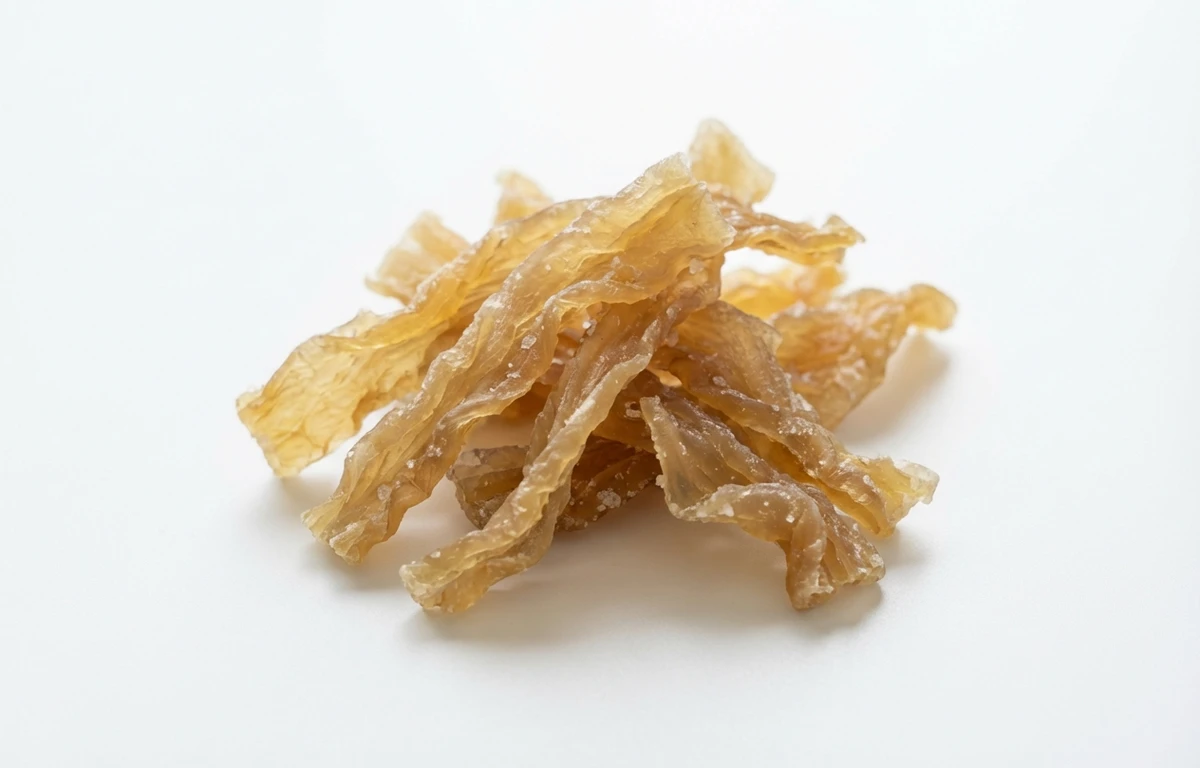
dried salted jellyfish.
VegetarianVeganGluten-freeDairy-freeNut-freePeanut-freeSoy-freeEgg-freeShellfish-freeHoney-freeAlcohol-freeKosher
ALSO KNOWN AS
dried jellyfish
SERVING
CALORIES
36
PROTEIN
5.5g
CARBS
0g
FAT
1.4g
FIBER
0g
NUTRITION PROFILE · per 100 g
Everything in this ingredient.
MACRONUTRIENTS
Calories36kcal—
Protein5.5g11%
Carbohydrates0g0%
Fiber0g0%
Sugar0g0%
Total fat1.4g2%
Saturated fat0.27g1%
Cholesterol5.0mg2%
Water68g—
MINERALS
Sodium9690mg421%
Potassium3.0mg0%
Calcium2.0mg0%
Iron2.3mg13%
Magnesium2.0mg0%
Phosphorus20mg2%
Zinc0.42mg4%
Copper0.14mg16%
Selenium42.2µg77%
VITAMINS
Vitamin A2.0µg0%
Vitamin C0mg0%
Vitamin D0µg0%
Vitamin E0.02mg0%
Vitamin K0.10µg0%
Thiamin (B1)0.01mg1%
Riboflavin (B2)0.01mg1%
Niacin (B3)0.20mg1%
Vitamin B60.01mg1%
Folate (B9)1.0µg0%
Vitamin B120.02µg1%
%DV based on a 2,000 cal diet. Source: USDA FoodData Central. A dash in the %DV column means there’s no established Daily Value for that nutrient.
MEASUREMENT CONVERSIONS
How much is what.
1 cup58g
1 tablespoon3.6g
1 teaspoon1.2g
1 ml0.2g
1 liter241.7g
HEALTH BENEFITS
Why eat it.
- ✓Extremely low in calories and fat, making it suitable for weight management diets.
- ✓A natural source of collagen, which may support skin elasticity and joint health.
- ✓Contains minerals like selenium, an antioxidant that helps protect cells from damage.
- ✓Provides chondroitin sulfate, a compound found in cartilage that may help alleviate joint pain.
COOKING TIPS
In the kitchen.
- 1Thoroughly rehydrate by soaking in cold water for at least 4-6 hours, or overnight, changing the water several times to remove excess salt.
- 2For a signature crunchy texture, blanch the rehydrated jellyfish in boiling water for 15-30 seconds, then immediately plunge into an ice bath to stop the cooking process.
- 3Jellyfish has a neutral taste and excels at absorbing flavors. It is best served cold in salads with bold dressings containing sesame oil, soy sauce, rice vinegar, and chili.
- 4Slice the rehydrated and blanched jellyfish into thin strips for an ideal texture and to allow it to mix well with other salad ingredients.
STORAGE
Keep it fresh.
- Store the unopened package of dried salted jellyfish in a cool, dark, and dry place like a pantry for up to one year.
- Once rehydrated, keep the jellyfish in a covered container in the refrigerator and use within 3-4 days.
FAQ
Frequently asked questions.
Is dried salted jellyfish healthy?
Yes, dried salted jellyfish is considered healthy due to its extremely low calorie and fat content. It's a natural source of collagen, which may support skin elasticity and joint health, and contains minerals like selenium and chondroitin sulfate.
What are the nutritional values of dried salted jellyfish?
Per 100g, dried salted jellyfish is very low in calories, providing approximately 36 calories. It contains about 5.5g of protein, 0g of carbohydrates, and 1.4g of fat, making it a lean protein source.
Is dried salted jellyfish good for weight loss?
Yes, dried salted jellyfish can be beneficial for weight loss diets. Its very low calorie and fat content, combined with its protein contribution, makes it a satisfying and light addition to meals without adding significant caloric load.
How do you prepare dried salted jellyfish for eating?
Dried salted jellyfish requires rehydration and desalting before consumption. Typically, it's soaked in water for several hours, with multiple water changes, to remove excess salt and soften its texture. After desalting, it's often blanched briefly in hot water and then rinsed with cold water.
What does dried salted jellyfish taste and texture like?
Once properly prepared, dried salted jellyfish has a mild, slightly briny flavor and a distinctive crunchy, firm, yet gelatinous texture. It readily absorbs the flavors of dressings and sauces it's served with, making it versatile in various dishes.
Is dried salted jellyfish gluten-free?
Generally, dried salted jellyfish itself is naturally gluten-free as it's a seafood product. However, always check the packaging for any added ingredients or cross-contamination warnings, especially if it's part of a pre-packaged salad or dish.
Is dried salted jellyfish keto-friendly?
Yes, dried salted jellyfish is highly keto-friendly. It contains 0g of carbohydrates and very little fat, while providing a moderate amount of protein, fitting well into a ketogenic diet plan.
How should dried salted jellyfish be stored?
Unopened dried salted jellyfish should be stored in a cool, dry place away from direct sunlight. Once opened or rehydrated, it should be kept refrigerated in an airtight container and consumed within a few days for best quality and safety.
How long does dried salted jellyfish last?
When kept in its original dried and sealed packaging, dried salted jellyfish can last for several months to over a year, depending on the manufacturer's date. After rehydration, it should be consumed within 2-3 days and stored in the refrigerator.
Can dried salted jellyfish be eaten raw?
Dried salted jellyfish is not eaten raw in its dried state. It must undergo a rehydration and desalting process. After proper preparation, it is typically served cold in salads or appetizers, but it is not cooked with heat like other seafood.



















