
Nut Seed
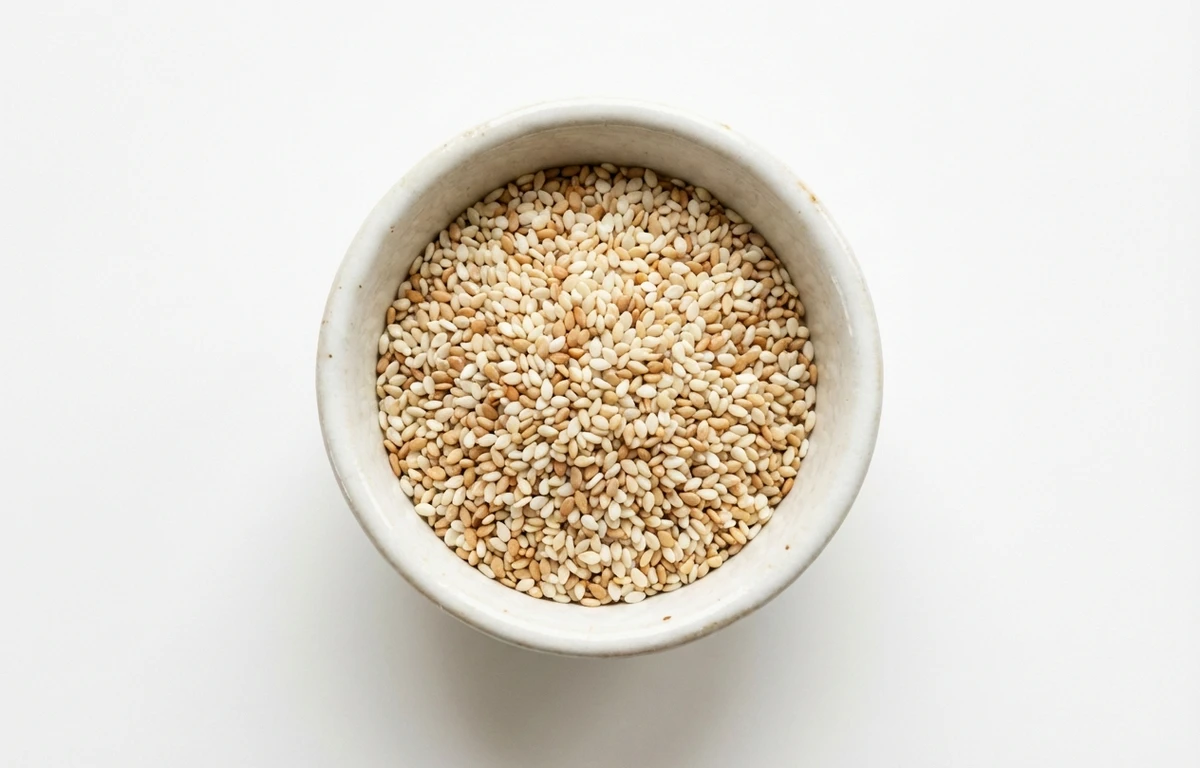
dried sesame seed kernels.
VegetarianVeganGluten-freeDairy-freeNut-freePeanut-freeSoy-freeEgg-freeShellfish-freeHoney-freeAlcohol-free
ALSO KNOWN AS
sesame seed kernels
SERVING
CALORIES
631
PROTEIN
20.4g
CARBS
11.7g
FAT
61.2g
FIBER
11.6g
NUTRITION PROFILE · per 100 g
Everything in this ingredient.
MACRONUTRIENTS
Calories631kcal—
Protein20.4g41%
Carbohydrates11.7g4%
Fiber11.6g41%
Sugar0.48g1%
Total fat61.2g78%
Saturated fat9.1g45%
Trans fat0g—
Cholesterol0mg0%
Water3.8g—
MINERALS
Sodium47mg2%
Potassium370mg8%
Calcium60mg5%
Iron6.4mg35%
Magnesium345mg82%
Phosphorus667mg53%
Zinc6.7mg61%
Copper1.4mg156%
Manganese1.4mg63%
Selenium34.4µg63%
VITAMINS
Vitamin A3.0µg0%
Vitamin C0mg0%
Vitamin D0µg0%
Vitamin E1.7mg11%
Vitamin K0µg0%
Thiamin (B1)0.70mg58%
Riboflavin (B2)0.09mg7%
Niacin (B3)5.8mg36%
Pantothenic acid (B5)0.29mg6%
Vitamin B60.40mg24%
Folate (B9)115µg29%
Vitamin B120µg0%
%DV based on a 2,000 cal diet. Source: USDA FoodData Central. A dash in the %DV column means there’s no established Daily Value for that nutrient.
MEASUREMENT CONVERSIONS
How much is what.
1 cup150g
1 tablespoon8g
1 teaspoon2.7g
1 ml0.5g
1 liter533.3g
HEALTH BENEFITS
Why eat it.
- ✓Excellent source of minerals like copper, manganese, and magnesium, crucial for bone health and metabolic function.
- ✓Rich in healthy monounsaturated and polyunsaturated fats, which support heart health.
- ✓Contains unique antioxidants called lignans (sesamin and sesamolin) that may help reduce inflammation and oxidative stress.
- ✓Good source of dietary fiber, promoting digestive regularity and healthy cholesterol levels.
COOKING TIPS
In the kitchen.
- 1Toast seeds in a dry skillet over medium heat for 2-3 minutes, stirring frequently, until fragrant and lightly golden to intensify their nutty flavor.
- 2Grind toasted sesame seeds to make tahini, a fundamental ingredient in hummus, baba ghanoush, and various dressings.
- 3Use as a crunchy topping for salads, stir-fries, noodle dishes, yogurt, and baked goods like bread and bagels.
- 4Incorporate into a crust or coating for fish, chicken, or tofu before baking or pan-frying.
STORAGE
Keep it fresh.
- Store in an airtight container in a cool, dark pantry for up to 6 months.
- For longer-term storage (up to a year), refrigerate or freeze the seeds to prevent their natural oils from becoming rancid.
FAQ
Frequently asked questions.
Is dried sesame seed healthy?
Yes, dried sesame seeds are very healthy. They are an excellent source of essential minerals like copper, manganese, and magnesium, and are rich in healthy monounsaturated and polyunsaturated fats. They also contain unique antioxidants called lignans and are a good source of dietary fiber, supporting overall well-being.
What are the nutritional benefits of dried sesame seeds?
Dried sesame seeds are packed with nutrients. Per 100g, they provide 20.45g of protein, 11.73g of carbohydrates, and 61.21g of healthy fats. They are particularly noted for their high content of minerals crucial for bone health and metabolic function, and fiber for digestion.
How many calories and how much fat are in dried sesame seeds?
Dried sesame seeds are calorie-dense and rich in fats. A 100g serving contains approximately 631 calories and 61.21g of fat, primarily healthy monounsaturated and polyunsaturated fats. Due to their high caloric and fat content, they are best consumed in moderation.
Are dried sesame seeds good for heart health?
Yes, dried sesame seeds are beneficial for heart health. They are rich in healthy monounsaturated and polyunsaturated fats, which can help lower bad cholesterol levels. Additionally, the lignans (sesamin and sesamolin) found in sesame seeds may contribute to reducing inflammation and oxidative stress, further supporting cardiovascular well-being.
Are dried sesame seeds gluten-free?
Yes, dried sesame seeds are naturally gluten-free. They are a safe and nutritious ingredient for individuals following a gluten-free diet. However, always check product labels for potential cross-contamination if you have severe gluten sensitivity or celiac disease.
Are dried sesame seeds keto-friendly?
Dried sesame seeds can be included in a keto diet in moderation. While they contain some carbohydrates (11.73g per 100g), their high fat (61.21g) and protein (20.45g) content makes them suitable for adding flavor and nutrients without significantly impacting carb limits when used sparingly.
How should dried sesame seeds be used in cooking?
Dried sesame seeds are incredibly versatile in cooking. They can be sprinkled over salads, stir-fries, and roasted vegetables for added crunch and flavor. They are also a key ingredient in baked goods, breading for meats or fish, and in making tahini or gomasio.
What do dried sesame seeds taste like?
Dried sesame seeds have a mild, nutty, and slightly sweet flavor when raw. When toasted, their flavor intensifies, becoming richer, deeper, and more pronouncedly nutty, with a hint of bitterness. This toasted flavor is often preferred for culinary applications.
How should I store dried sesame seeds to keep them fresh?
To keep dried sesame seeds fresh, store them in an airtight container in a cool, dark place, such as a pantry. For longer shelf life, especially in warmer climates, refrigeration or freezing can help prevent the oils from going rancid.
Do dried sesame seeds need to be toasted before use?
While dried sesame seeds can be used raw, toasting them significantly enhances their flavor and aroma, making them more fragrant and nutty. Toasting is recommended for most culinary applications to bring out their best qualities, but it's not strictly necessary for safety.



















