
Other
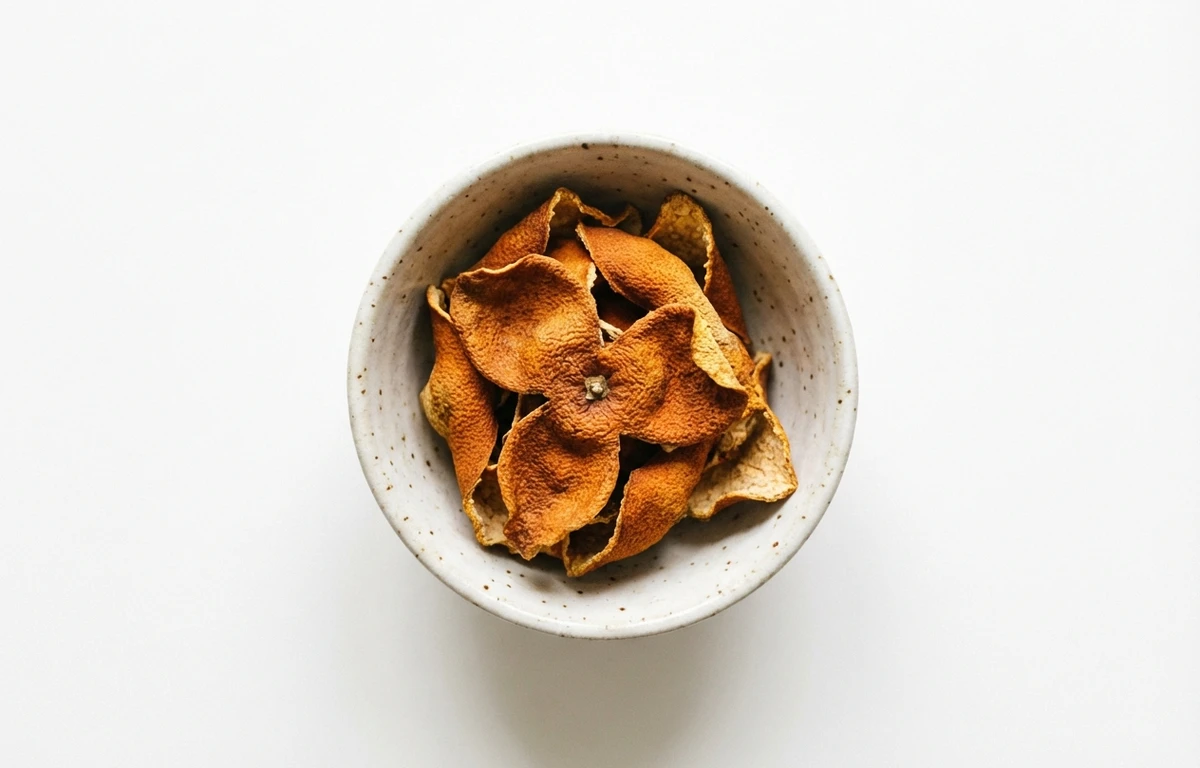
dried tangerine peel.
VegetarianVeganGluten-freeDairy-freeNut-freePeanut-freeSoy-freeEgg-freeShellfish-freeHoney-freeAlcohol-free
ALSO KNOWN AS
chenpichen pidried mandarin peeldried orange zestdried tangerine peeldried orange peel
SERVING
CALORIES
283
PROTEIN
1.5g
CARBS
72.5g
FAT
1.1g
FIBER
10.6g
This ingredient is flagged as naturally gluten-free. Per 100 g, it provides 0 µg of vitamin K.
NUTRITION PROFILE · per 100 g
Everything in this ingredient.
MACRONUTRIENTS
Calories283kcal—
Protein1.5g3%
Carbohydrates72.5g26%
Fiber10.6g38%
Sugar15g30%
Total fat1.1g1%
Saturated fat0.20g1%
Trans fat0g—
Cholesterol0mg0%
Water12g—
MINERALS
Sodium5.0mg0%
Potassium212mg5%
Calcium161mg12%
Iron0.80mg4%
Magnesium22mg5%
Phosphorus21mg2%
Zinc0.20mg2%
Copper0.10mg11%
Manganese0.10mg4%
Selenium0.50µg1%
VITAMINS
Vitamin A21µg2%
Vitamin C136mg151%
Vitamin D0µg0%
Vitamin E0.25mg2%
Vitamin K0µg0%
Thiamin (B1)0.12mg10%
Riboflavin (B2)0.09mg7%
Niacin (B3)0.90mg6%
Pantothenic acid (B5)0.40mg8%
Vitamin B60.17mg10%
Folate (B9)30µg8%
Vitamin B120µg0%
%DV based on a 2,000 cal diet. Source: USDA FoodData Central. A dash in the %DV column means there’s no established Daily Value for that nutrient.
MEASUREMENT CONVERSIONS
How much is what.
1 cup45g
1 tablespoon6g
1 teaspoon2g
1 oz28.4g
1 lb453.6g
1 piece3g
HEALTH BENEFITS
Why eat it.
- ✓Traditionally used to aid digestion and reduce bloating
- ✓May help in reducing phlegm and respiratory congestion
COOKING TIPS
In the kitchen.
- 1Soak in warm water until soft before adding to dishes
- 2Scrape off the white inner pith after soaking if you want to reduce bitterness
- 3Add to slow-cooked stews, soups, or desserts for a subtle citrus aroma
STORAGE
Keep it fresh.
- Store in an airtight container in a cool, dark, and dry place
- Avoid moisture as it can cause the peel to mold
- Properly aged peel can last for several years, often improving in flavor
FAQ
Frequently asked questions.
What is dried tangerine peel (Chenpi)?
It is the sun-dried skin of a tangerine or mandarin orange, widely used in Chinese cuisine and traditional medicine for its aromatic and digestive properties.
How do I select high-quality dried tangerine peel?
Look for peels that are thin, dry, and brittle. Older peels (aged Chenpi) are darker, more fragrant, and more expensive.
Does it need to be washed before use?
Yes, it is recommended to rinse the peel briefly and then soak it in water to soften it before adding it to your recipe.
What can I use as a substitute?
Fresh tangerine or orange zest can work in a pinch, though the flavor profile is brighter and less complex than the aged, dried version.
How long does dried tangerine peel last?
If kept dry and airtight, it can last for years. In Chinese culture, aged peel (10-20 years) is highly prized for its deep flavor.
Can I make it at home?
Yes, you can air-dry organic tangerine peels in a well-ventilated area until they are completely hard and brittle.
What dishes commonly use this ingredient?
It is frequently used in red bean soup, beef stews, steamed fish, and various herbal teas.



















