
Vegetable
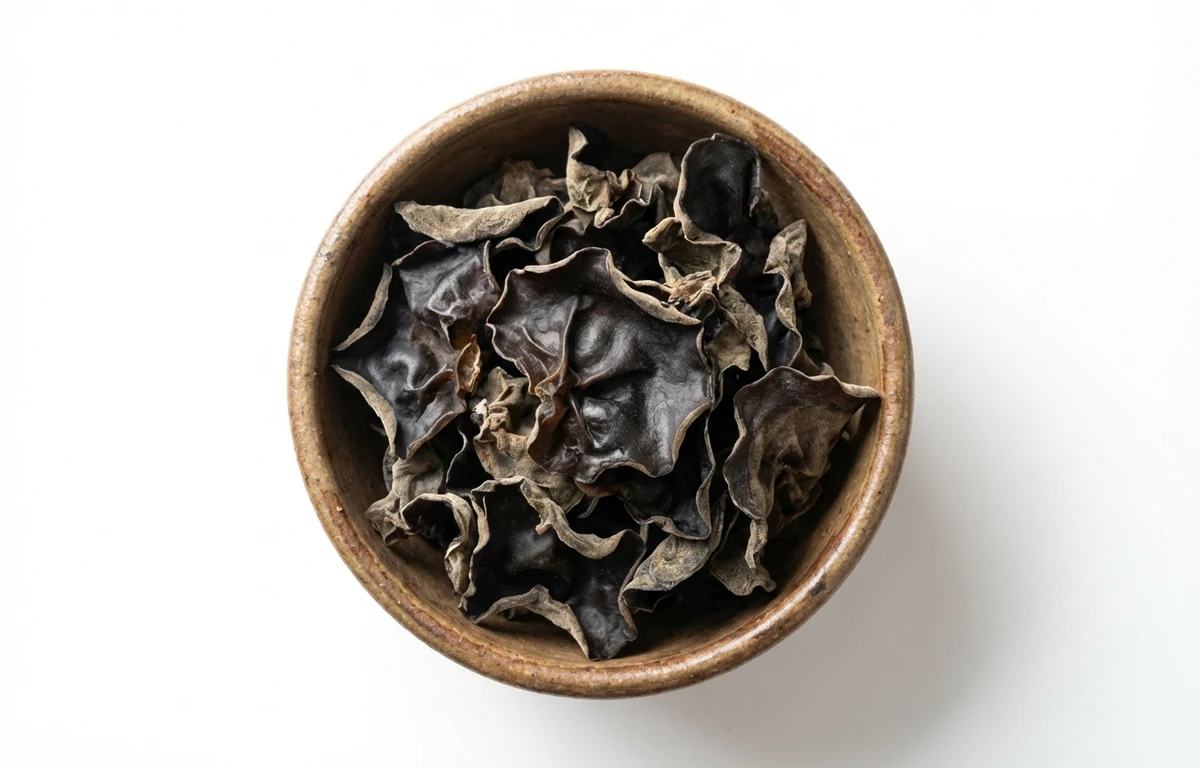
dried wood ear mushrooms.
VegetarianVeganGluten-freeDairy-freeNut-freePeanut-freeSoy-freeEgg-freeShellfish-freeHoney-freeAlcohol-free
ALSO KNOWN AS
wood ear mushroomsblack funguscloud ear fungus
SERVING
CALORIES
284
PROTEIN
10.6g
CARBS
70.1g
FAT
1.2g
FIBER
58g
This ingredient is flagged as naturally gluten-free. Per 100 g, it provides 0 µg of vitamin K.
NUTRITION PROFILE · per 100 g
Everything in this ingredient.
MACRONUTRIENTS
Calories284kcal—
Protein10.6g21%
Carbohydrates70.1g25%
Fiber58g207%
Sugar0g0%
Total fat1.2g2%
Saturated fat0.20g1%
Trans fat0g—
Cholesterol0mg0%
Water11g—
MINERALS
Sodium35mg2%
Potassium754mg16%
Calcium159mg12%
Iron5.5mg31%
Magnesium83mg20%
Phosphorus184mg15%
Zinc1.3mg12%
Copper0.50mg56%
Manganese0.80mg35%
Selenium10.3µg19%
VITAMINS
Vitamin A0µg0%
Vitamin C0mg0%
Vitamin E0.10mg1%
Vitamin K0µg0%
Thiamin (B1)0.15mg13%
Riboflavin (B2)0.84mg65%
Niacin (B3)6.3mg39%
Pantothenic acid (B5)1.5mg30%
Vitamin B60.11mg6%
Folate (B9)38µg10%
Vitamin B120µg0%
%DV based on a 2,000 cal diet. Source: USDA FoodData Central. A dash in the %DV column means there’s no established Daily Value for that nutrient.
MEASUREMENT CONVERSIONS
How much is what.
1 cup28g
1 tablespoon1.8g
1 teaspoon0.6g
1 ml0.1g
1 liter116.7g
1 piece4.5g
HEALTH BENEFITS
Why eat it.
- ✓Supports gut health due to its high dietary fiber and prebiotic content.
- ✓May have anticoagulant properties, potentially supporting cardiovascular health by improving circulation.
COOKING TIPS
In the kitchen.
- 1Always rehydrate in warm water for 20-30 minutes, or until fully softened and expanded, before cooking. They will swell to several times their original size.
- 2After rehydrating, trim off and discard the tough, woody nub at the base where the mushroom was attached.
- 3Prized for their unique crunchy, slightly gelatinous texture rather than a strong flavor; they readily absorb the flavors of sauces and broths.
- 4Slice thinly and add to stir-fries, soups (like hot and sour soup), and cold salads for a unique textural contrast.
STORAGE
Keep it fresh.
- Store in an airtight container in a cool, dark, and dry place, such as a pantry, where they can last for over a year.
- Once rehydrated, store in a covered container in the refrigerator and use within 2-3 days.
FAQ
Frequently asked questions.
What are the nutritional values of dried wood ear mushrooms?
Per 100g (dried), wood ear mushrooms contain approximately 284 calories, 10.6g protein, 70.1g carbohydrates, and 1.2g fat. They are also a good source of dietary fiber, which contributes significantly to their carbohydrate content, and various minerals.
Are dried wood ear mushrooms keto-friendly?
No, dried wood ear mushrooms are not considered keto-friendly due to their high carbohydrate content. Per 100g dried, they contain about 70.1g of carbohydrates, which is too high for a typical ketogenic diet.
How do you prepare dried wood ear mushrooms for cooking?
Dried wood ear mushrooms must be rehydrated before use. Soak them in warm water for 20-30 minutes, or until they become soft and pliable. Drain the water, rinse them thoroughly, and trim off any tough, woody parts at the base before slicing or dicing.
What do dried wood ear mushrooms taste and feel like?
Once rehydrated and cooked, wood ear mushrooms have a mild, earthy flavor that readily absorbs other flavors from dishes. Their most distinctive feature is their unique gelatinous, yet crunchy and chewy texture, often described as 'crisp' or 'rubbery'.
What are common uses for dried wood ear mushrooms in cooking?
They are widely used in Asian cuisine, particularly in stir-fries, soups (like hot and sour soup), stews, and salads. Their unique texture adds a delightful contrast to other ingredients, and their mild flavor makes them versatile.
Can dried wood ear mushrooms be eaten raw?
No, dried wood ear mushrooms should not be eaten raw. They must be rehydrated and cooked thoroughly before consumption. Eating them raw can lead to digestive upset and they may contain harmful bacteria if not properly prepared.



















