
Grain
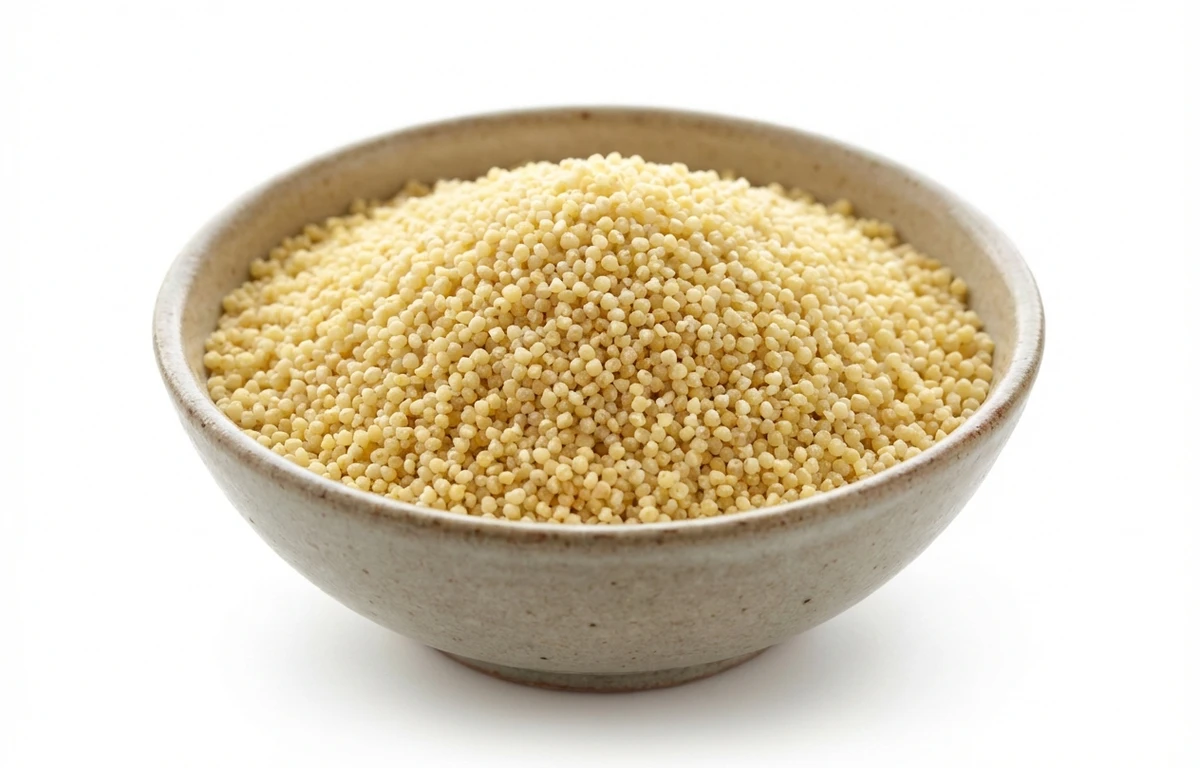
dry couscous.
VegetarianVeganGluten-freeDairy-freeNut-freePeanut-freeSoy-freeEgg-freeShellfish-freeHoney-freeAlcohol-free
SERVING
CALORIES
376
PROTEIN
12.8g
CARBS
77.4g
FAT
0.60g
FIBER
5.0g
NUTRITION PROFILE · per 100 g
Everything in this ingredient.
MACRONUTRIENTS
Calories376kcal—
Protein12.8g26%
Carbohydrates77.4g28%
Fiber5.0g18%
Sugar0.10g0%
Total fat0.60g1%
Saturated fat0.10g1%
Trans fat0g—
Cholesterol0mg0%
Water8.5g—
MINERALS
Sodium10mg0%
Potassium166mg4%
Calcium24mg2%
Iron1.1mg6%
Magnesium44mg10%
Phosphorus170mg14%
Zinc0.80mg7%
Copper0.19mg21%
Manganese0.78mg34%
Selenium27.5µg50%
VITAMINS
Vitamin A0µg0%
Vitamin C0mg0%
Vitamin D0µg0%
Vitamin E0.13mg1%
Vitamin K0µg0%
Thiamin (B1)0.16mg13%
Riboflavin (B2)0.08mg6%
Niacin (B3)3.5mg22%
Pantothenic acid (B5)0.37mg7%
Vitamin B60.11mg6%
Folate (B9)20µg5%
Vitamin B120µg0%
%DV based on a 2,000 cal diet. Source: USDA FoodData Central. A dash in the %DV column means there’s no established Daily Value for that nutrient.
MEASUREMENT CONVERSIONS
How much is what.
1 cup173g
1 tablespoon10.8g
1 teaspoon3.6g
1 ml0.7g
1 liter720.8g
HEALTH BENEFITS
Why eat it.
- ✓Rich source of selenium, an antioxidant that helps protect cells from damage and supports thyroid health.
- ✓Provides a quick source of energy due to its carbohydrate content, making it ideal for refueling.
- ✓Contains plant-based protein, which is essential for building and repairing body tissues.
- ✓Supports immune function through its selenium and other micronutrient content.
COOKING TIPS
In the kitchen.
- 1For instant couscous, use a 1:1 ratio of couscous to boiling liquid (water or broth). Pour the liquid over the couscous, cover, and let it steam off the heat for 5-10 minutes.
- 2Enhance flavor by cooking couscous in vegetable, chicken, or beef broth instead of water, and add herbs, spices, or a knob of butter.
- 3After the liquid is absorbed, use a fork to fluff the couscous gently. This separates the grains and prevents them from clumping.
- 4Toast the dry couscous in a pan with a little olive oil or butter for a few minutes before adding liquid to develop a richer, nuttier flavor.
STORAGE
Keep it fresh.
- Store dry couscous in an airtight container in a cool, dark, and dry place, such as a pantry, for up to 1-2 years.
- Once cooked, store leftover couscous in a sealed container in the refrigerator for up to 4 days.
FAQ
Frequently asked questions.
Is couscous healthy?
Yes, couscous is generally considered healthy. It is a good source of selenium, an antioxidant that supports thyroid health and protects cells from damage. It also provides plant-based protein and a quick source of energy due to its carbohydrate content.
How much protein, calories, and carbs are in dry couscous?
Per 100g of dry couscous, there are approximately 376 calories, 12.8g of protein, 77.4g of carbohydrates, and 0.6g of fat. These values will change slightly once cooked as it absorbs water.
Is couscous gluten-free?
No, traditional couscous is not gluten-free. It is made from durum wheat semolina, which contains gluten. However, gluten-free versions made from corn, rice, or other grains are available for those with gluten sensitivities.
Can diabetics eat couscous?
Diabetics can eat couscous in moderation as part of a balanced diet. It has a moderate to high glycemic index, so portion control is key. Opting for whole wheat couscous can provide more fiber, which helps manage blood sugar levels.
How do you cook dry couscous?
To cook dry couscous, combine equal parts couscous and boiling water or broth in a bowl. Cover tightly and let it sit for 5-10 minutes until all the liquid is absorbed. Then, fluff with a fork before serving.
What does couscous taste like?
Couscous has a very mild, neutral flavor, making it highly versatile. It readily absorbs the flavors of the liquids it's cooked in and any sauces or ingredients it's paired with, making it an excellent base for various dishes.
How do you store dry couscous?
Dry couscous should be stored in an airtight container in a cool, dry, and dark place, such as a pantry or cupboard. Proper storage helps prevent moisture absorption and keeps pests away.
How long does dry couscous last?
When stored properly, dry couscous can last for up to 1-2 years past its 'best by' date. Once cooked, it should be refrigerated in an airtight container and consumed within 3-4 days.
Is couscous good for weight loss?
Couscous can be part of a weight-loss diet when consumed in appropriate portions. While it's high in carbohydrates, its protein content can contribute to satiety. Choosing whole wheat couscous adds fiber, which further aids in feeling full and supports digestive health.
What is the difference between regular (Moroccan) couscous and Israeli (Pearl) couscous?
Regular or Moroccan couscous consists of very small, fine grains that cook quickly by steaming or soaking. Israeli or Pearl couscous has larger, pearl-like grains with a chewier texture, requiring a longer cooking time, often by simmering like pasta.



















