
Grain
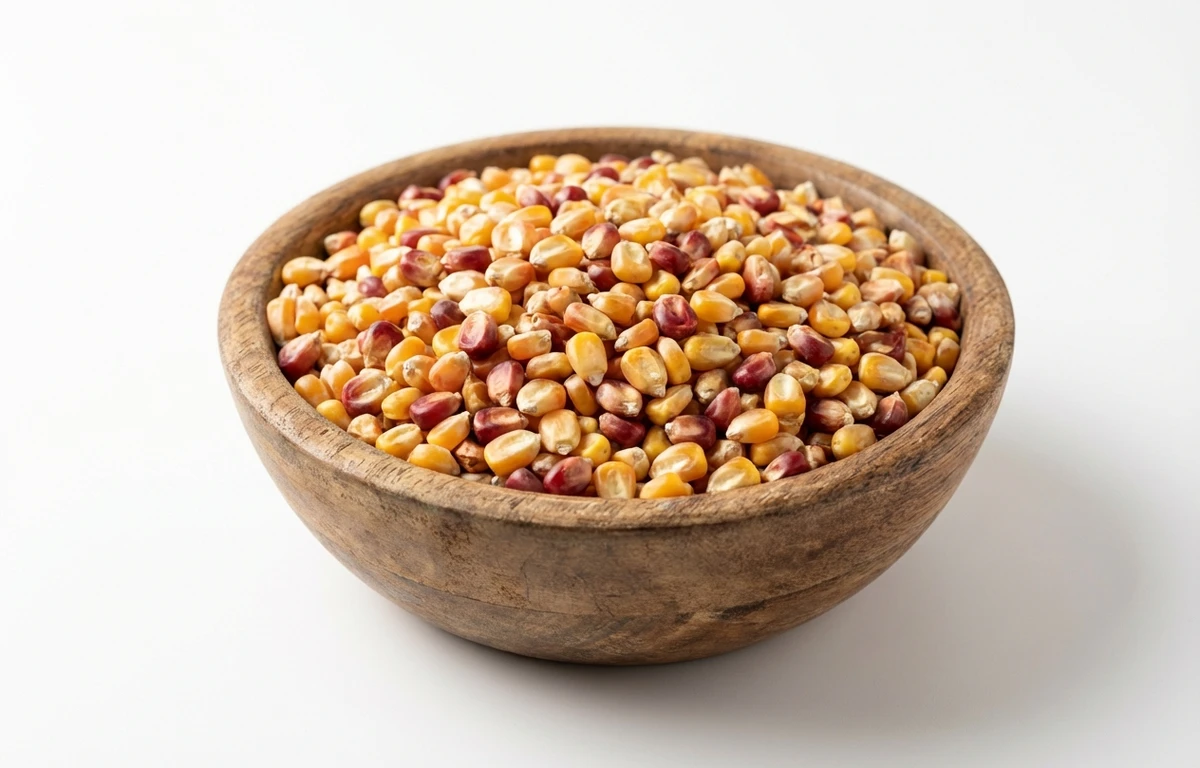
dry maize.
VegetarianVeganGluten-freeDairy-freeNut-freePeanut-freeSoy-freeEgg-freeShellfish-freeHoney-freeAlcohol-freeWhole grain
SERVING
CALORIES
334
PROTEIN
8.8g
CARBS
64.8g
FAT
3.8g
FIBER
12.2g
NUTRITION PROFILE · per 100 g
Everything in this ingredient.
MACRONUTRIENTS
Calories334kcal—
Protein8.8g18%
Carbohydrates64.8g24%
Fiber12.2g44%
Sugar1.7g3%
Total fat3.8g5%
Saturated fat0.41g2%
Trans fat0g—
Cholesterol0mg0%
Water9.3g—
MINERALS
Sodium4.4mg0%
Potassium291mg6%
Calcium8.9mg1%
Iron2.5mg14%
Magnesium145mg35%
Phosphorus279mg22%
Zinc2.3mg21%
Copper0.45mg50%
Manganese0.71mg31%
Selenium8.7µg16%
VITAMINS
Vitamin A296µg33%
Vitamin C0mg0%
Vitamin D33.6µg168%
Vitamin E0.36mg2%
Vitamin K2.5µg2%
Thiamin (B1)0.33mg28%
Riboflavin (B2)0.09mg7%
Niacin (B3)2.7mg17%
Pantothenic acid (B5)0.34mg7%
Vitamin B60.34mg20%
Biotin (B7)0.49µg2%
Folate (B9)25.8µg6%
%DV based on a 2,000 cal diet. Source: USDA FoodData Central. A dash in the %DV column means there’s no established Daily Value for that nutrient.
MEASUREMENT CONVERSIONS
How much is what.
1 cup170g
1 tablespoon10.6g
1 teaspoon3.5g
1 oz28.4g
1 lb453.6g
1 ml0.7g
1 liter719g
HEALTH BENEFITS
Why eat it.
- ✓Rich in dietary fiber, which aids digestion and promotes gut health.
- ✓Good source of complex carbohydrates, providing sustained energy release.
- ✓Contains antioxidants like lutein and zeaxanthin, which are beneficial for eye health.
- ✓Provides essential minerals such as magnesium, phosphorus, and manganese.
COOKING TIPS
In the kitchen.
- 1Soak dry maize kernels in water for at least 8 hours or overnight to significantly reduce cooking time.
- 2Simmer soaked maize in fresh water or broth for 1-2 hours, or until tender, for use in stews, soups, and salads.
- 3For dishes like posole, dry maize must undergo nixtamalization, a process of soaking and cooking in an alkaline solution, which removes the hull and improves nutritional value.
- 4Grind dry maize into coarse cornmeal for polenta or grits, or into fine flour for baking.
STORAGE
Keep it fresh.
- Store in a cool, dark, and dry place in an airtight container to protect from moisture, insects, and rodents.
- When stored properly, dry maize kernels can last for over a year without significant degradation in quality.
FAQ
Frequently asked questions.
Is dry maize healthy?
Yes, dry maize is a healthy grain. It's rich in dietary fiber, which supports digestion and gut health, and provides complex carbohydrates for sustained energy. It also contains antioxidants like lutein and zeaxanthin, beneficial for eye health, and essential minerals such as magnesium and phosphorus.
What are the nutritional benefits of dry maize?
Dry maize offers several nutritional benefits. It's a good source of complex carbohydrates for energy, dietary fiber for digestive health, and protein (8.8g per 100g). Additionally, it provides antioxidants that protect eye health and essential minerals like magnesium, phosphorus, and manganese.
How many calories and carbs are in dry maize?
Per 100 grams, dry maize contains approximately 334.13 calories and 64.77 grams of carbohydrates. It also provides 8.8 grams of protein and 3.77 grams of fat, making it an energy-dense grain.
Is dry maize gluten-free?
Yes, dry maize (corn) is naturally gluten-free. This makes it a suitable grain option for individuals with celiac disease or gluten sensitivity, and it's often used to make gluten-free flours and products.
Is dry maize suitable for diabetics?
Dry maize is a source of complex carbohydrates, which can provide sustained energy. However, due to its high carbohydrate content (64.77g per 100g), individuals with diabetes should consume it in moderation and monitor portion sizes, as it can impact blood sugar levels.
Is dry maize keto-friendly?
No, dry maize is not considered keto-friendly. With 64.77 grams of carbohydrates per 100 grams, it is too high in carbs to fit within the strict carbohydrate limits of a ketogenic diet.
How do you prepare dry maize for cooking?
Dry maize typically requires processing before cooking. It can be ground into flour (cornmeal or masa harina) for baking or making tortillas, or it can be cooked whole after soaking for several hours to soften, often used in stews or as hominy.
What are common uses for dry maize?
Dry maize is incredibly versatile. It's commonly ground into cornmeal for polenta, cornbread, and grits, or processed into masa harina for tortillas, tamales, and pupusas. It can also be used to make popcorn, or fermented for beverages and ethanol.
How should I store dry maize?
Dry maize should be stored in an airtight container in a cool, dry, and dark place. This prevents moisture absorption, spoilage, and infestation by pests like weevils. Proper storage helps maintain its quality and extends its shelf life.
How long does dry maize last?
When stored properly in an airtight container in a cool, dry place, whole dry maize kernels can last for several years. Once ground into flour (cornmeal), its shelf life is shorter, typically 6-12 months, due to the increased surface area exposed to air.



















