
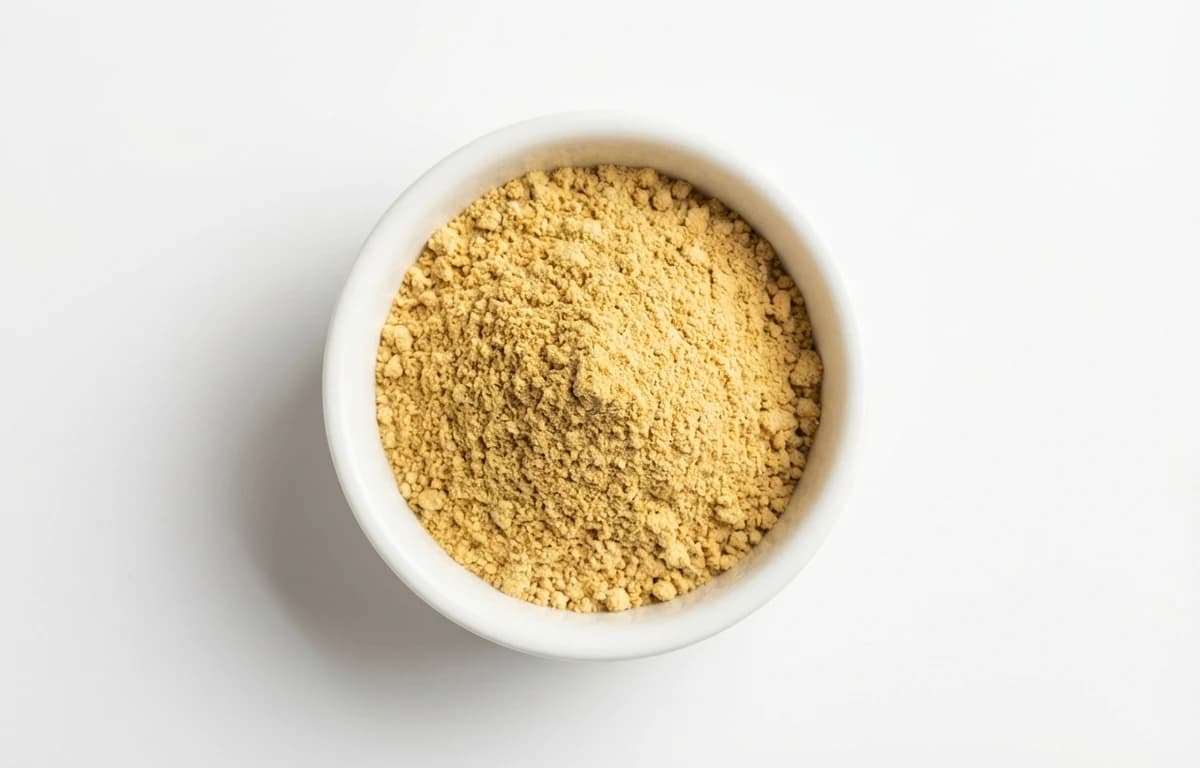
dry mustard
Also known as: mustard powder, ground mustard, sarson powder, rai powder, yellow mustard powder
Loading...
Also known as: mustard powder, ground mustard, sarson powder, rai powder, yellow mustard powder
Per 100g
Nutrition data source: USDA FoodData Central
Common measurement equivalents in grams
When stored in a cool, dark place in an airtight container, dry mustard can last for 1 to 2 years, though it gradually loses its potency.
Yes, use 1 tablespoon of prepared mustard for every 1 teaspoon of dry mustard, but reduce the liquid in your recipe by 1 teaspoon.
Mix the powder with a cold liquid (like water or vinegar) and let it stand for 10 minutes. Heat or hot water will actually deactivate the enzymes that provide the 'bite'.
Pure dry mustard is naturally gluten-free, but always check the label for anti-caking agents or cross-contamination if you have a severe allergy.
The best substitutes are prepared mustard, mustard seeds (ground yourself), or horseradish powder for a similar heat profile.
While it has about 500 calories per 100g, it is used in such small quantities (teaspoons) that its caloric contribution to a dish is negligible.
It is not recommended to freeze dry mustard as the moisture in the freezer can cause clumping and degrade the essential oils.
It is commonly used in mac and cheese, deviled eggs, salad dressings, spice rubs for BBQ, and savory sauces.
dry mustard is a versatile ingredient found in cuisines around the world. With 508 calories per 100g and 26.1 grams of protein, it's a nutritious addition to many dishes.
Explore more ingredients in the condiment category with complete nutrition information.
View all condiment →Discover 1 recipes featuring dry mustard with step-by-step instructions.
Browse recipes →If the powder has lost its bright yellow color or no longer has a sharp, pungent aroma when sniffed, it should be replaced.