
Dairy
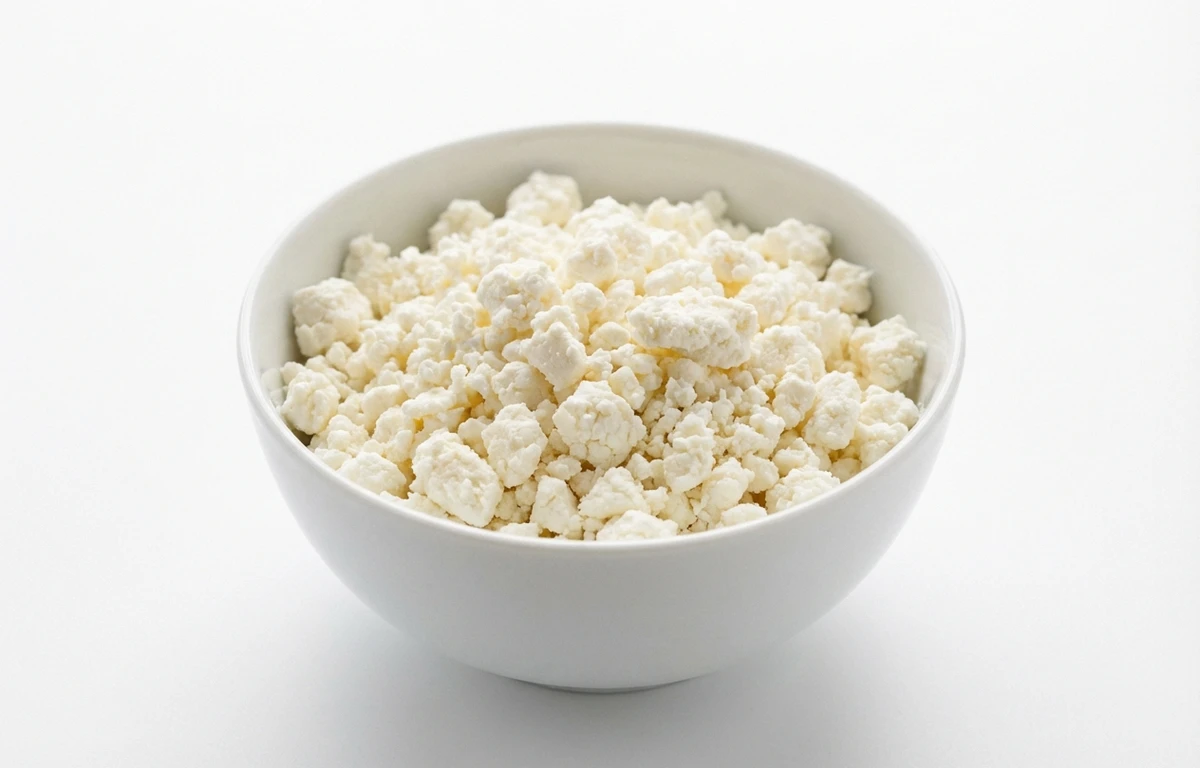
dry nonfat cottage cheese.
VegetarianVeganGluten-freeDairy-freeNut-freePeanut-freeSoy-freeEgg-freeShellfish-freeHoney-freeAlcohol-freeFermented
ALSO KNOWN AS
dry curd cottage cheesenonfat dry curd cottage cheesefat free dry cottage cheesepot cheesefarmer cheese dry style
SERVING
CALORIES
72
PROTEIN
17.3g
CARBS
1.8g
FAT
0.30g
FIBER
0g
NUTRITION PROFILE · per 100 g
Everything in this ingredient.
MACRONUTRIENTS
Calories72kcal—
Protein17.3g35%
Carbohydrates1.8g1%
Fiber0g0%
Sugar1.8g4%
Total fat0.30g0%
Saturated fat0.10g1%
Trans fat0g—
Cholesterol7.0mg2%
Water79.8g—
MINERALS
Sodium15mg1%
Potassium137mg3%
Calcium60mg5%
Iron0.10mg1%
Magnesium9.0mg2%
Phosphorus134mg11%
Zinc0.40mg4%
Copper0.02mg2%
Manganese0.01mg0%
Selenium9.7µg18%
VITAMINS
Vitamin A2.0µg0%
Vitamin C0mg0%
Vitamin D0µg0%
Vitamin E0.01mg0%
Vitamin K0µg0%
Thiamin (B1)0.02mg2%
Riboflavin (B2)0.16mg12%
Niacin (B3)0.10mg1%
Pantothenic acid (B5)0.20mg4%
Vitamin B60.05mg3%
Folate (B9)9.0µg2%
Vitamin B120.50µg21%
%DV based on a 2,000 cal diet. Source: USDA FoodData Central. A dash in the %DV column means there’s no established Daily Value for that nutrient.
MEASUREMENT CONVERSIONS
How much is what.
1 cup225g
1 tablespoon14g
1 teaspoon5g
1 oz28.4g
1 lb453.6g
HEALTH BENEFITS
Why eat it.
- ✓Excellent source of high-quality casein protein for muscle maintenance
- ✓Very low in calories and fat, making it ideal for weight management
- ✓Contains calcium and phosphorus for bone health
- ✓Low sodium compared to creamed cottage cheese varieties
- ✓Provides B-vitamins like B12 for energy metabolism
COOKING TIPS
In the kitchen.
- 1Mix with a little Greek yogurt or milk if you prefer a creamier consistency
- 2Use as a high-protein filling for pancakes, crepes, or lasagna
- 3Pulse in a blender to create a smooth, low-fat substitute for ricotta cheese
STORAGE
Keep it fresh.
- Keep refrigerated in an airtight container at all times
- Use within 5 to 7 days of opening the package
- Do not freeze as it significantly alters the texture of the curds
FAQ
Frequently asked questions.
What is the difference between dry curd and regular cottage cheese?
Dry curd cottage cheese is the solid curd without the added cream or milk dressing found in regular cottage cheese, making it lower in fat and calories.
How long does dry nonfat cottage cheese last?
It typically lasts 5-7 days in the refrigerator after opening. Always check for a sour smell or mold before consuming.
Can I use dry cottage cheese as a substitute for ricotta?
Yes, it is an excellent low-fat substitute for ricotta in recipes like lasagna or stuffed shells, though you may want to blend it for a smoother texture.
Is dry curd cottage cheese lactose-free?
No, it still contains lactose, although the fermentation process and removal of whey may reduce the levels slightly compared to fresh milk.
How do I pick the best quality dry cottage cheese?
Look for containers where the curds appear distinct and white, with no excess liquid or yellowish discoloration.
Is it good for weight loss?
Yes, it is highly satiating due to its high protein content while being very low in calories and fat.
Can dry cottage cheese be eaten raw?
Yes, it is most commonly eaten raw, often mixed with fruit, nuts, or used as a topping for salads.
Why is it called 'pot cheese'?
It is sometimes called pot cheese because it is the simple curd left in the pot after the whey has been drained away.
Does it contain a lot of salt?
Dry curd cottage cheese is generally much lower in sodium than creamed versions because salt is usually added to the cream dressing, not the curd itself.



















