
Legume
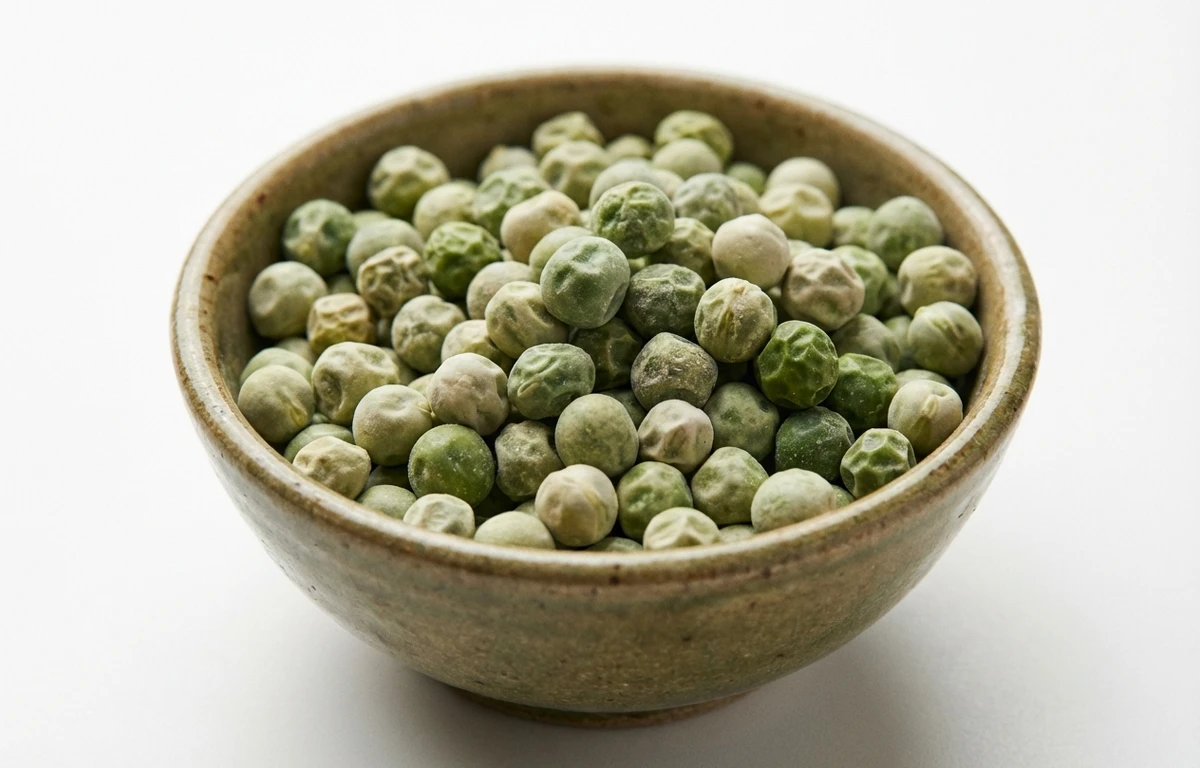
dry peas.
VegetarianVeganGluten-freeDairy-freeNut-freePeanut-freeSoy-freeEgg-freeShellfish-freeHoney-freeAlcohol-free
SERVING
CALORIES
303
PROTEIN
20.4g
CARBS
48.9g
FAT
1.9g
FIBER
17g
NUTRITION PROFILE · per 100 g
Everything in this ingredient.
MACRONUTRIENTS
Calories303kcal—
Protein20.4g41%
Carbohydrates48.9g18%
Fiber17g61%
Sugar2.0g4%
Total fat1.9g2%
Saturated fat0.24g1%
Trans fat0g—
Cholesterol0mg0%
Water9.3g—
MINERALS
Sodium23.4mg1%
Potassium922mg20%
Calcium75.1mg6%
Iron5.1mg28%
Magnesium123mg29%
Phosphorus334mg27%
Zinc3.1mg28%
Copper0.68mg76%
Manganese1.1mg47%
Selenium50.1µg91%
VITAMINS
Vitamin A65.7µg7%
Vitamin C0mg0%
Vitamin D15.2µg76%
Vitamin E0.32mg2%
Vitamin K11.4µg10%
Thiamin (B1)0.56mg47%
Riboflavin (B2)0.16mg12%
Niacin (B3)2.7mg17%
Pantothenic acid (B5)1.3mg25%
Vitamin B60.26mg15%
Biotin (B7)0.53µg2%
Folate (B9)110µg28%
%DV based on a 2,000 cal diet. Source: USDA FoodData Central. A dash in the %DV column means there’s no established Daily Value for that nutrient.
MEASUREMENT CONVERSIONS
How much is what.
1 cup192g
1 tablespoon12g
1 teaspoon4g
1 oz28.4g
1 lb453.6g
1 ml0.8g
1 liter811.5g
HEALTH BENEFITS
Why eat it.
- ✓Excellent source of dietary fiber, which supports digestive health and can help lower cholesterol.
- ✓Rich in plant-based protein, essential for muscle building and repair.
- ✓High in important micronutrients such as folate, iron, and manganese.
- ✓Have a low glycemic index, which helps in managing blood sugar levels.
COOKING TIPS
In the kitchen.
- 1Soak whole dry peas for 6-8 hours or overnight to reduce cooking time and improve digestibility. Split peas do not require soaking.
- 2Simmer gently in water or broth until tender. Avoid vigorous boiling, which can cause them to break apart.
- 3Add salt and acidic ingredients like tomatoes or lemon juice only after the peas are fully cooked, as they can toughen the skins and prevent them from softening.
- 4Dry peas are excellent for making thick soups, stews, dals, and purées like hummus or dips.
STORAGE
Keep it fresh.
- Store in an airtight container in a cool, dark, and dry place, such as a pantry, for up to one year.
- Once cooked, store in a sealed container in the refrigerator for up to 4-5 days.
FAQ
Frequently asked questions.
Are dry peas healthy?
Yes, dry peas are very healthy. They are an excellent source of dietary fiber, plant-based protein, and essential micronutrients like folate, iron, and manganese. Their high fiber content supports digestive health and can help lower cholesterol.
How much protein and calories are in dry peas?
Per 100g, dry peas contain approximately 303.3 calories and 20.43g of protein. They are also rich in complex carbohydrates (48.93g) and low in fat (1.89g), making them a nutrient-dense food.
Are dry peas good for weight loss?
Yes, dry peas can be beneficial for weight loss. Their high fiber and protein content promote satiety, helping you feel full longer and potentially reducing overall calorie intake. They are also relatively low in fat.
Are dry peas gluten-free?
Yes, dry peas are naturally gluten-free. As a legume, they are a safe and nutritious option for individuals following a gluten-free diet or those with celiac disease.
Are dry peas vegan?
Yes, dry peas are 100% vegan. As a plant-based legume, they are a staple in many vegan diets, providing essential protein and nutrients without any animal products.
Can diabetics eat dry peas?
Yes, dry peas are a good choice for diabetics. They have a low glycemic index, meaning they cause a slower and more gradual rise in blood sugar levels, which can help with blood sugar management.
How do you cook dry peas?
Dry peas typically need to be rinsed and then simmered in water or broth until tender. Cooking times vary, but they usually take 45-90 minutes, depending on whether they were soaked. They can be used in soups, stews, or purees.
What do dry peas taste like and what are they used for?
Dry peas have a mild, earthy, and slightly sweet flavor, similar to fresh peas but with a denser texture. They are commonly used in split pea soup, dahl, curries, and as a base for vegetarian burgers or purees.
How do you store dry peas?
Store dry peas in an airtight container in a cool, dark, and dry place, such as a pantry. When stored properly, they can last for up to 1-2 years.
Do dry peas need to be soaked before cooking?
Soaking dry peas is recommended but not strictly necessary. Soaking for 4-8 hours can significantly reduce cooking time and may improve digestibility. If not soaked, they will simply require a longer cooking period.



















