
Nut Seed
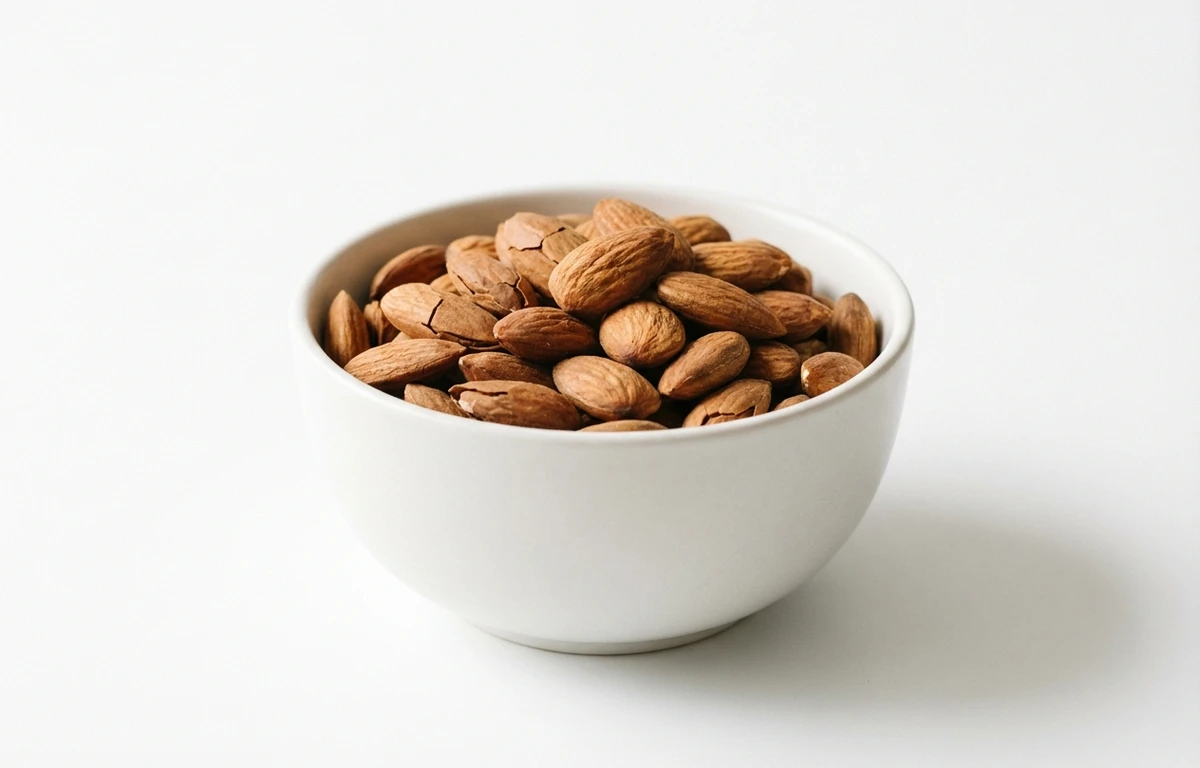
dry roasted unsalted almonds.
VegetarianVeganGluten-freeDairy-freeNut-freePeanut-freeSoy-freeEgg-freeShellfish-freeHoney-freeAlcohol-free
ALSO KNOWN AS
dry roasted unsalted badam
SERVING
CALORIES
598
PROTEIN
21g
CARBS
21g
FAT
52.5g
FIBER
10.8g
NUTRITION PROFILE · per 100 g
Everything in this ingredient.
MACRONUTRIENTS
Calories598kcal—
Protein21g42%
Carbohydrates21g8%
Fiber10.8g39%
Sugar4.9g10%
Total fat52.5g67%
Saturated fat4.0g20%
Trans fat0g—
Cholesterol0mg0%
Water2.4g—
MINERALS
Sodium1.0mg0%
Potassium705mg15%
Calcium264mg20%
Iron3.7mg21%
Magnesium268mg64%
Phosphorus484mg39%
Zinc3.1mg28%
Copper1.0mg111%
Manganese2.3mg100%
Selenium2.5µg5%
VITAMINS
Vitamin A0µg0%
Vitamin C0mg0%
Vitamin D0µg0%
Vitamin E26.2mg175%
Vitamin K0µg0%
Thiamin (B1)0.20mg17%
Riboflavin (B2)1.1mg85%
Niacin (B3)3.6mg23%
Pantothenic acid (B5)0.50mg10%
Vitamin B60.10mg6%
Folate (B9)50µg13%
Vitamin B120µg0%
%DV based on a 2,000 cal diet. Source: USDA FoodData Central. A dash in the %DV column means there’s no established Daily Value for that nutrient.
MEASUREMENT CONVERSIONS
How much is what.
1 cup145g
1 tablespoon9g
1 teaspoon3g
1 oz28.4g
1 lb453.6g
1 ml0.6g
1 liter600g
1 piece1.2g
HEALTH BENEFITS
Why eat it.
- ✓High in Vitamin E which acts as a powerful antioxidant
- ✓Rich in monounsaturated fats that support heart health
- ✓Good source of magnesium which helps regulate blood sugar
- ✓High fiber content promotes satiety and digestive health
- ✓Contains plant-based protein for muscle maintenance
COOKING TIPS
In the kitchen.
- 1Roughly chop and use as a crunchy topping for salads or oatmeal
- 2Blend in a high-speed processor to make homemade almond butter
- 3Add to homemade granola or trail mixes for a protein boost
STORAGE
Keep it fresh.
- Store in an airtight container in a cool, dark place for up to 6 months
- Refrigerate to extend freshness for up to 12 months
- Freeze in a sealed bag for long-term storage up to 2 years
FAQ
Frequently asked questions.
How long do dry roasted unsalted almonds last?
When stored in an airtight container in a cool, dry place, they typically last 6 to 9 months. Refrigeration can extend this to a year.
Can I freeze dry roasted almonds?
Yes, freezing is an excellent way to preserve the oils in almonds and prevent rancidity. They can last up to 2 years in the freezer.
What is the best substitute for dry roasted almonds?
Dry roasted walnuts, pecans, or cashews are the best substitutes depending on the desired texture and flavor profile.
Are dry roasted almonds healthier than raw almonds?
Nutritionally they are very similar, though roasting can slightly reduce the content of some heat-sensitive vitamins like B vitamins.
How can I tell if the almonds have gone bad?
Rancid almonds will have a sharp, bitter, or paint-like smell and a sour or unpleasant taste.
Do these almonds contain any added salt?
No, 'unsalted' indicates that no salt was added during or after the roasting process.
Are dry roasted almonds suitable for a keto diet?
Yes, they are high in healthy fats and fiber while being relatively low in net carbs, making them keto-friendly.
How many almonds are in a 100g serving?
There are approximately 80 to 85 medium-sized almonds in a 100g serving.
Can I use these to make almond milk?
While possible, raw almonds are preferred for almond milk as roasted almonds will produce a darker milk with a toasted flavor.



















