
Grain
durum wheat.
VegetarianVeganGluten-freeDairy-freeNut-freePeanut-freeSoy-freeEgg-freeShellfish-freeHoney-freeAlcohol-freeWhole grain
ALSO KNOWN AS
durumhard wheat
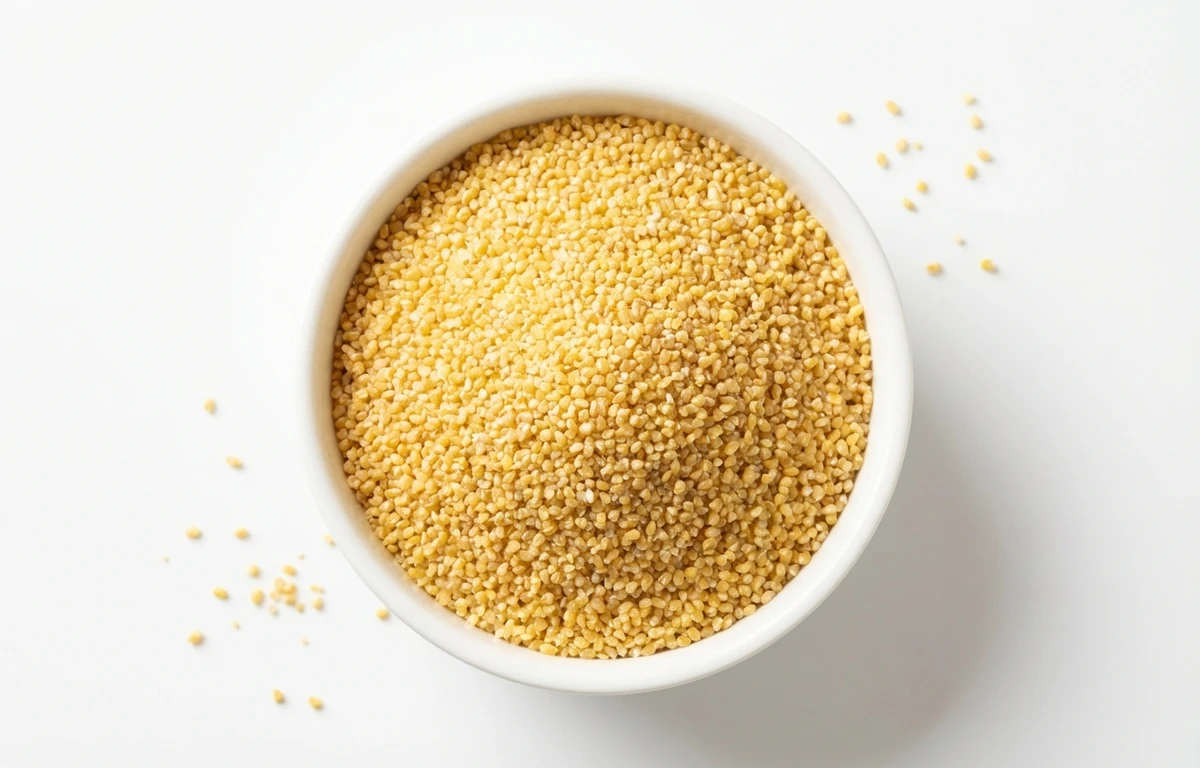
SERVING
CALORIES
339
PROTEIN
13.7g
CARBS
71.1g
FAT
2.5g
FIBER
10.7g
NUTRITION PROFILE · per 100 g
Everything in this ingredient.
MACRONUTRIENTS
Calories339kcal—
Protein13.7g27%
Carbohydrates71.1g26%
Fiber10.7g38%
Sugar0.40g1%
Total fat2.5g3%
Saturated fat0.40g2%
Trans fat0g—
Cholesterol0mg0%
Water11g—
MINERALS
Sodium2.0mg0%
Potassium431mg9%
Calcium34mg3%
Iron3.5mg19%
Magnesium144mg34%
Phosphorus386mg31%
Zinc4.2mg38%
Copper0.40mg44%
Manganese3.0mg130%
Selenium89.4µg163%
VITAMINS
Vitamin A0µg0%
Vitamin C0mg0%
Vitamin D0µg0%
Vitamin E0.60mg4%
Vitamin K1.9µg2%
Thiamin (B1)0.40mg33%
Riboflavin (B2)0.10mg8%
Niacin (B3)6.7mg42%
Pantothenic acid (B5)0.90mg18%
Vitamin B60.40mg24%
Folate (B9)43µg11%
Vitamin B120µg0%
%DV based on a 2,000 cal diet. Source: USDA FoodData Central. A dash in the %DV column means there’s no established Daily Value for that nutrient.
MEASUREMENT CONVERSIONS
How much is what.
1 cup192g
1 tablespoon12g
1 teaspoon4g
1 ml0.8g
1 liter800g
HEALTH BENEFITS
Why eat it.
- ✓High in protein compared to other wheat varieties, which supports muscle maintenance and promotes satiety.
- ✓Good source of B vitamins, including folate and thiamine, essential for converting food into energy.
- ✓Rich in dietary fiber (when consumed as a whole grain), which aids digestion and helps regulate blood sugar levels.
- ✓Contains important minerals like selenium and manganese, which act as antioxidants and support metabolic health.
COOKING TIPS
In the kitchen.
- 1Ideal for making pasta and couscous due to its high protein and gluten content, which creates a firm texture that holds its shape during cooking.
- 2Use semolina flour as a dusting flour when shaping bread or pizza dough to prevent sticking and add a slightly crispy crust.
- 3Cook whole durum wheat berries (similar to farro) and add them to salads, soups, or grain bowls for a chewy texture and nutty flavor.
- 4Toasted semolina flour can be used to make a creamy, nutty-flavored porridge or pudding.
STORAGE
Keep it fresh.
- Store whole durum wheat berries or semolina flour in an airtight container in a cool, dark, dry place like a pantry for up to 6 months.
- For longer-term storage and to prevent rancidity, especially for whole-grain flour, keep the airtight container in the refrigerator or freezer for up to one year.
FAQ
Frequently asked questions.
Is durum wheat healthy?
Yes, durum wheat is a nutritious grain, especially when consumed as a whole grain. It's notably high in protein compared to other wheat varieties, which supports muscle maintenance and satiety. It also provides B vitamins, essential minerals like selenium and manganese, and dietary fiber, which aids digestion and helps regulate blood sugar.
What are the nutritional values of durum wheat?
Per 100g, durum wheat typically contains around 339 calories, 13.7g of protein, 71.1g of carbohydrates, and 2.5g of fat. It's a good source of energy and provides a significant amount of plant-based protein, making it a valuable component of many diets.
Is durum wheat gluten-free?
No, durum wheat is not gluten-free. As a type of wheat, it naturally contains gluten, which is essential for its unique texture in pasta and other products. Individuals with celiac disease or gluten sensitivity should avoid durum wheat.
Can people with diabetes eat durum wheat?
People with diabetes can consume durum wheat in moderation, especially in its whole grain form. Whole grain durum wheat products, like whole wheat pasta, have a lower glycemic index due to their fiber content, which helps manage blood sugar levels. Portion control is key, and consulting a healthcare professional is always recommended.
What is durum wheat primarily used for in cooking?
Durum wheat is most famously used for making pasta, couscous, and semolina. Its high protein content and strong gluten structure give pasta its characteristic firm, al dente texture. It's also used in some breads, particularly in Mediterranean and Middle Eastern cuisines.
How does durum wheat compare to common bread wheat?
Durum wheat is a 'hard' wheat with a higher protein content and stronger gluten than common bread wheat (Triticum aestivum). This makes it ideal for pasta, which requires a firm structure. Bread wheat, on the other hand, has more elastic gluten, making it better suited for leavened breads that need to rise.
Is durum wheat a whole grain?
Durum wheat can be a whole grain if the entire kernel (bran, germ, and endosperm) is used, such as in whole wheat durum pasta or flour. However, it is often processed into semolina, which is a refined product made from the endosperm, removing much of the fiber and some nutrients.
How should I store durum wheat flour or pasta?
Durum wheat flour should be stored in an airtight container in a cool, dry, dark place to prevent spoilage and insect infestation. Dried durum wheat pasta also benefits from similar storage conditions. Proper storage helps maintain freshness and extends shelf life.
Does durum wheat offer any unique health benefits compared to other grains?
Durum wheat stands out for its higher protein content compared to many other common wheat varieties, which is beneficial for muscle health and satiety. It's also a good source of specific minerals like selenium and manganese, which act as antioxidants and support metabolic functions, contributing to overall well-being.
Is durum wheat suitable for a low-carb or keto diet?
No, durum wheat is not suitable for low-carb or keto diets. It is a grain that is high in carbohydrates, with approximately 71.1g of carbs per 100g. These diets typically restrict carbohydrate intake significantly, making durum wheat products unsuitable.



















